View methods side by side.
Choose up to four methods. Add them using the search and share the comparison by copying its link.
| Criterion | 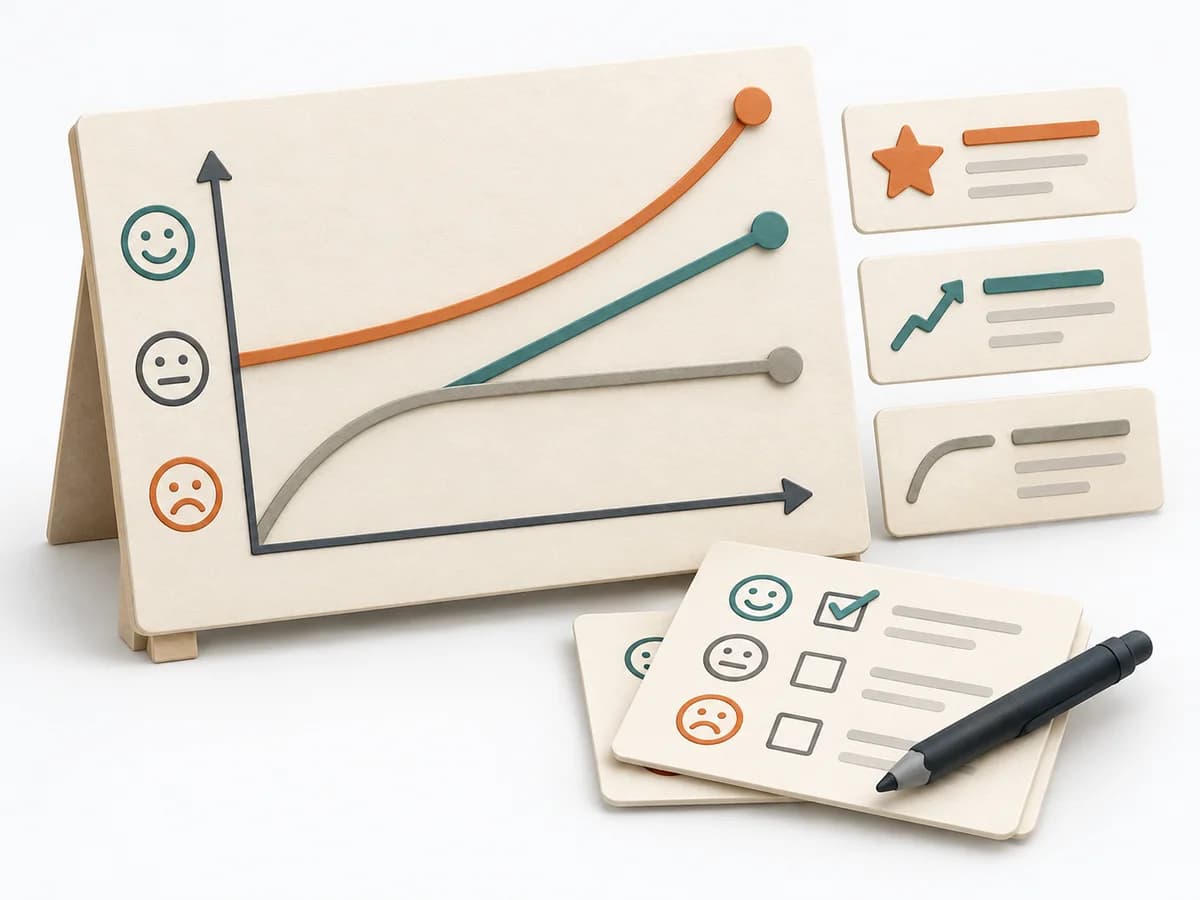 Product Discovery Kano Model | 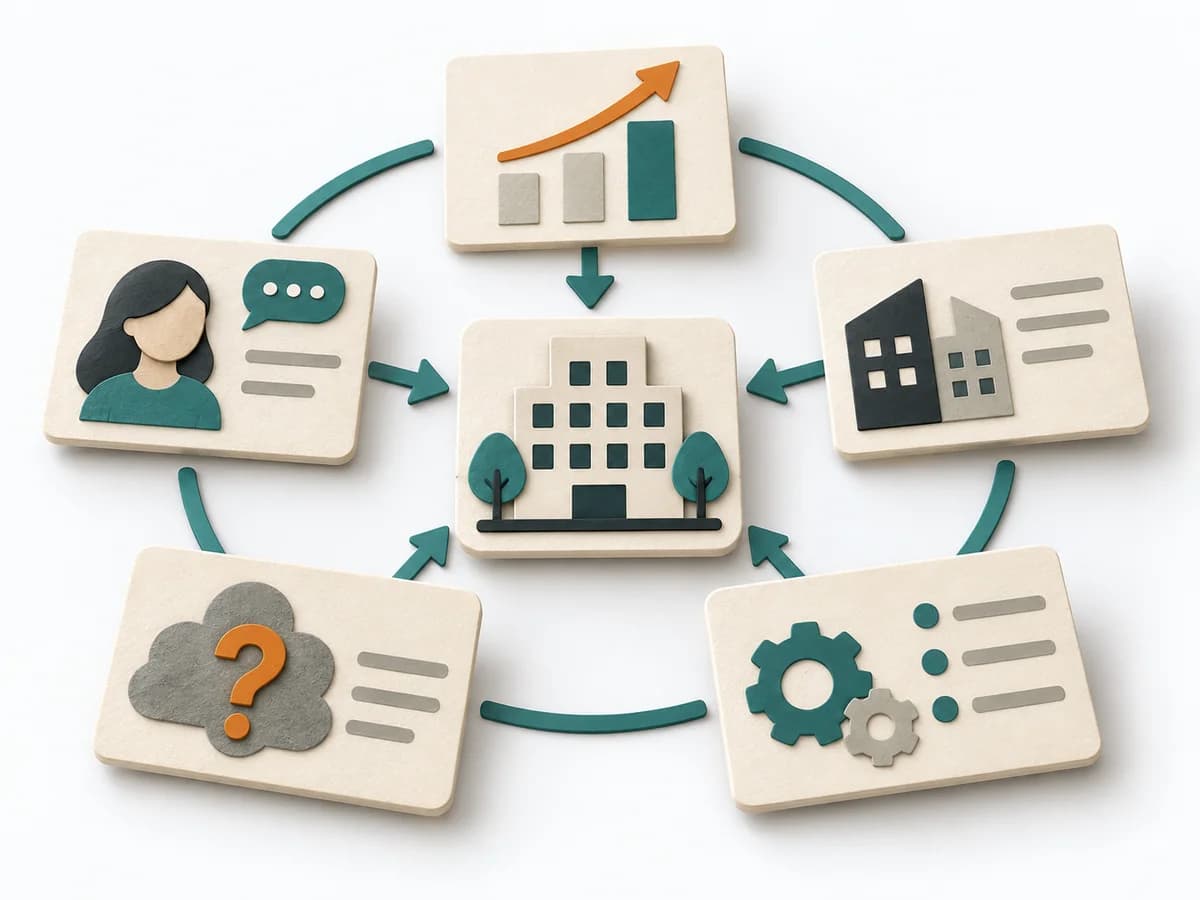 Product Discovery Context Canvas | 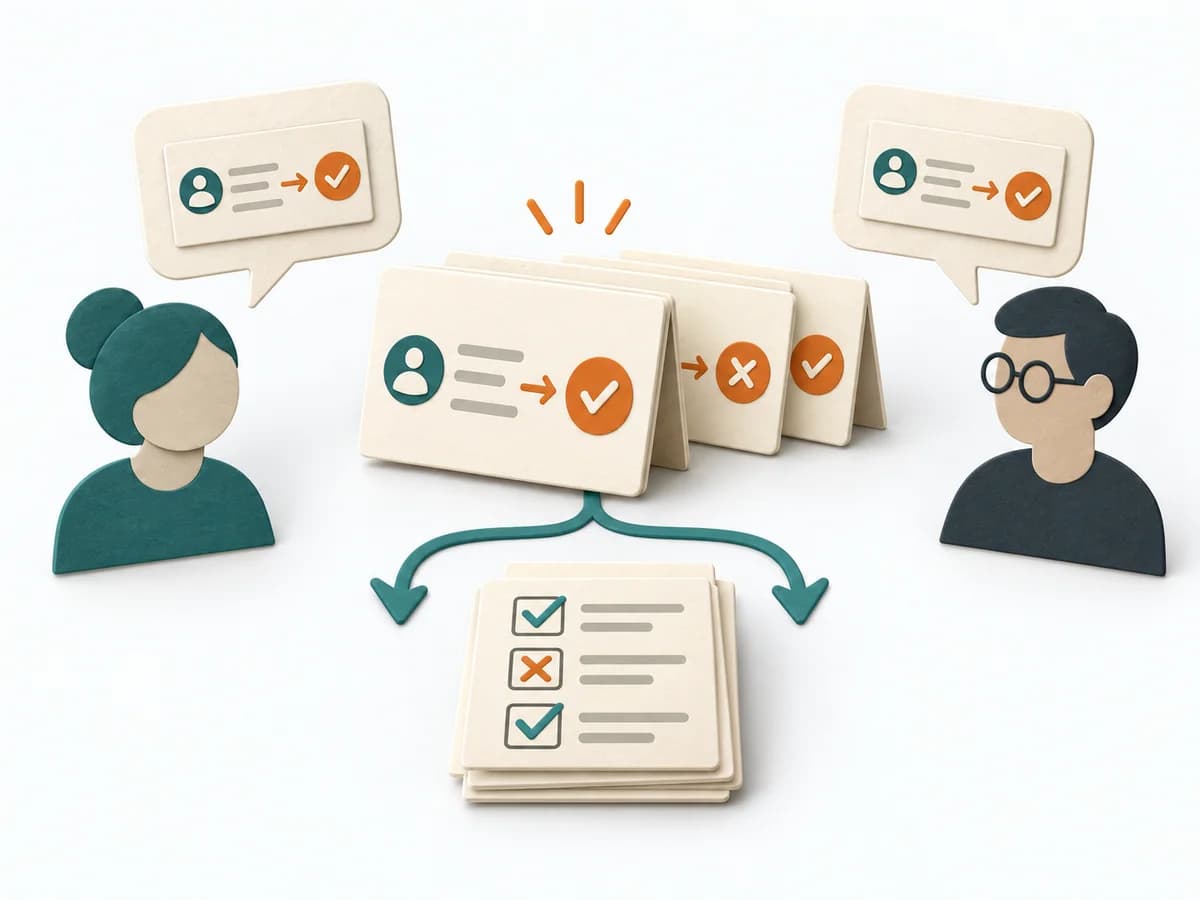 Agile Specification by Example | 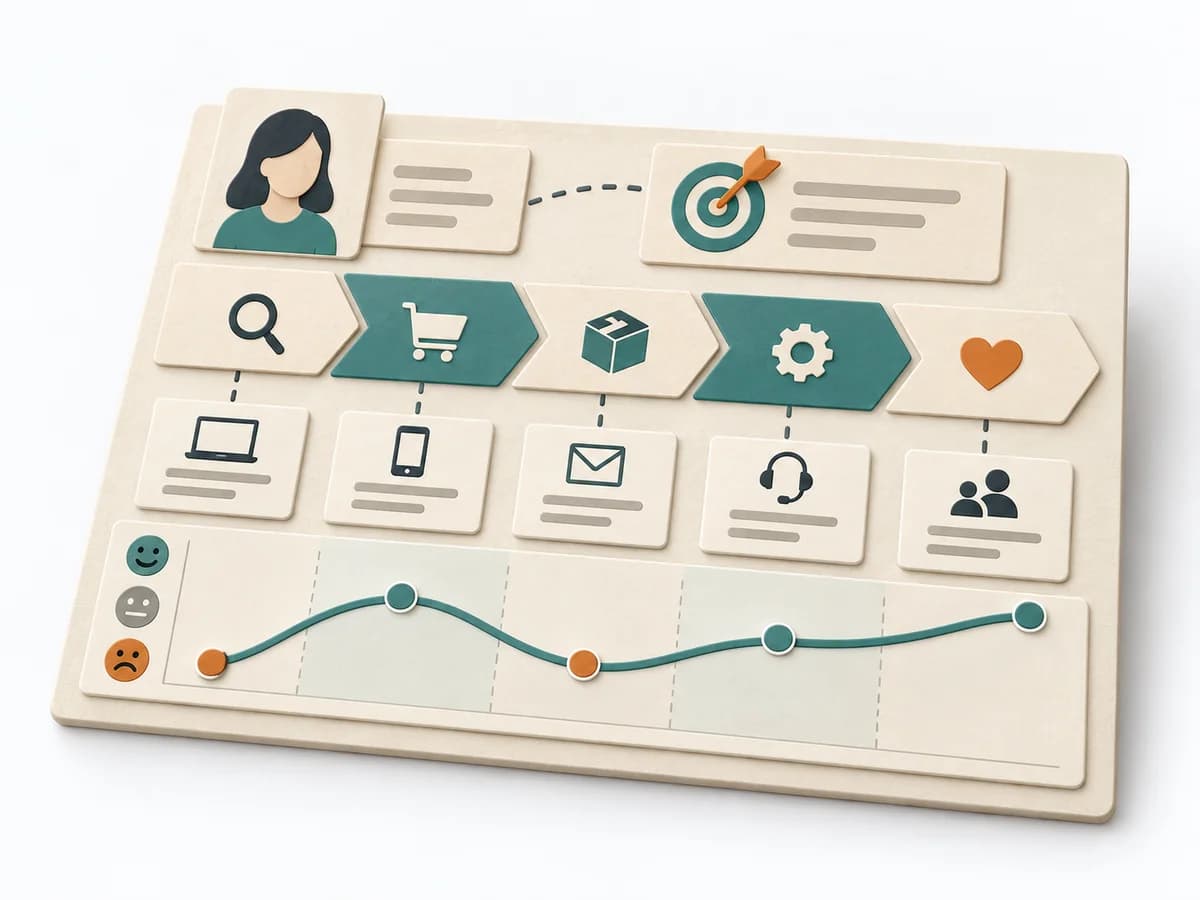 UX Design Customer Journey Canvas |
|---|---|---|---|---|
Purposedifferent | When features need to be distinguished by their effect on satisfaction, it makes expectations and surprises comparable. It separates basic needs, performance contribution, and delight. | When an environment of users, systems, and constraints is hard to grasp, it puts the context compactly on the table. It creates a clear reading of influence, boundary, and dependency. | When business rules need to become precise, it ties language, example, and test together. It sorts work by value, risk, and delivery ability. The result is captured as an Example Table and Acceptance Tests. | When a journey needs to be understood across several phases, it arranges experience, touchpoints, and opportunities into one picture. It makes gaps and friction along the user path clear. |
Complexitydifferent | Medium | Low | Medium | Medium |
Timedifferent | 1-2 Tage | 45-90 min | 60-90 min pro Feature | 1-3 h |
Participantsdifferent | 10-50 | 3-10 | 3-6 | 3-10 |
Formatdifferent | Workshop + async | Workshop | Workshop | Workshop |
Outputdifferent | Kano Matrix, Feature Classes, Priority Themes | Context canvas, Open questions, Shared context notes | Example Table, Acceptance Tests | Customer Journey Canvas, Pain Points, Experience Opportunities |
Tagsno overlap | SatisfactionPrioritizationCustomer | ContextFramingRequirementsCanvas | AgileRequirementsExamplesBehavior-Driven Development | JourneyCustomerService designCanvas |