View methods side by side.
Choose up to four methods. Add them using the search and share the comparison by copying its link.
| Criterion | 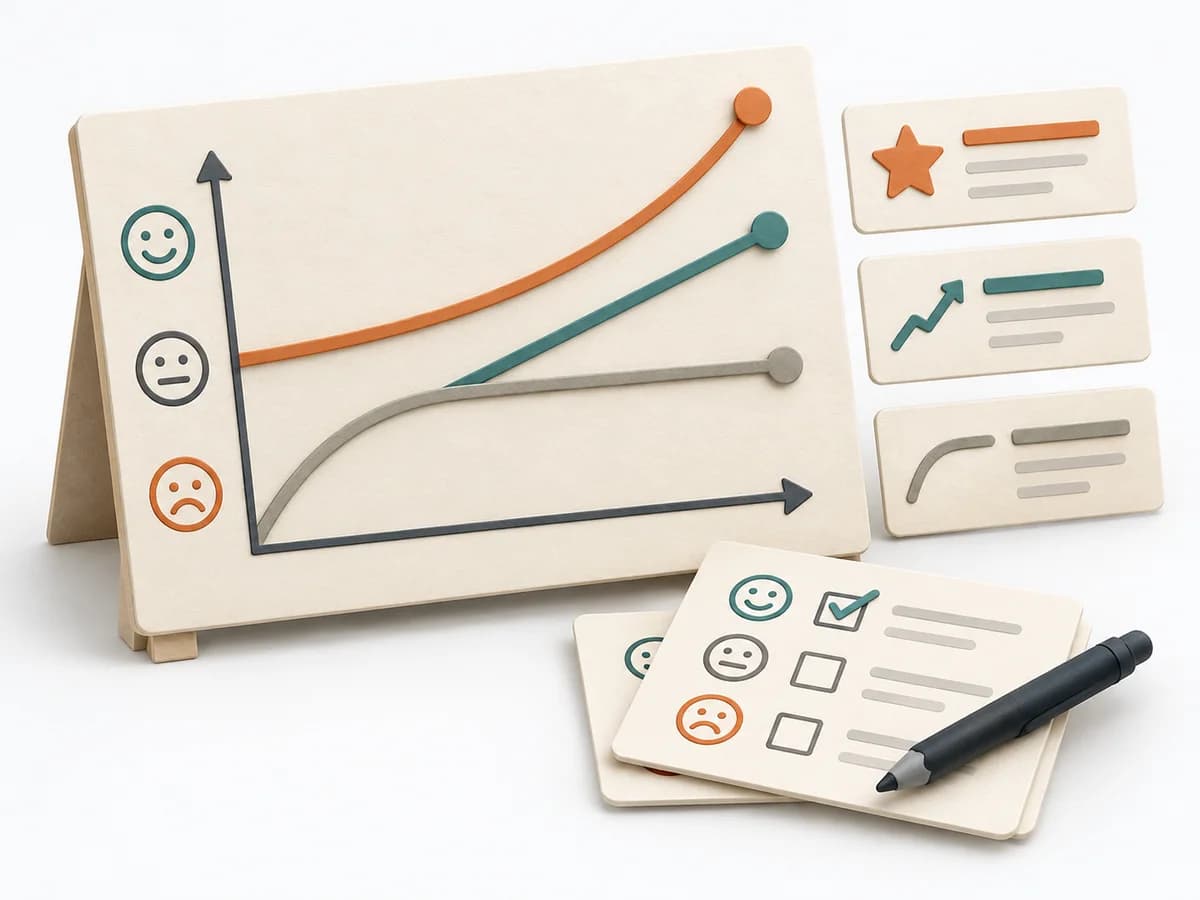 Product Discovery Kano Model |  Domain Modeling Bounded Context Canvas | 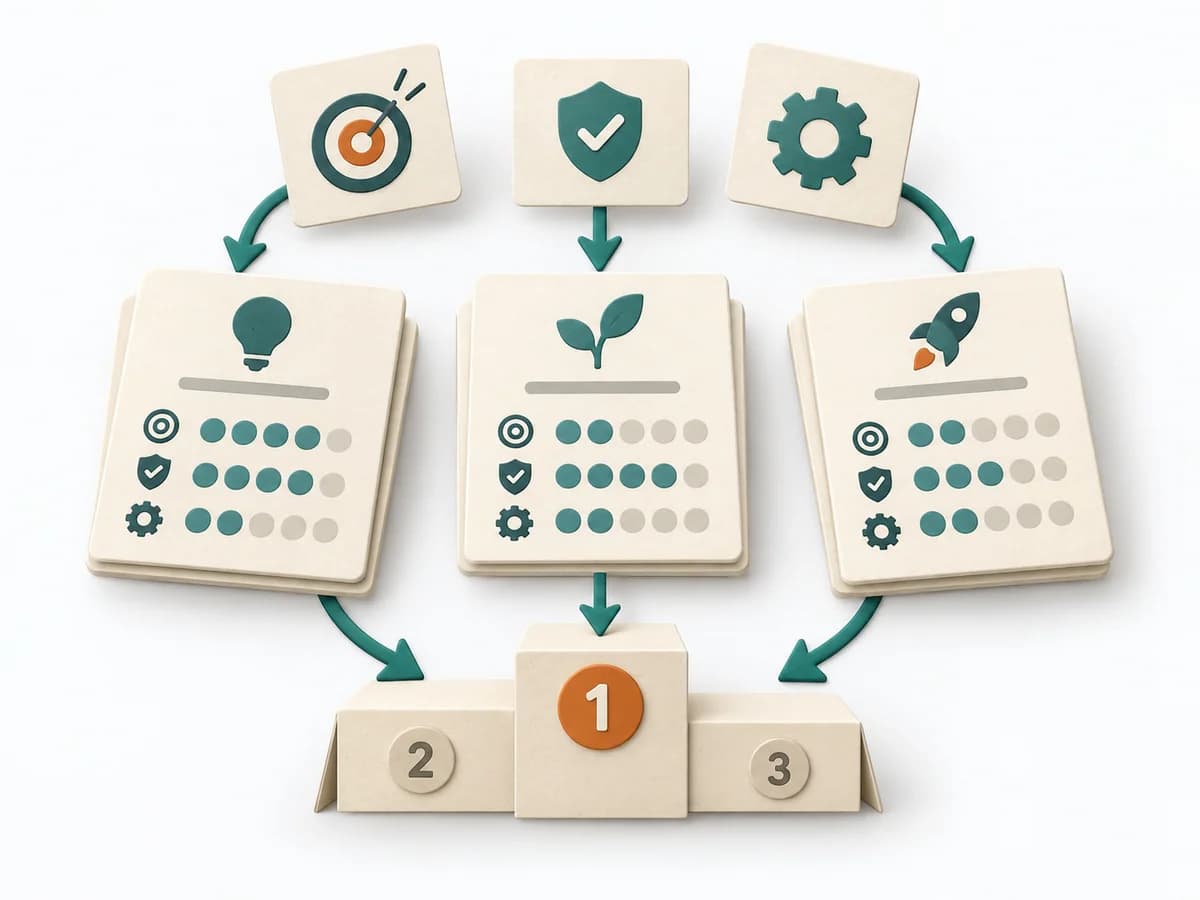 Product Strategy ICE Scoring |  Domain Modeling Domain Context Map |
|---|---|---|---|---|
Purposedifferent | When features need to be distinguished by their effect on satisfaction, it makes expectations and surprises comparable. It separates basic needs, performance contribution, and delight. | When a business context is still loosely outlined, it shapes language, responsibility, and integration space. It clarifies what belongs together and where a boundary needs to hold. | When ideas need sorting quickly, it condenses impact, confidence, and effort into one compact score. It connects customer value, product logic, and decision priorities. The result is captured as an ICE table and top-ideas list. | When a domain model and its associated contexts need to be thought through together, it creates a shared overview. It connects the business view and organizational boundary into a readable whole. |
Complexitydifferent | Medium | Medium | Low | Medium |
Timedifferent | 1-2 Tage | 1-3 h | 30-60 min | 1-3 h |
Participantsdifferent | 10-50 | 3-8 | 2-8 | 3-10 |
Formatdifferent | Workshop + async | Workshop + async | Workshop + async | Workshop |
Outputdifferent | Kano Matrix, Feature Classes, Priority Themes | Context Canvas, Glossary, Integration Notes | ICE Table, Top Idea List | Domain Context Map, Boundary Notes, Ownership Map |
Tagsno overlap | SatisfactionPrioritizationCustomer | Domain-Driven DesignBoundariesModeling | PrioritizationScoringGrowthDecision | Domain-Driven DesignContextBoundaries |