View methods side by side.
Choose up to four methods. Add them using the search and share the comparison by copying its link.
| Criterion |  Product Discovery Jobs to Be Done |  UX Research User Interviews | 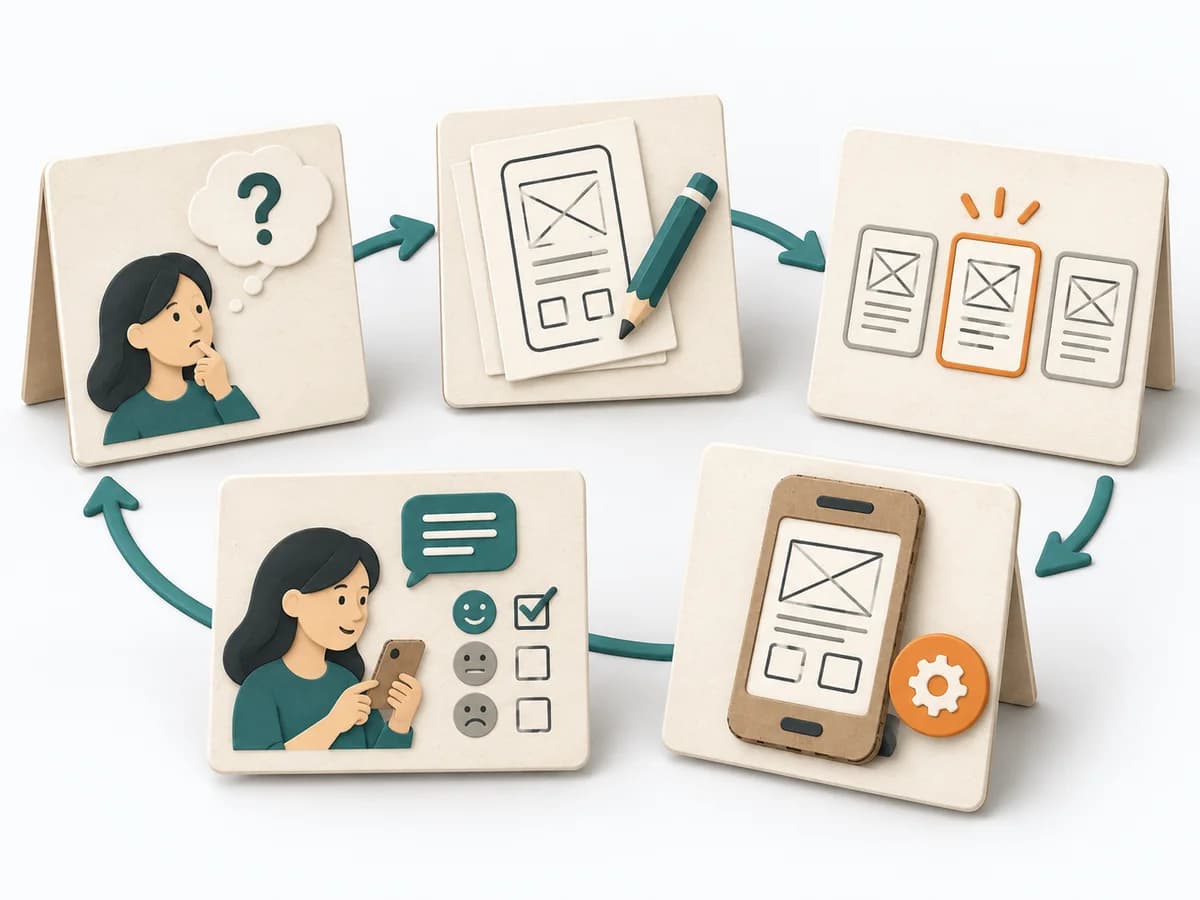 Innovation Design Sprint | 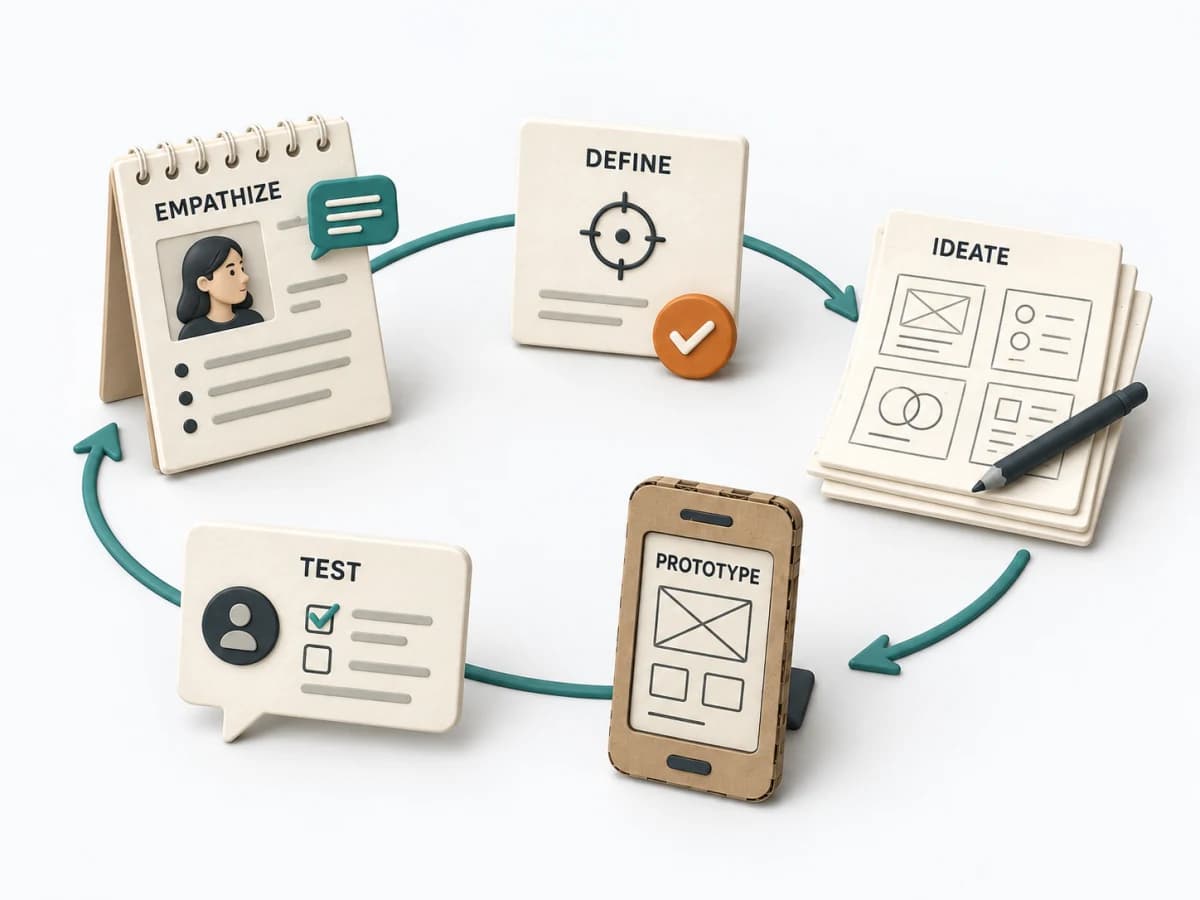 Innovation Design Thinking |
|---|---|---|---|---|
Purposedifferent | When switching motives and progress are unclear, it reconstructs the situation from real customer circumstances. It shows why a switch happens and what kind of progress is being sought. | When teams derive needs only from assumptions and real motives are missing, user interviews give direct access to behavior and meaning. Conversations from the target group's everyday life make patterns, tensions, and open questions solidly visible. | When the product question is unclear and time pressure is high, the method takes a team from an open idea to a testable solution. It connects problem understanding, decision, and learning in one compact format, lowering the risk of spending a lot of energy on a mere guess. | For complex user problems with an uncertain cause, the method connects observation, interpretation, and experiment into a learning cycle. It keeps the focus on real needs and avoids premature solution language. This produces robust decisions for product and service. |
Complexitydifferent | Medium | Low | High | High |
Timedifferent | 1-3 Wochen | 30–60 min per interview | 4-5 Tage | 1 Tag bis mehrere Wochen |
Participantsdifferent | 5-12 Interviews | 1 participant per interview | 5-8 | 4-10 |
Formatdifferent | Workshop + async | Workshop + async | Workshop | Workshop |
Outputdifferent | Job Stories, Outcome Statements, Opportunity List | Interview Notes, Themes, Insight Summary | Prototype, Test Findings, Decision Rationale | Problem Statement, Prototype, Test Learnings |
Tagsno overlap | CustomerOutcomesNeeds | QualitativeResearchCustomerDiscovery | Design sprintPrototypeValidationInnovation | InnovationPrototypeResearch |