View methods side by side.
Choose up to four methods. Add them using the search and share the comparison by copying its link.
| Criterion | 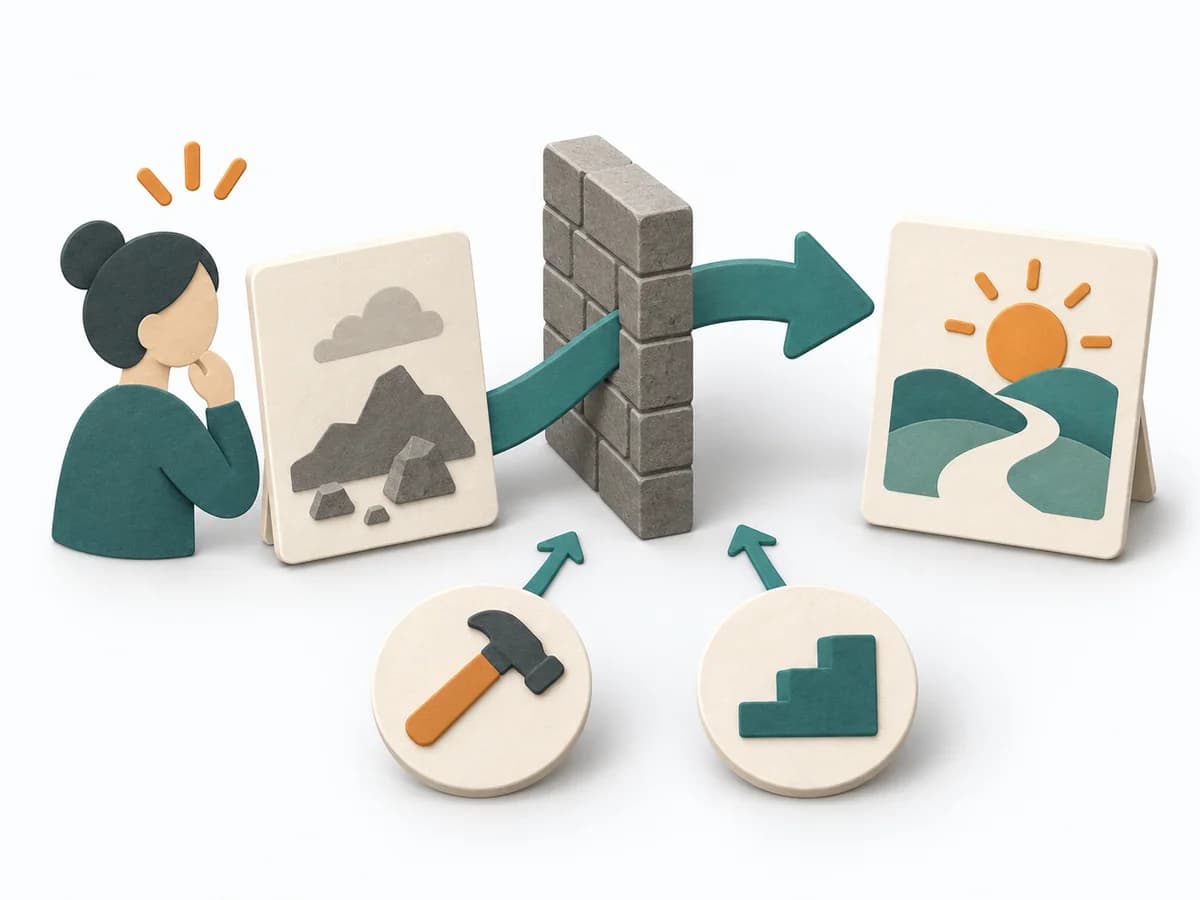 Product Discovery Jobs to Be Done | 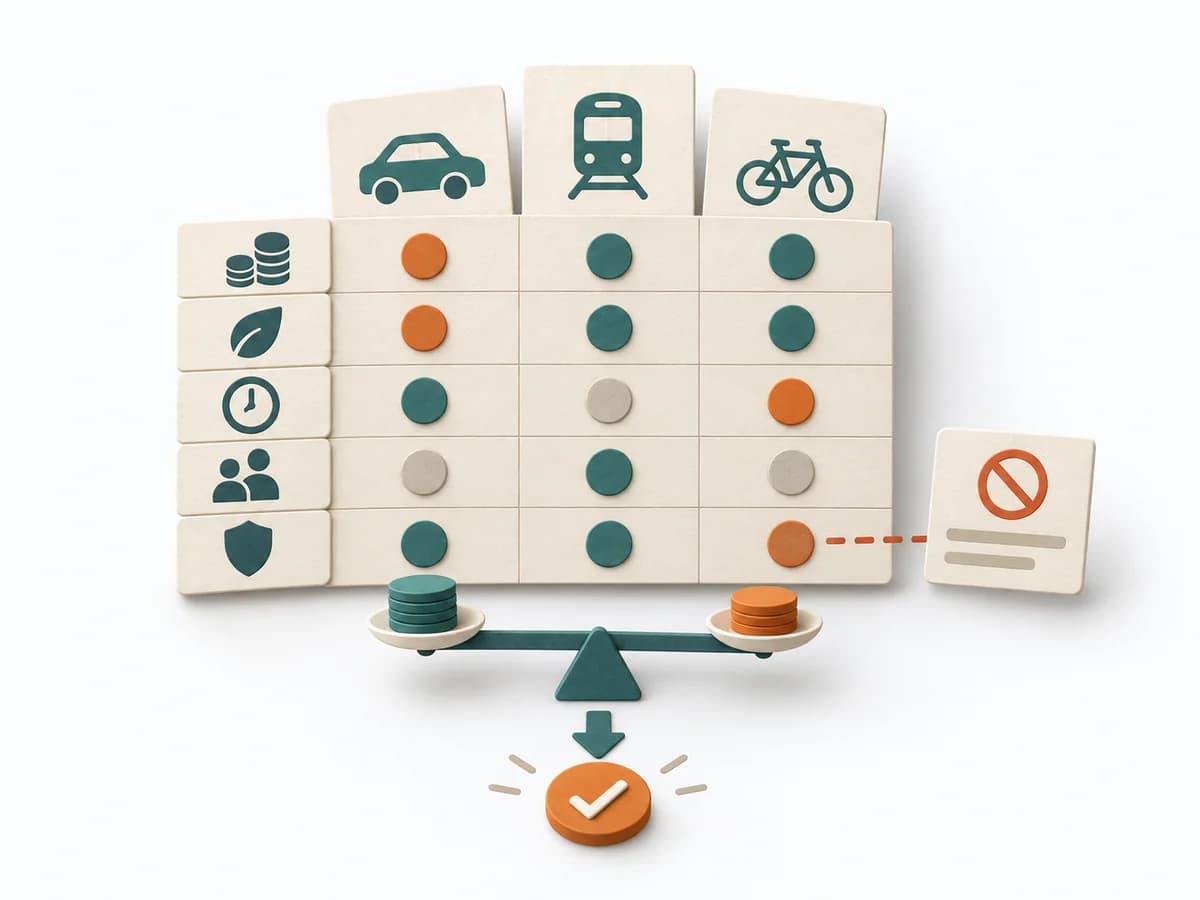 Decision Making Trade-off Analysis | 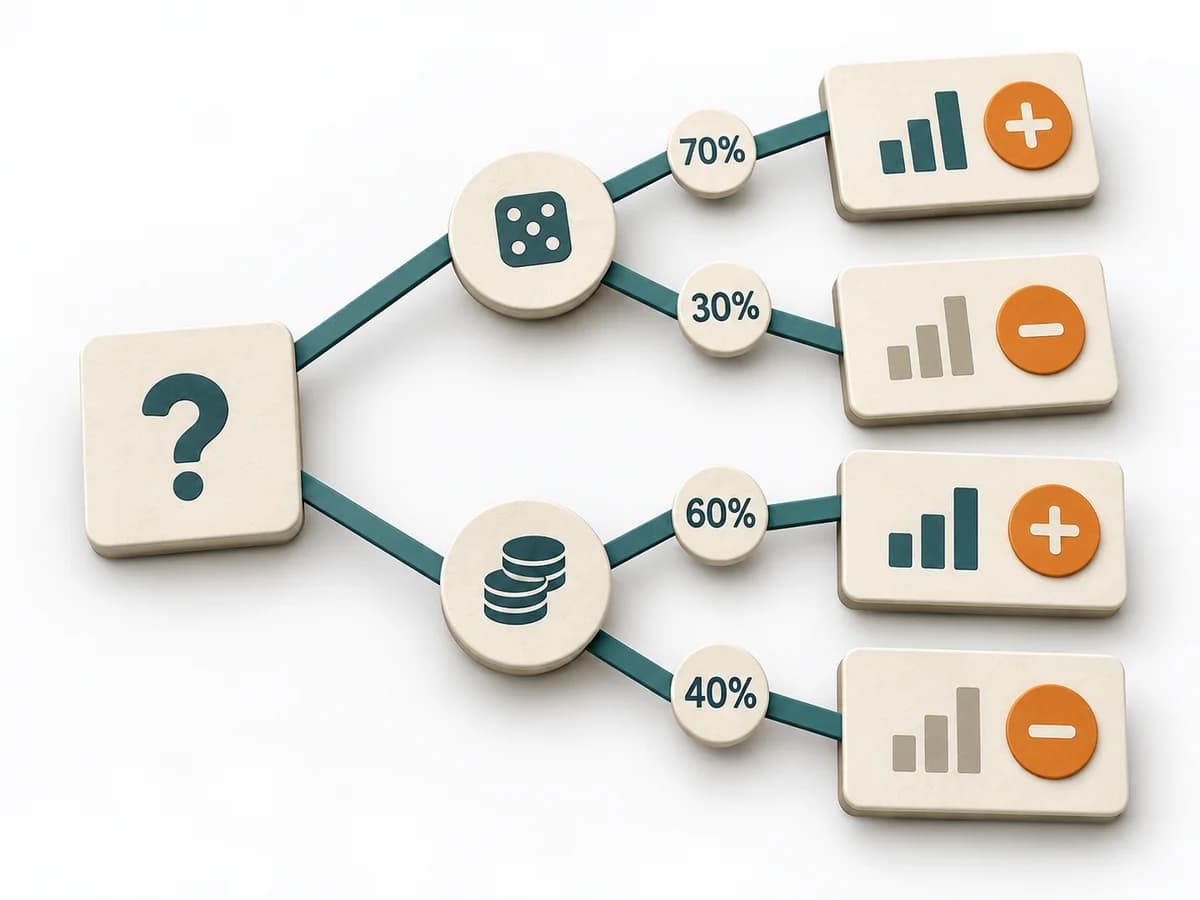 Decision Making Decision Tree | 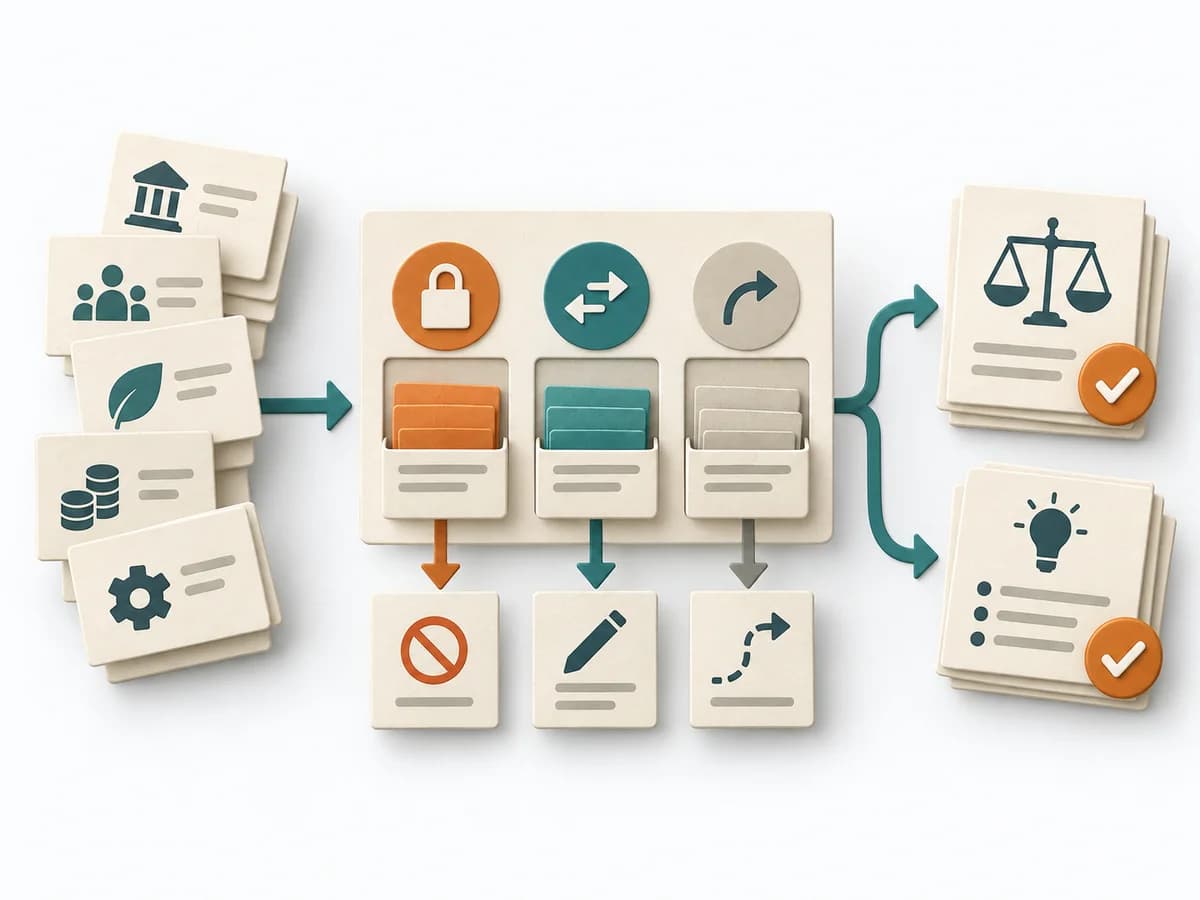 Decision Making Constraint Analysis |
|---|---|---|---|---|
Purposedifferent | When switching motives and progress are unclear, it reconstructs the situation from real customer circumstances. It shows why a switch happens and what kind of progress is being sought. | With limited resources, quality, speed, cost, and risk almost always compete with each other. Trade-off Analysis makes these tensions explicit and prevents decisions from producing hidden side effects. | For decisions with follow-on paths and dependencies, a linear comparison is often not enough. A Decision Tree shows how options branch under conditions and which consequences hang on each branch. | When an initiative stalls, the limit often lies not in the idea but in hard or soft boundary conditions. Constraint Analysis separates these limits and shows which of them can actually be shaped. |
Complexitydifferent | Medium | Medium | Medium | Low |
Timedifferent | 1-3 Wochen | 45-120 min | 30-90 min | 30-90 min |
Participantsdifferent | 5-12 Interviews | 2-8 | 1-6 | 2-8 |
Formatsame | Workshop + async | Workshop + async | Workshop + async | Workshop + async |
Outputdifferent | Job Stories, Outcome Statements, Opportunity List | Trade-off Matrix, Criteria List, Decision Rationale, Accepted Downsides | Decision Tree, Option Map, Assumption List | Constraint List, Hard/Soft Classification, Option Impact Notes, Decision Boundaries |
Tagsno overlap | CustomerOutcomesNeeds | TradeoffsDecisionCriteriaOptions | DecisionTreeOptions | ConstraintsDecisionPlanningOptions |