View methods side by side.
Choose up to four methods. Add them using the search and share the comparison by copying its link.
| Criterion | 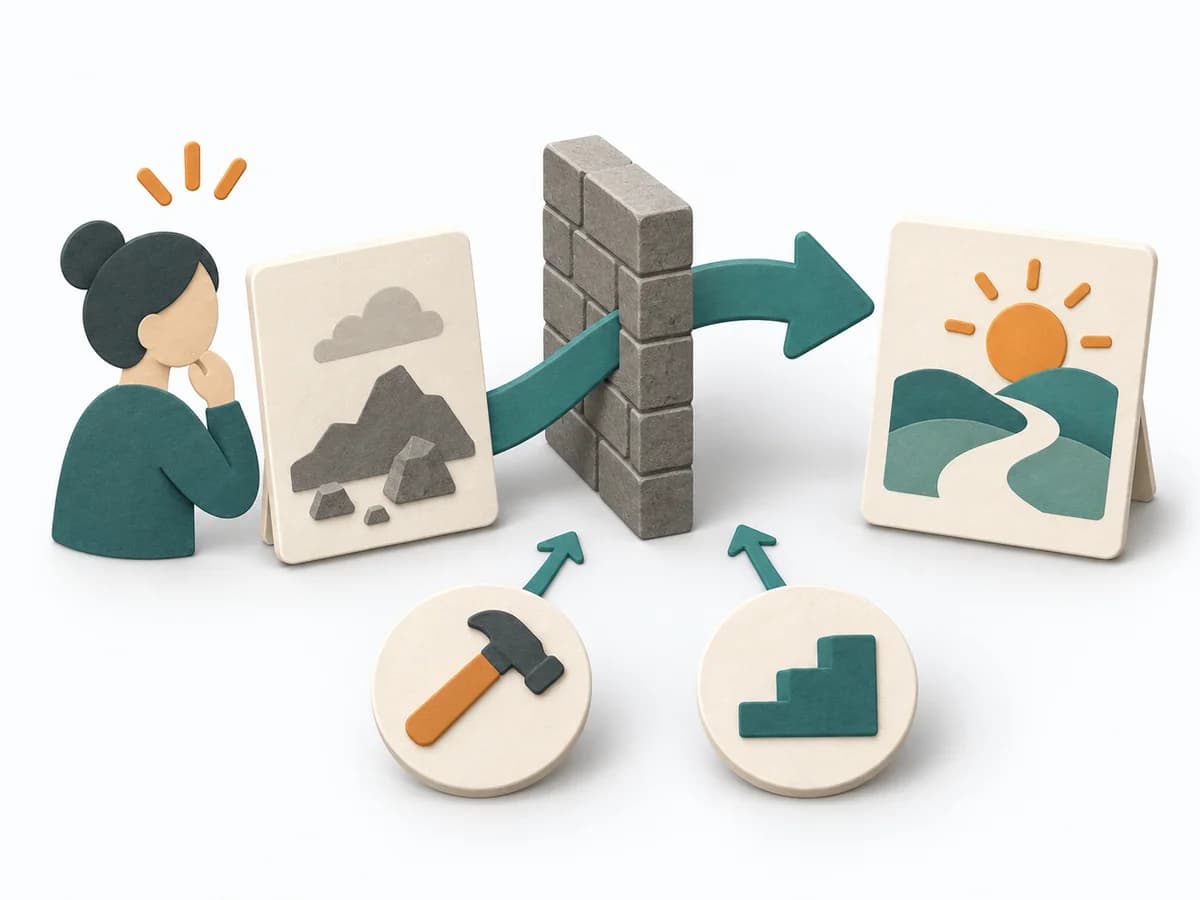 Product Discovery Jobs to Be Done | 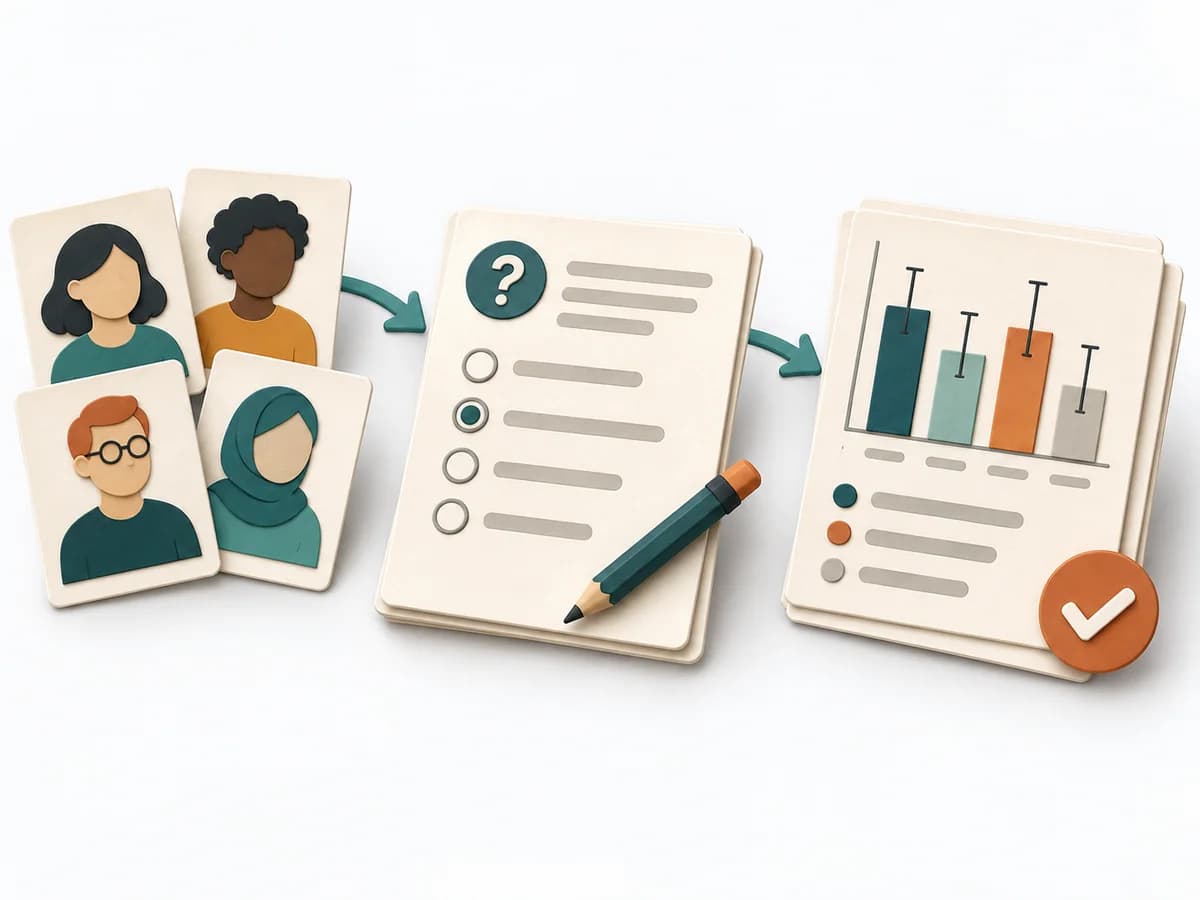 UX Research Surveys | 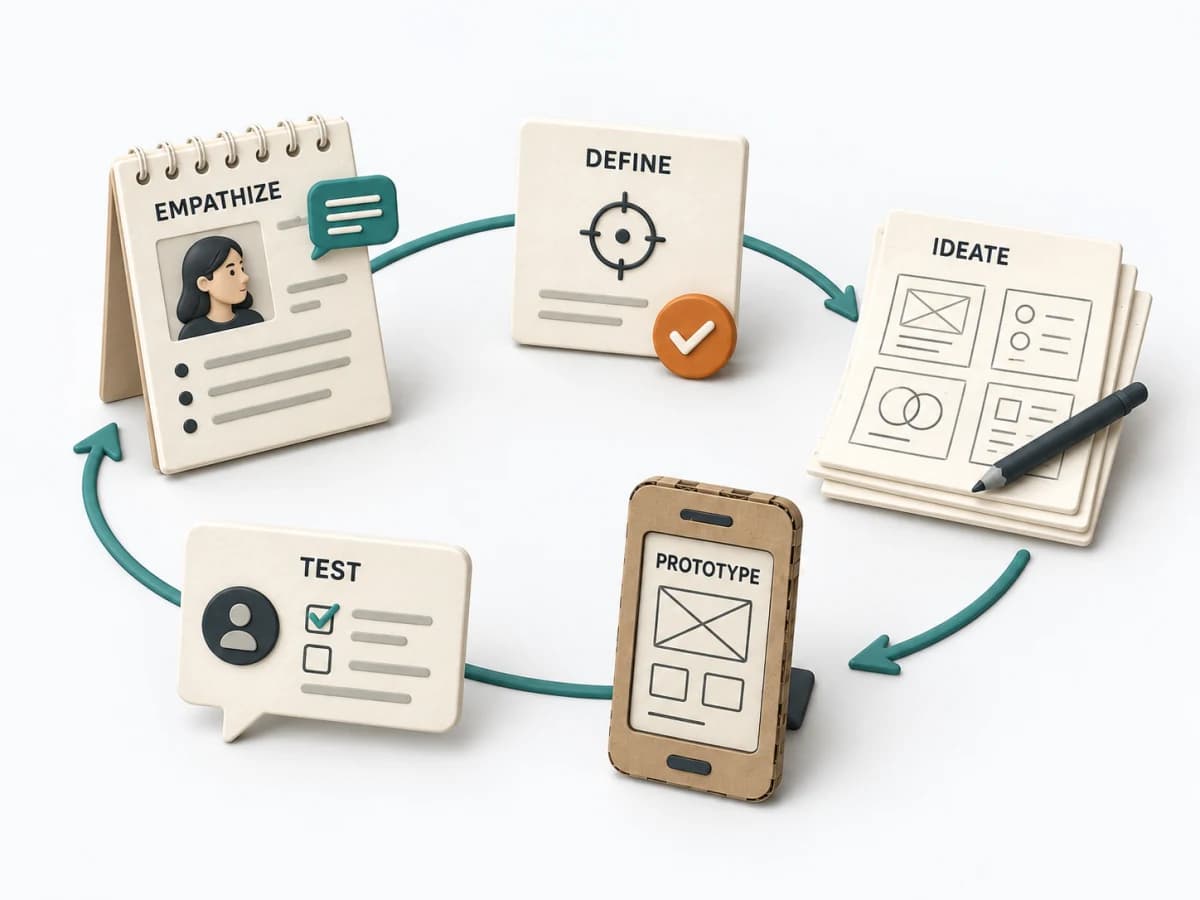 Innovation Design Thinking | 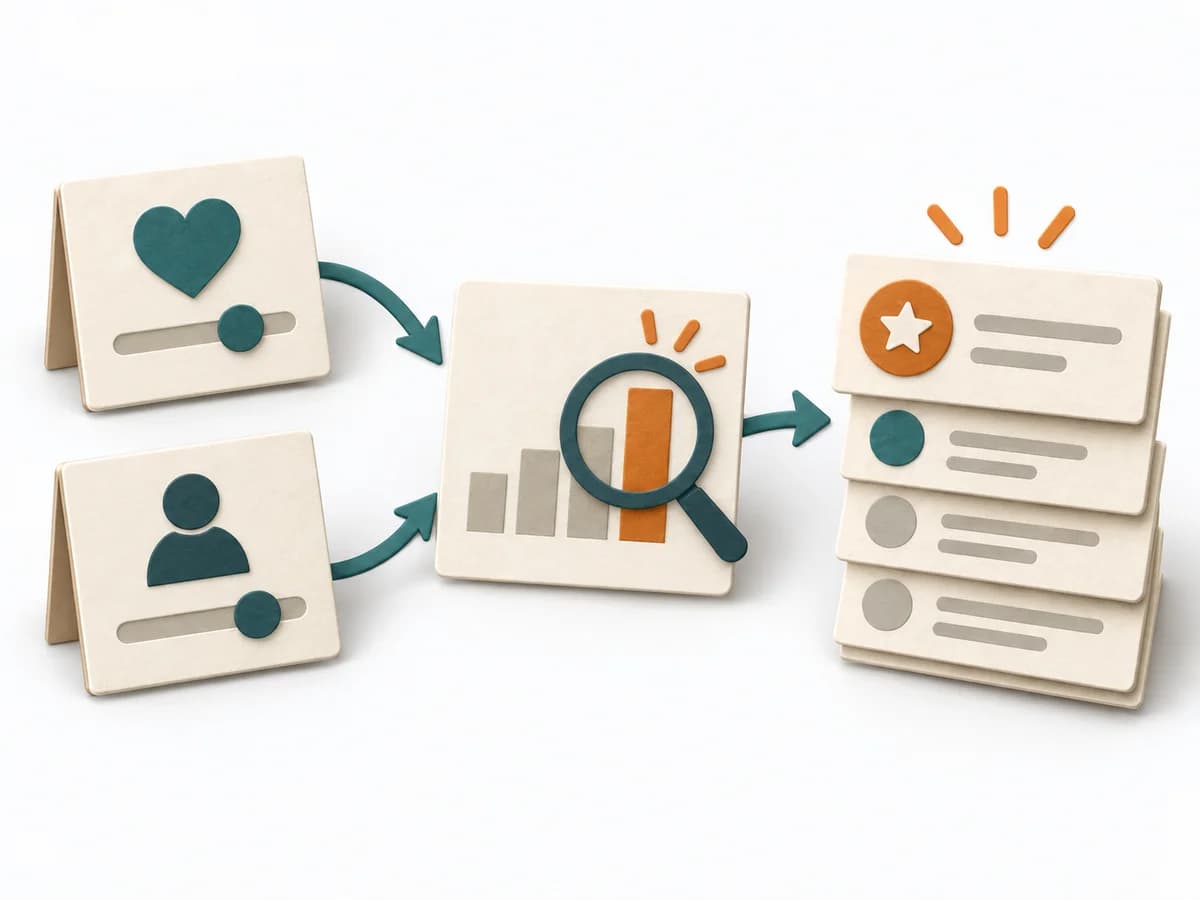 Product Discovery Opportunity Scoring |
|---|---|---|---|---|
Purposedifferent | When switching motives and progress are unclear, it reconstructs the situation from real customer circumstances. It shows why a switch happens and what kind of progress is being sought. | When a topic needs to be validated broadly and many people can answer the same question, surveys gather structured feedback in a scalable form. Answers become comparable and segmentable instead of remaining merely anecdotal. | For complex user problems with an uncertain cause, the method connects observation, interpretation, and experiment into a learning cycle. It keeps the focus on real needs and avoids premature solution language. This produces robust decisions for product and service. | When opportunities need ranking by their effect, it makes importance and satisfaction directly comparable. It separates problem, assumption, solution, and evidence. The result is captured as an opportunity-score table and top outcomes. |
Complexitydifferent | Medium | Medium | High | Medium |
Timedifferent | 1-3 Wochen | 3-14 Tage | 1 Tag bis mehrere Wochen | 60-120 min |
Participantsdifferent | 5-12 Interviews | 50+ | 4-10 | 3-6 |
Formatdifferent | Workshop + async | Async | Workshop | Workshop + async |
Outputdifferent | Job Stories, Outcome Statements, Opportunity List | Survey Results, Charts, Segment Insights | Problem Statement, Prototype, Test Learnings | Opportunity Score Table, Top Outcomes |
Tagsno overlap | CustomerOutcomesNeeds | QuantitativeResearchValidation | InnovationPrototypeResearch | PrioritizationDiscoveryOutcomesNeeds |