View methods side by side.
Choose up to four methods. Add them using the search and share the comparison by copying its link.
| Criterion |  Product Discovery Jobs to Be Done | 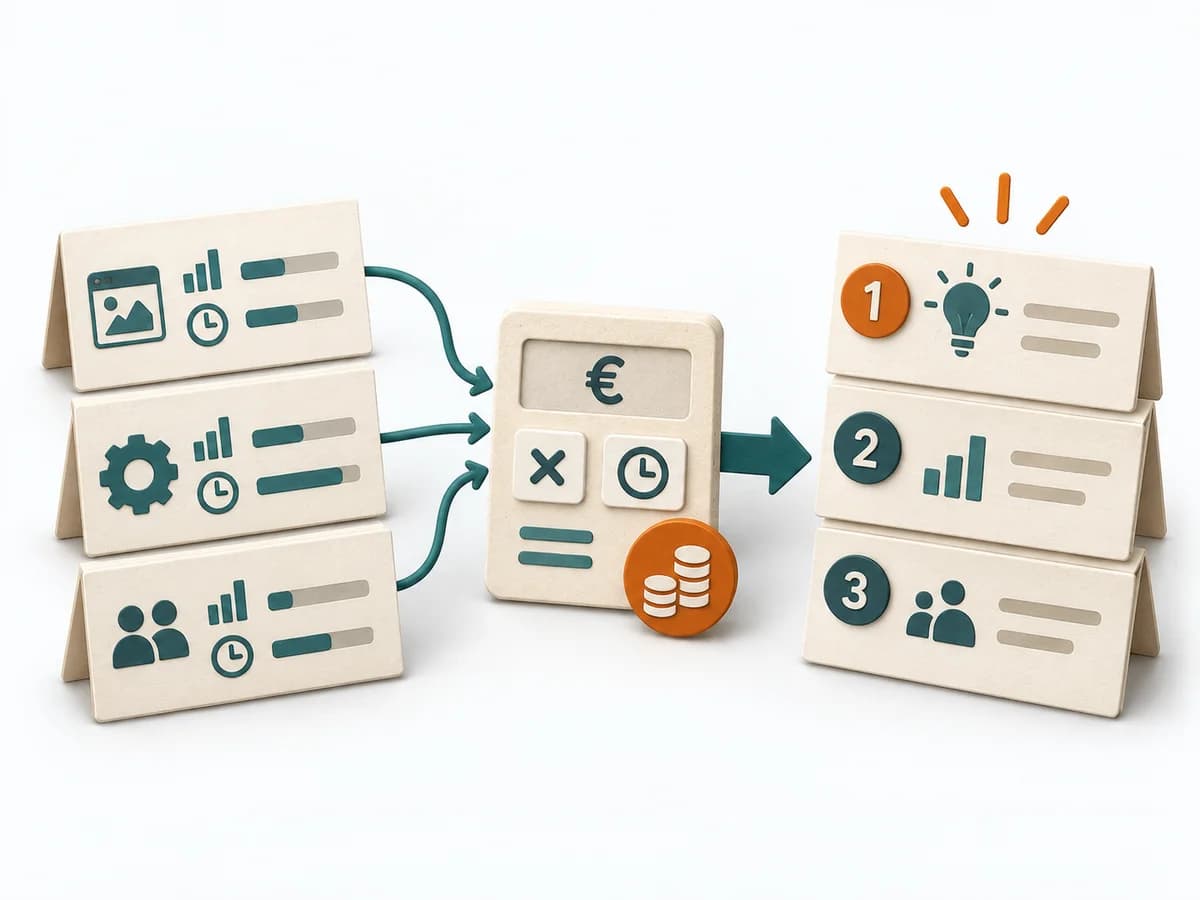 Delivery Cost of Delay | 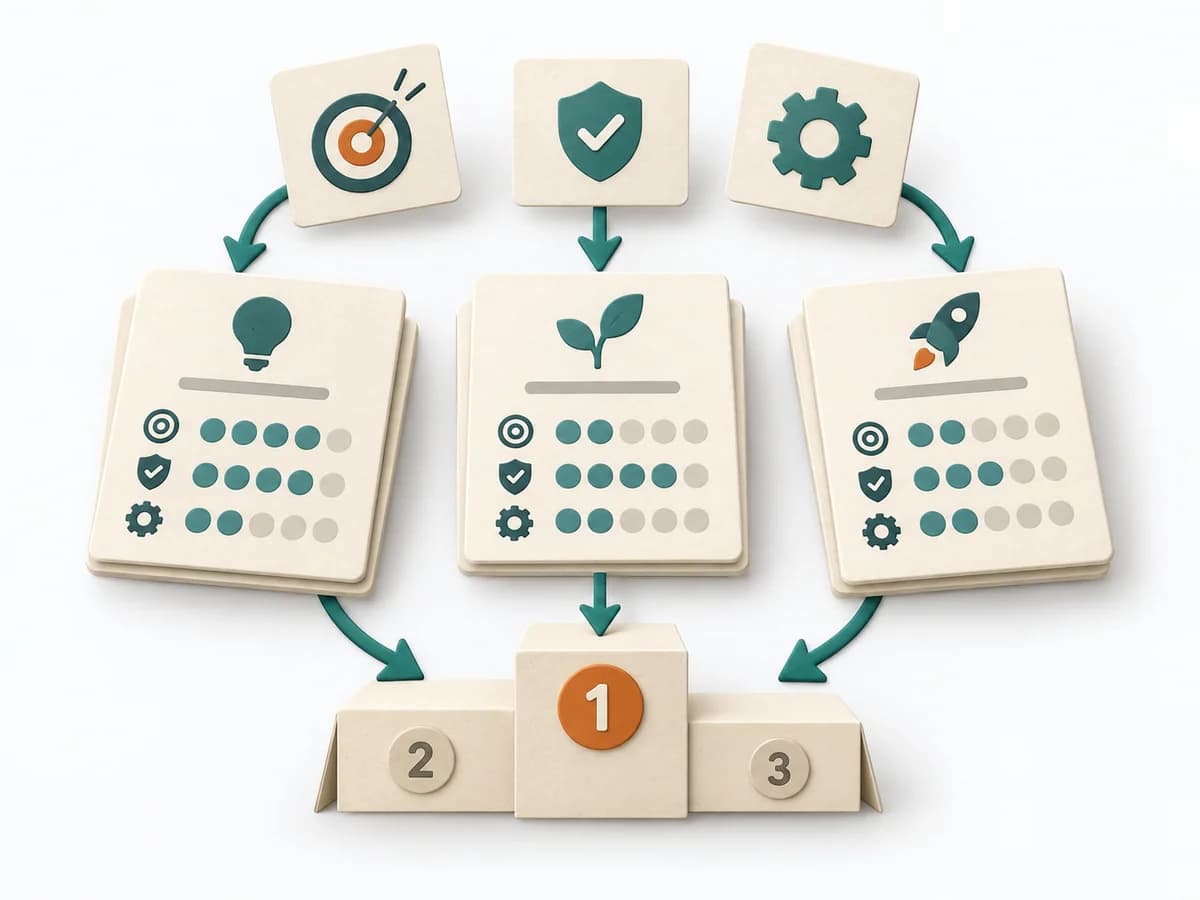 Product Strategy ICE Scoring |  Product Discovery Opportunity Scoring |
|---|---|---|---|---|
Purposedifferent | When switching motives and progress are unclear, it reconstructs the situation from real customer circumstances. It shows why a switch happens and what kind of progress is being sought. | Helps clarify scope, order, and delivery flow in concrete terms. It makes work, constraints, and sequence manageable. The result is captured as a Cost of Delay table and prioritization sequence. | When ideas need sorting quickly, it condenses impact, confidence, and effort into one compact score. It connects customer value, product logic, and decision priorities. The result is captured as an ICE table and top-ideas list. | When opportunities need ranking by their effect, it makes importance and satisfaction directly comparable. It separates problem, assumption, solution, and evidence. The result is captured as an opportunity-score table and top outcomes. |
Complexitydifferent | Medium | High | Low | Medium |
Timedifferent | 1-3 Wochen | 90-180 min | 30-60 min | 60-120 min |
Participantsdifferent | 5-12 Interviews | 3-8 | 2-8 | 3-6 |
Formatdifferent | Workshop + async | Workshop | Workshop + async | Workshop + async |
Outputdifferent | Job Stories, Outcome Statements, Opportunity List | CoD Table, Prioritization Sequence | ICE Table, Top Idea List | Opportunity Score Table, Top Outcomes |
Tagsno overlap | CustomerOutcomesNeeds | PrioritizationDeliveryEconomicsDecision | PrioritizationScoringGrowthDecision | PrioritizationDiscoveryOutcomesNeeds |