View methods side by side.
Choose up to four methods. Add them using the search and share the comparison by copying its link.
| Criterion |  UX Research Customer Journey Mapping | 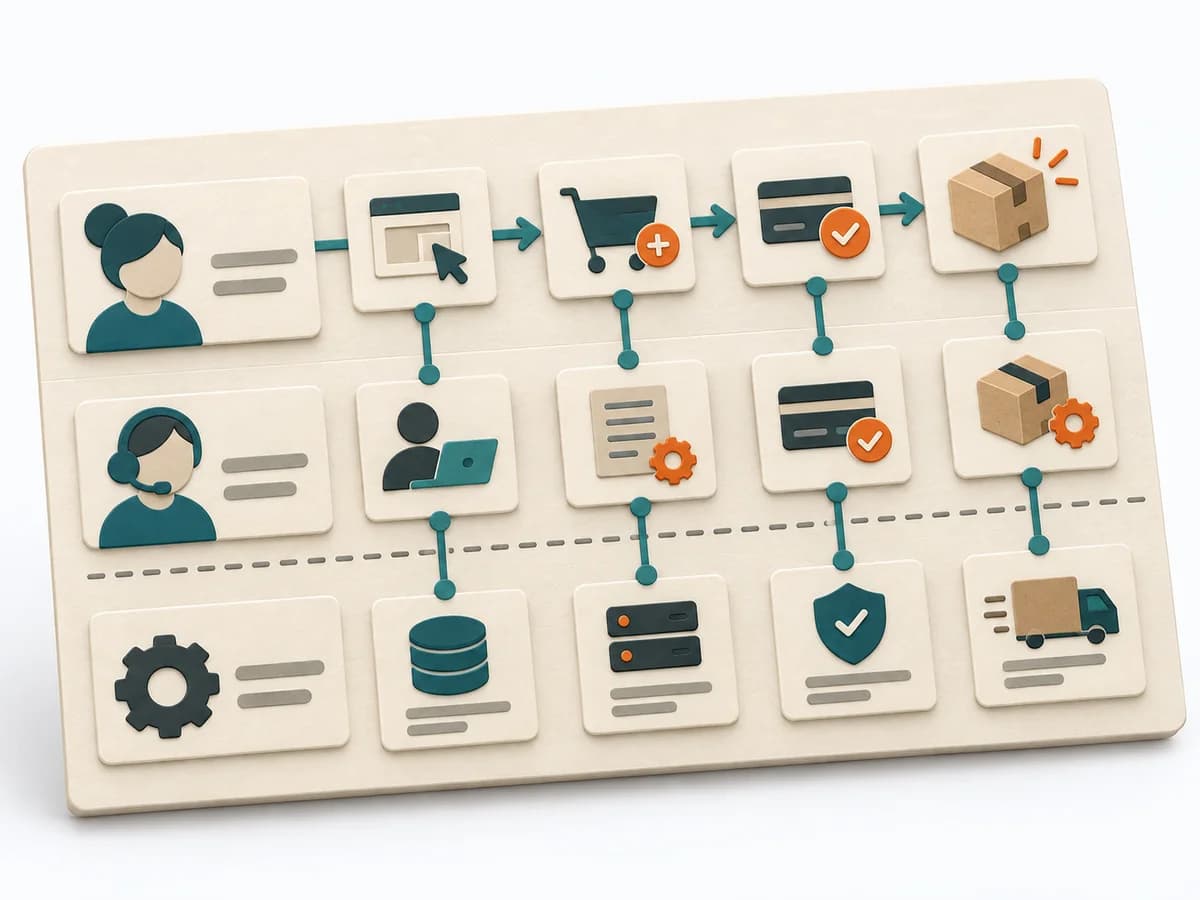 UX Design Service Blueprinting | 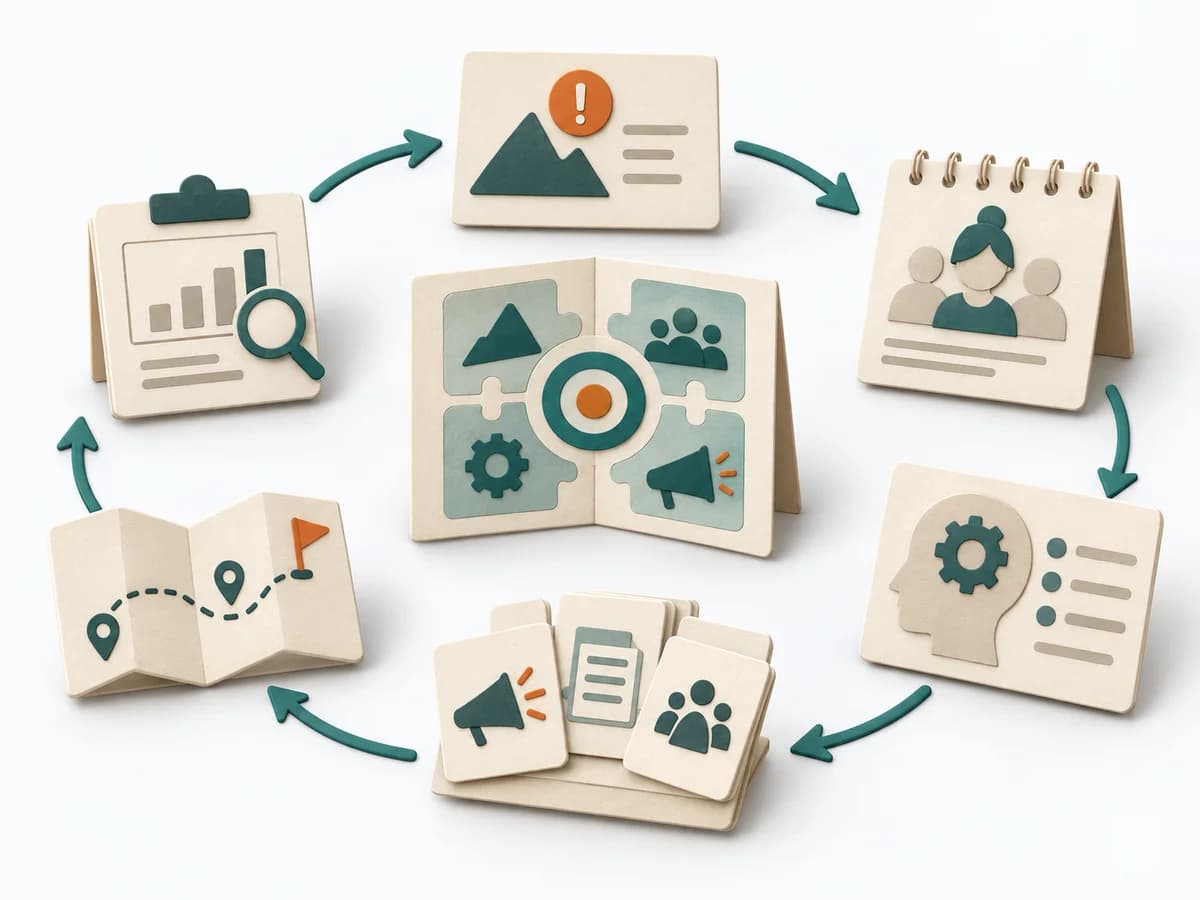 Systems Thinking Intervention Mapping |  Systems Thinking Leverage Points |
|---|---|---|---|---|
Purposedifferent | When a user journey falls apart across many touchpoints, customer journey mapping makes the experience visible as a coherent arc. Phases, emotions, and breaks become legible enough to prioritize critical moments deliberately. | When a service experience is spread across several touchpoints, it brings frontstage and backstage together. It shows where user contact and internal responsibility must fit. | Intervention Mapping translates a need for change into a planned, evaluable program. The method connects target group, determinants, actions, and measurement into a traceable chain. | Leverage Points show exactly where interventions in a system produce a disproportionate effect. It draws relationships, patterns, and feedback loops. The result is captured as a leverage map and action strategy. |
Complexitydifferent | Medium | High | High | High |
Timedifferent | 2-4 h | 0.5-2 Tage | 1-5 Tage | Half day |
Participantsdifferent | 4-10 | 6-12 | 4-12 | 3-12 |
Formatdifferent | Workshop | Workshop | Workshop + async | Workshop |
Outputdifferent | Journey Map, Pain-point List, Opportunity Backlog | Service Blueprint, Fail Points, Ownership Map | Logic Model, Change Objectives, Intervention Components, Evaluation Plan | Leverage Map, Action Strategy |
Tagsno overlap | JourneyServiceService design | Service designOperationsJourneyBlueprint | ChangeSystems thinkingCapability | Systems thinkingChangeStrategy |