View methods side by side.
Choose up to four methods. Add them using the search and share the comparison by copying its link.
| Criterion |  UX Research Customer Journey Mapping |  DevOps Incident Command | 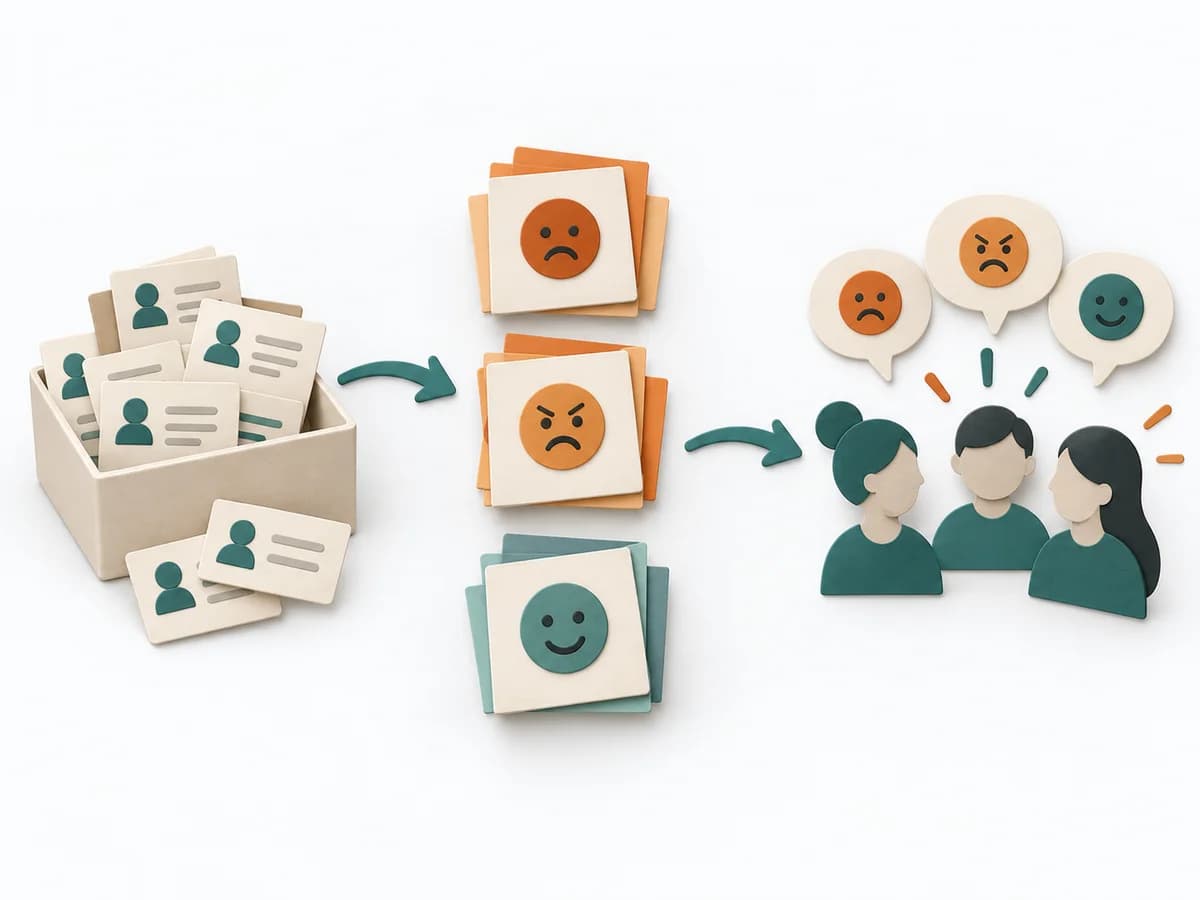 Agile Mad Sad Glad | 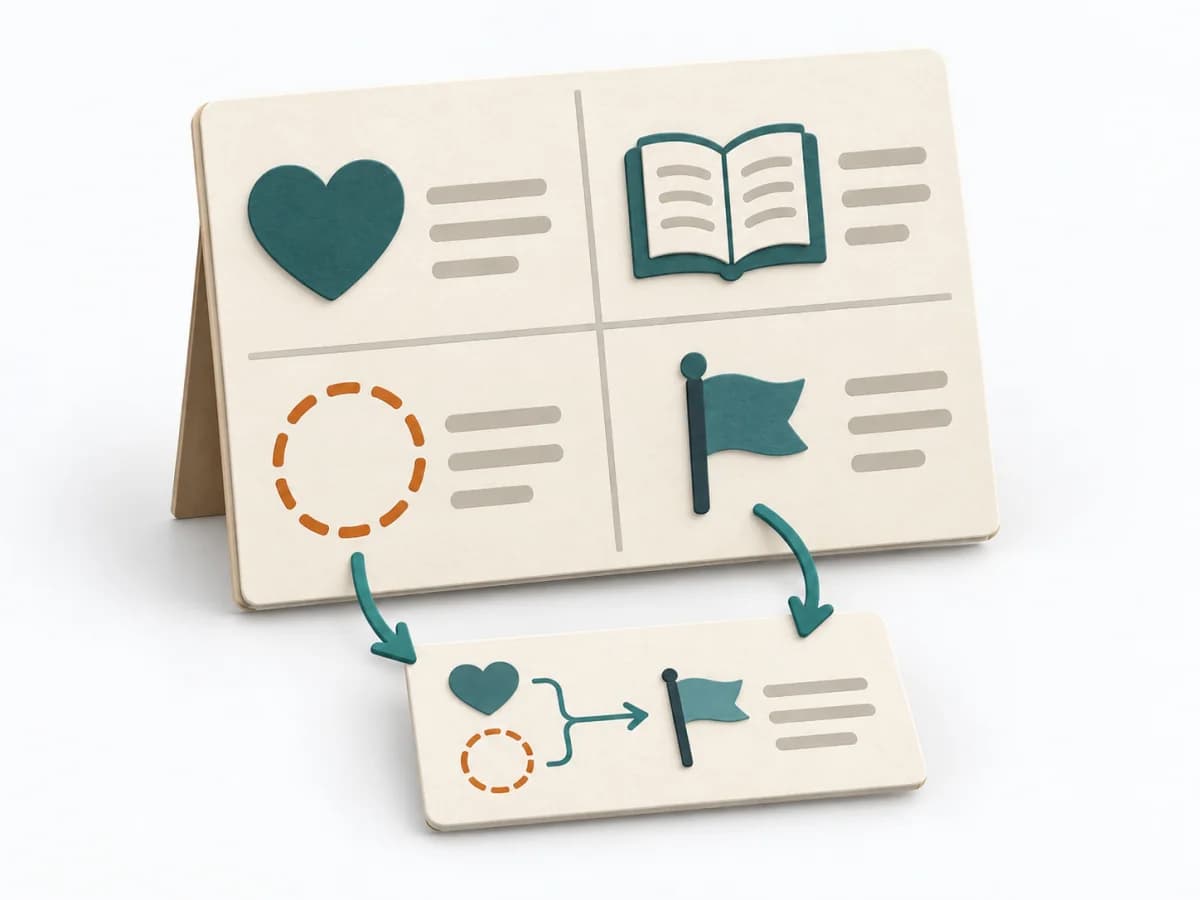 Agile 4Ls Retrospective |
|---|---|---|---|---|
Purposedifferent | When a user journey falls apart across many touchpoints, customer journey mapping makes the experience visible as a coherent arc. Phases, emotions, and breaks become legible enough to prioritize critical moments deliberately. | During an acute incident with several people involved, the method creates a clear leadership and communication structure. It reduces chaos when fast coordination and clean situational awareness are both needed at once. | When a team's or workshop's mood needs to become readable, it structures emotional signals with little setup. It makes strain, relief, and sources of energy tangible. | When a sprint should not only be assessed but also learned from, it captures experience in clear learning categories. It records what worked, what's missing, and what should run differently next time. |
Complexitydifferent | Medium | Medium | Low | Low |
Timedifferent | 2-4 h | As needed | 30-60 min | 45–75 min |
Participantsdifferent | 4-10 | 4-15 | 3-10 | Team members involved |
Formatdifferent | Workshop | Workshop + async | Workshop | Workshop |
Outputdifferent | Journey Map, Pain-point List, Opportunity Backlog | Incident Log, Action Tracker, Stakeholder Updates | Emotion Board, Themes, Action Items | 4Ls Board, Learning Themes, Improvement Actions |
Tagsno overlap | JourneyServiceService design | IncidentOperationsReliability | RetrospectiveTeamReflection | RetrospectiveLearningReflectionTeam |