View methods side by side.
Choose up to four methods. Add them using the search and share the comparison by copying its link.
| Criterion |  UX Research Customer Journey Mapping |  Knowledge Modeling IBIS | 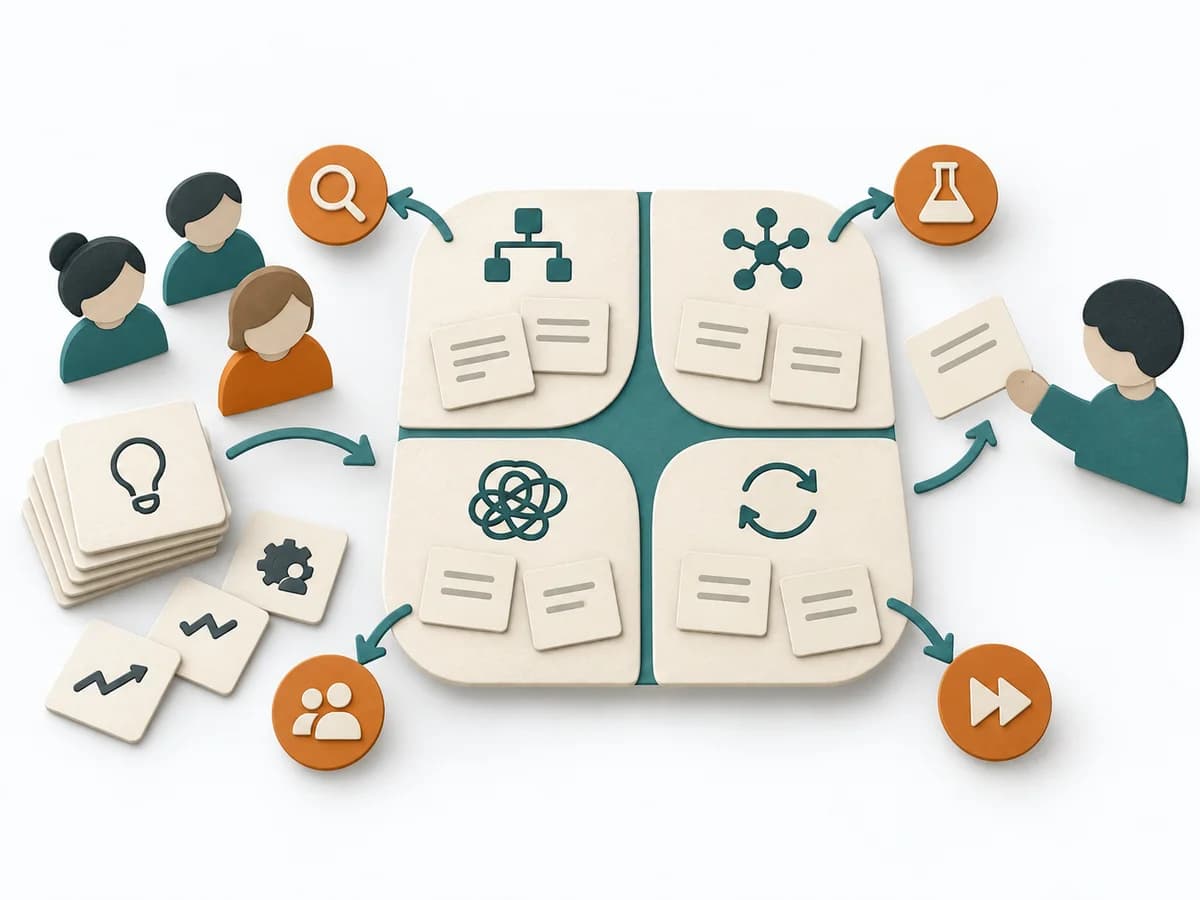 Decision Making Cynefin Workshop | 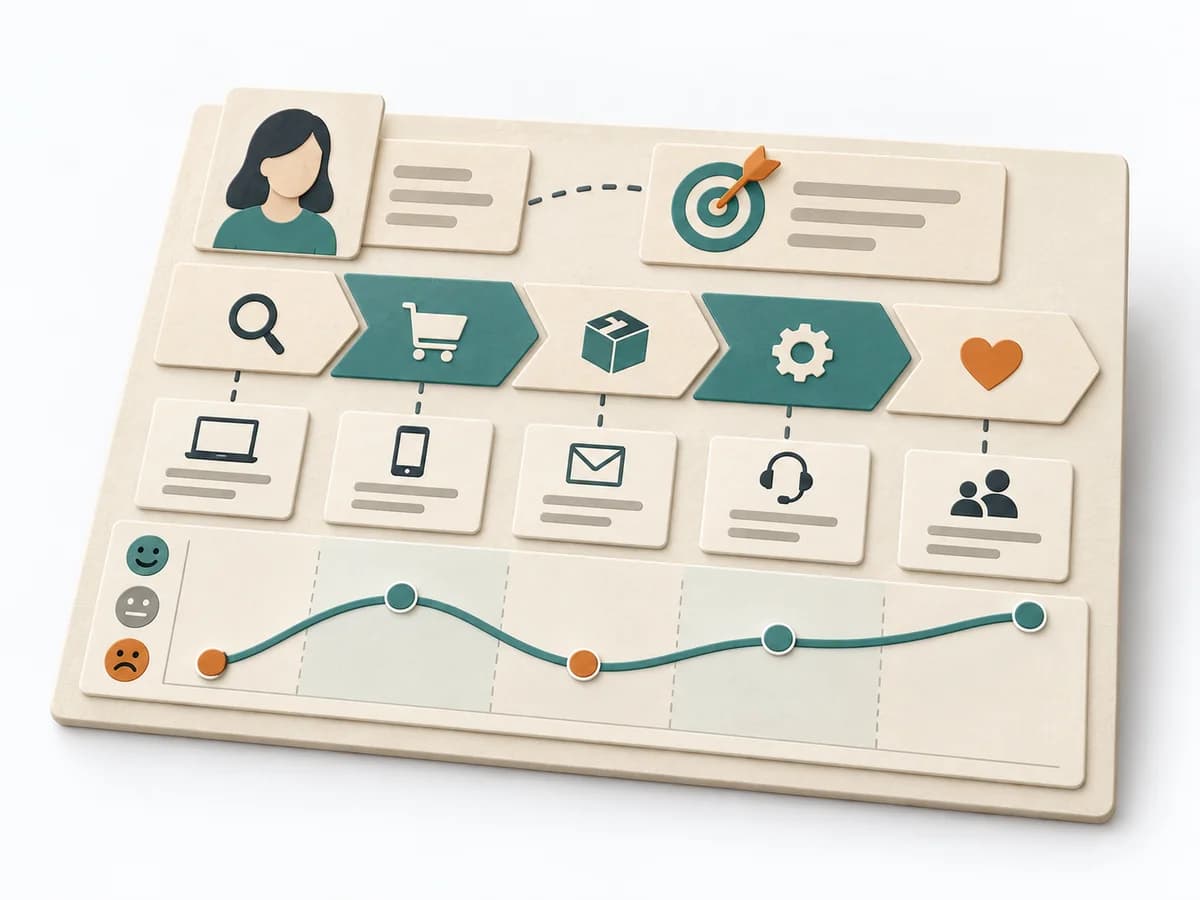 UX Design Customer Journey Canvas |
|---|---|---|---|---|
Purposedifferent | When a user journey falls apart across many touchpoints, customer journey mapping makes the experience visible as a coherent arc. Phases, emotions, and breaks become legible enough to prioritize critical moments deliberately. | IBIS structures thinking about complex questions as a sequence of issues, ideas, and arguments. The method keeps discussions open without forcing them into premature consensus. | When problems are unclear, chaotic, or only seemingly familiar, standard recipes fall short. A Cynefin Workshop sorts situations by the nature of their problem and connects them with matching action logic. | When a journey needs to be understood across several phases, it arranges experience, touchpoints, and opportunities into one picture. It makes gaps and friction along the user path clear. |
Complexitysame | Medium | Medium | Medium | Medium |
Timedifferent | 2-4 h | 1-3 h | 60-180 min | 1-3 h |
Participantsdifferent | 4-10 | 2-8 | 4-20 | 3-10 |
Formatdifferent | Workshop | Workshop + async | Workshop | Workshop |
Outputdifferent | Journey Map, Pain-point List, Opportunity Backlog | Issue Map, Positions, Argument Notes | Cynefin Map, Domain-specific Actions, Sensemaking Notes | Customer Journey Canvas, Pain Points, Experience Opportunities |
Tagsno overlap | JourneyServiceService design | RationaleKnowledgeDecision | ComplexitySensemakingDecision | JourneyCustomerService designCanvas |