View methods side by side.
Choose up to four methods. Add them using the search and share the comparison by copying its link.
| Criterion |  UX Research Customer Journey Mapping | 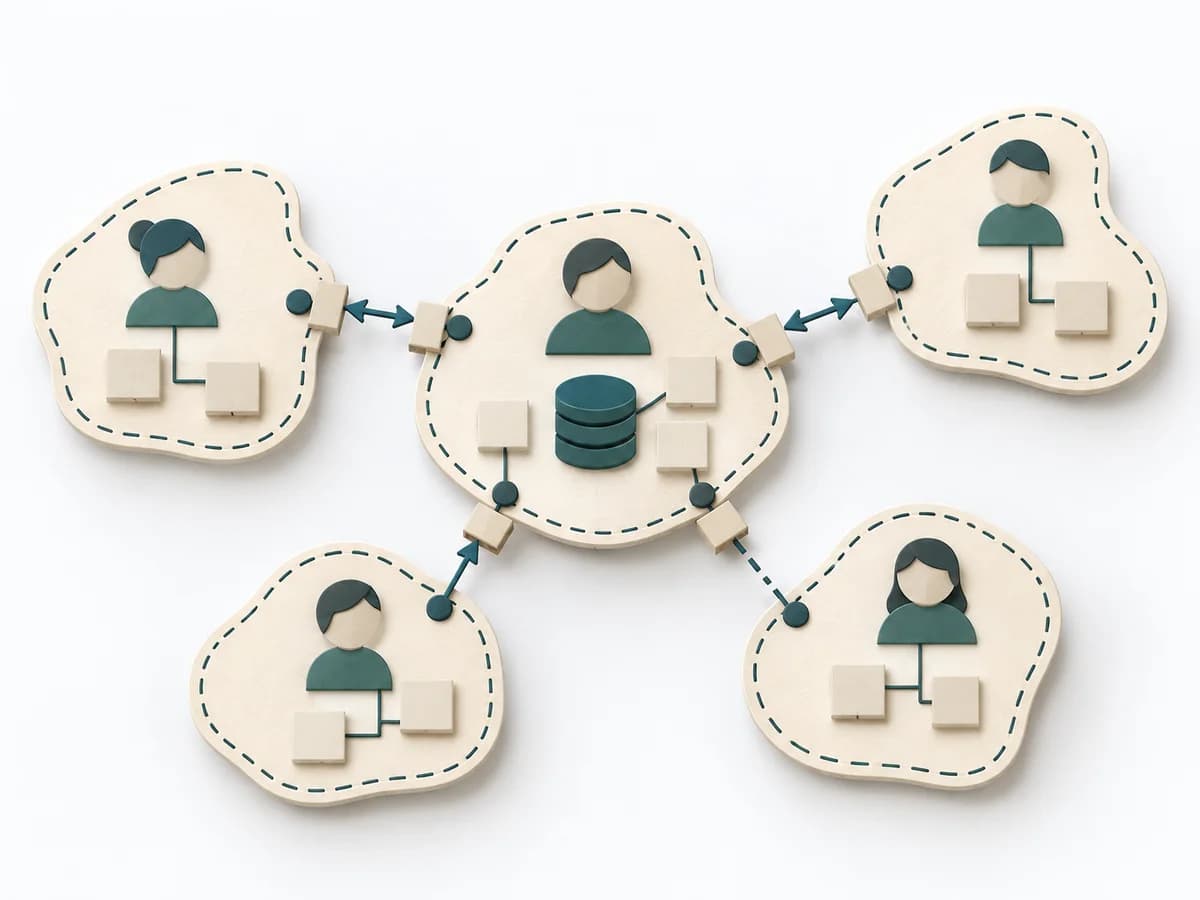 Domain Modeling Domain Context Map |  Product Strategy DIBB |  Domain Modeling Bounded Context Canvas |
|---|---|---|---|---|
Purposedifferent | When a user journey falls apart across many touchpoints, customer journey mapping makes the experience visible as a coherent arc. Phases, emotions, and breaks become legible enough to prioritize critical moments deliberately. | When a domain model and its associated contexts need to be thought through together, it creates a shared overview. It connects the business view and organizational boundary into a readable whole. | DIBB helps clarify target groups, value, goals, and priorities by making the logic behind a decision explicit. It captures results as a DIBB document, belief list, bet list, and learning report. | When a business context is still loosely outlined, it shapes language, responsibility, and integration space. It clarifies what belongs together and where a boundary needs to hold. |
Complexitydifferent | Medium | Medium | Low | Medium |
Timedifferent | 2-4 h | 1-3 h | 1-2 h | 1-3 h |
Participantsdifferent | 4-10 | 3-10 | 2-8 | 3-8 |
Formatdifferent | Workshop | Workshop | Workshop + async | Workshop + async |
Outputdifferent | Journey Map, Pain-point List, Opportunity Backlog | Domain Context Map, Boundary Notes, Ownership Map | DIBB document, Belief list, Bet list, Learning report | Context Canvas, Glossary, Integration Notes |
Tagsno overlap | JourneyServiceService design | Domain-Driven DesignContextBoundaries | StrategyDecisionAssumptionsHypothesis | Domain-Driven DesignBoundariesModeling |