View methods side by side.
Choose up to four methods. Add them using the search and share the comparison by copying its link.
| Criterion |  UX Research Customer Journey Mapping | 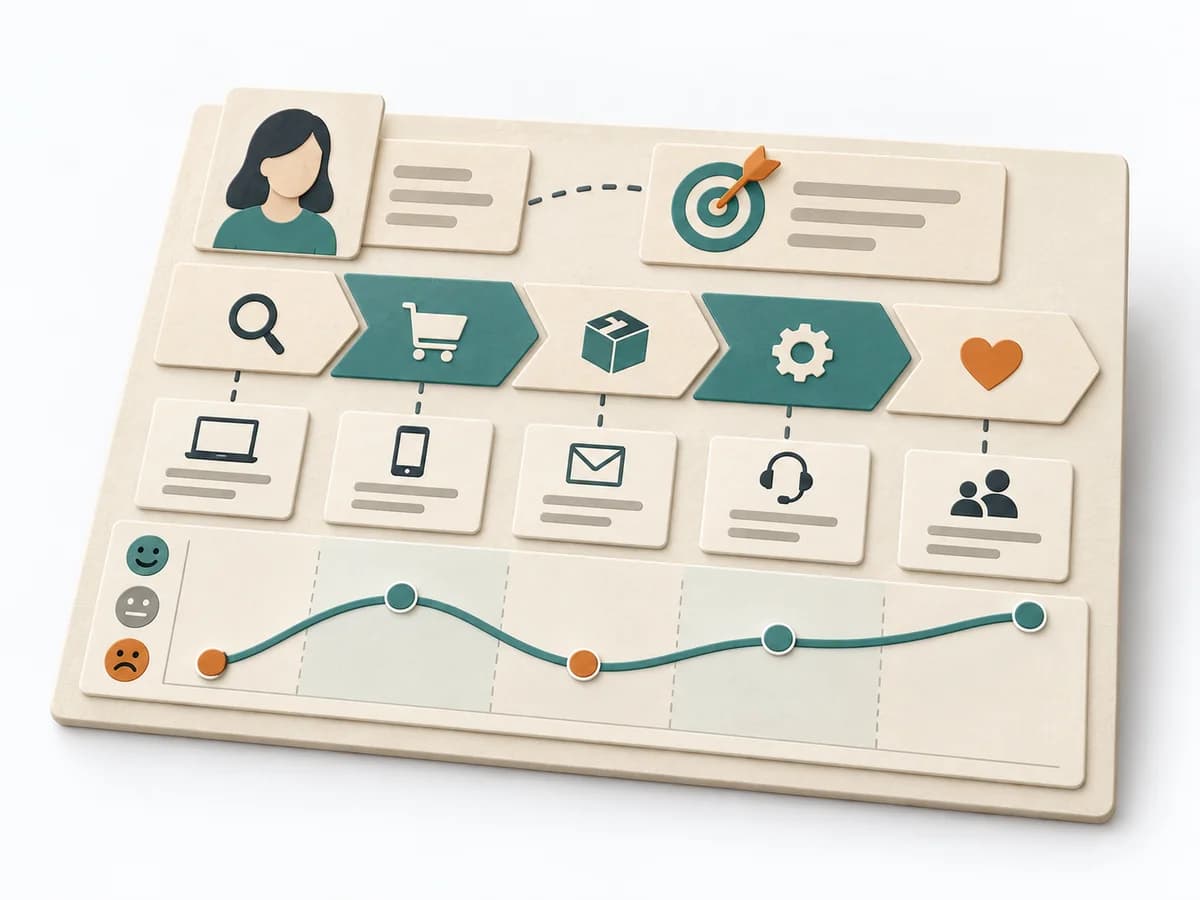 UX Design Customer Journey Canvas |  Facilitation Mind Mapping | 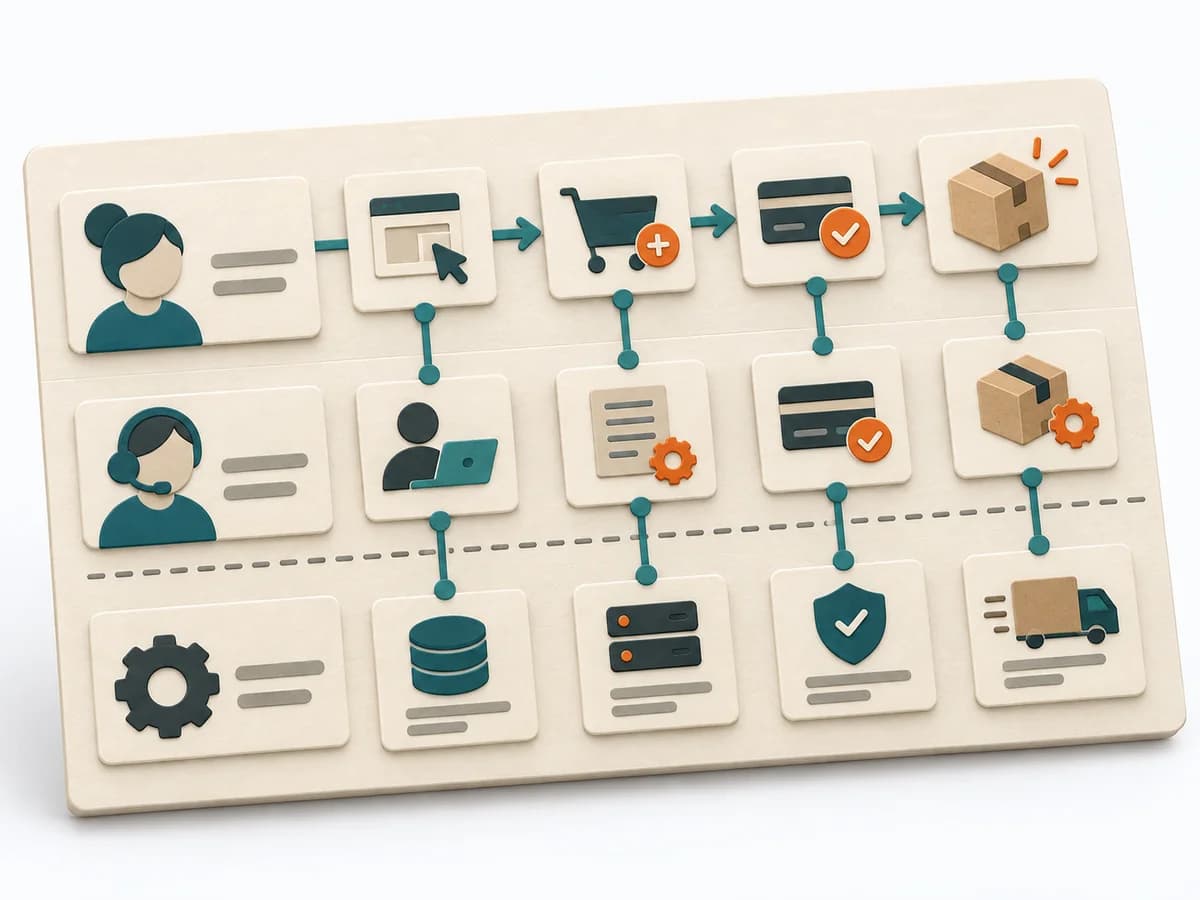 UX Design Service Blueprinting |
|---|---|---|---|---|
Purposedifferent | When a user journey falls apart across many touchpoints, customer journey mapping makes the experience visible as a coherent arc. Phases, emotions, and breaks become legible enough to prioritize critical moments deliberately. | When a journey needs to be understood across several phases, it arranges experience, touchpoints, and opportunities into one picture. It makes gaps and friction along the user path clear. | When a topic is still unclear and too many thoughts surface at once, Mind Mapping creates an open surface for ordering them. It makes connections, subtopics, and starting points visible without fixing them too early. | When a service experience is spread across several touchpoints, it brings frontstage and backstage together. It shows where user contact and internal responsibility must fit. |
Complexitydifferent | Medium | Medium | Low | High |
Timedifferent | 2-4 h | 1-3 h | 15-45 min | 0.5-2 Tage |
Participantsdifferent | 4-10 | 3-10 | 1-10 | 6-12 |
Formatdifferent | Workshop | Workshop | Workshop + async | Workshop |
Outputdifferent | Journey Map, Pain-point List, Opportunity Backlog | Customer Journey Canvas, Pain Points, Experience Opportunities | Mind Map, Topic Clusters, Open Questions | Service Blueprint, Fail Points, Ownership Map |
Tagsno overlap | JourneyServiceService design | JourneyCustomerService designCanvas | BrainstormingIdeasMappingStructureFacilitation | Service designOperationsJourneyBlueprint |