View methods side by side.
Choose up to four methods. Add them using the search and share the comparison by copying its link.
| Criterion |  UX Research Customer Journey Mapping |  DevOps Blameless Postmortem | 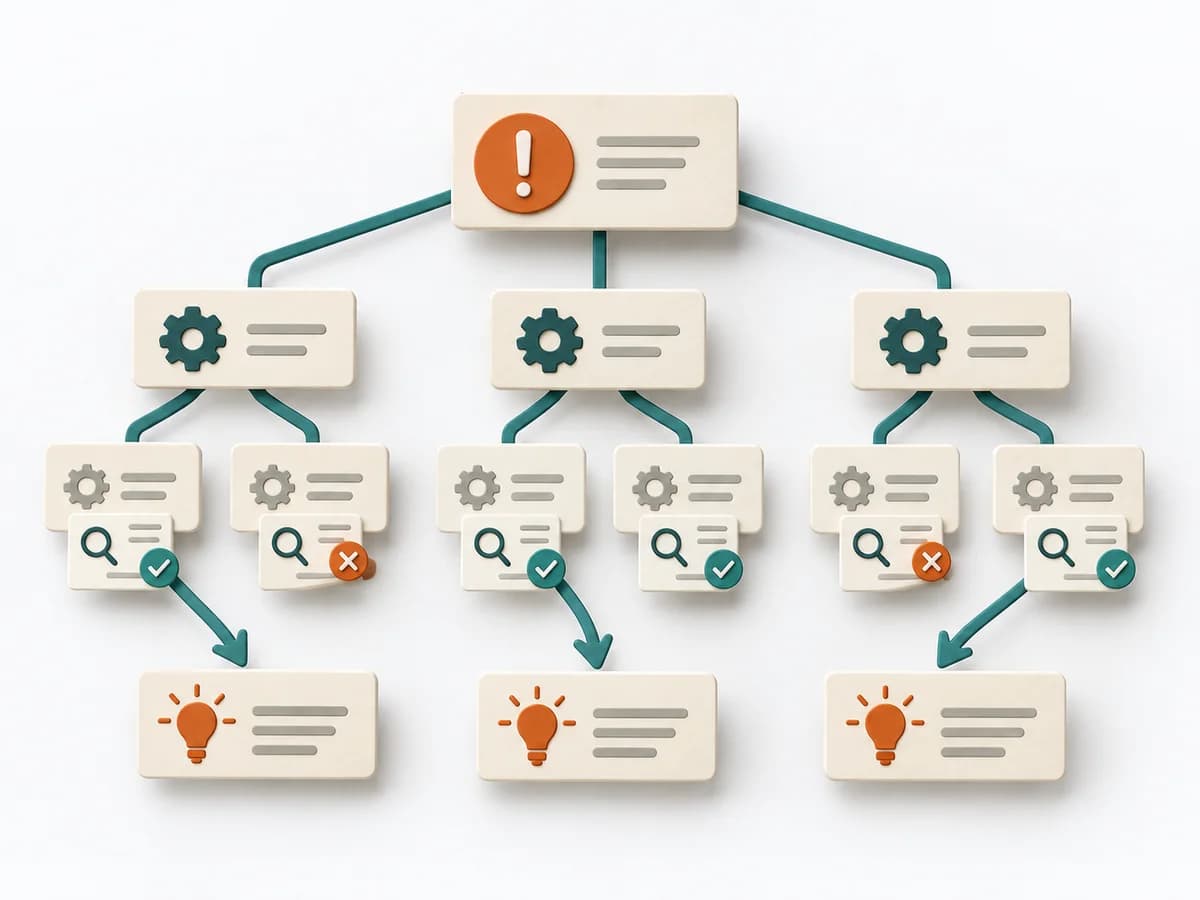 Operations Root Cause Tree Analysis |  Operations Barrier Analysis |
|---|---|---|---|---|
Purposedifferent | When a user journey falls apart across many touchpoints, customer journey mapping makes the experience visible as a coherent arc. Phases, emotions, and breaks become legible enough to prioritize critical moments deliberately. | After an incident with damage or a near miss, the method creates a sober field for learning without assigning blame. It directs attention to the course of events, conditions, and effective countermeasures. | For a problem with several suspected causes, the method builds a causal structure instead of a mere list. It makes visible how causes connect and where the strongest points of leverage lie. | For a risk that can only be managed through multiple layers of protection, the method examines the effectiveness of each barrier. It shows where safeguards are missing, too weak, or fail under real conditions. |
Complexitysame | Medium | Medium | Medium | Medium |
Timedifferent | 2-4 h | 30-90 min | 1-3 h | 2-4 h |
Participantsdifferent | 4-10 | 3-12 | 2-8 | 2-6 |
Formatdifferent | Workshop | Workshop + async | Workshop | Workshop + async |
Outputdifferent | Journey Map, Pain-point List, Opportunity Backlog | Postmortem Doc, Action Items, Timeline | Cause Tree, Evidence Notes, Countermeasures | Barrier Inventory, Failure Analysis per Barrier, Action Backlog |
Tagsno overlap | JourneyServiceService design | Site Reliability EngineeringIncidentLearningReliability | Root causeTreeIncidentQuality | Root causeSafetyIncident |