View methods side by side.
Choose up to four methods. Add them using the search and share the comparison by copying its link.
| Criterion | 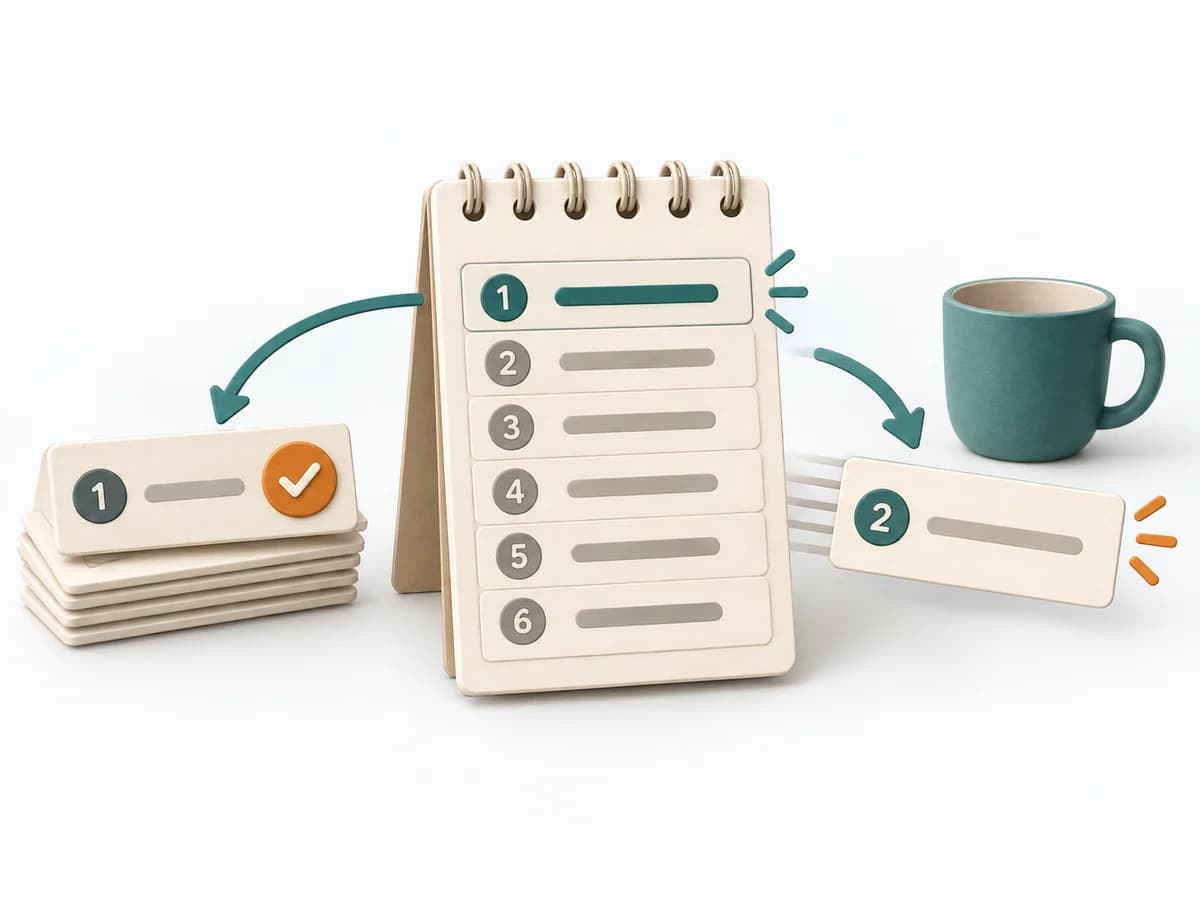 Operations Ivy Lee Method |  Growth Flywheel | 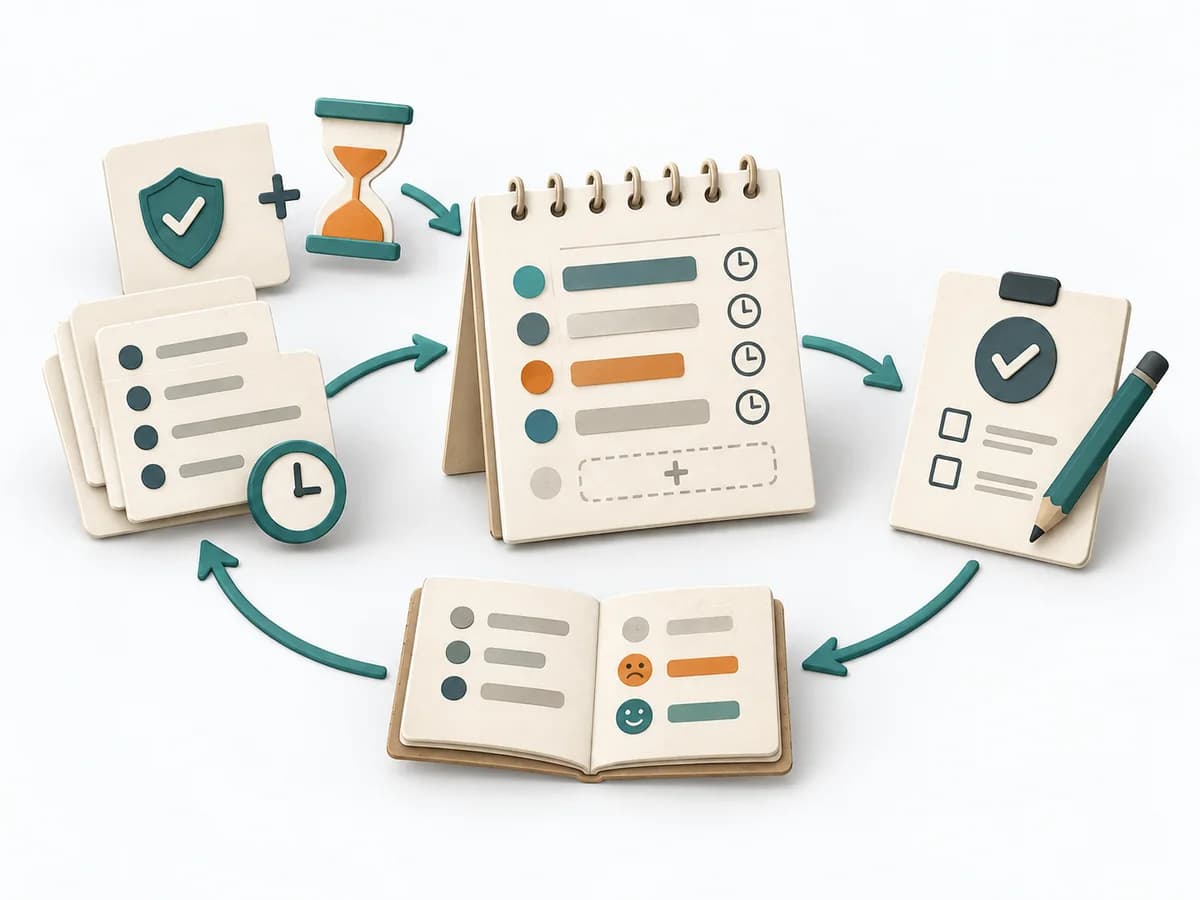 Operations ALPEN Method | 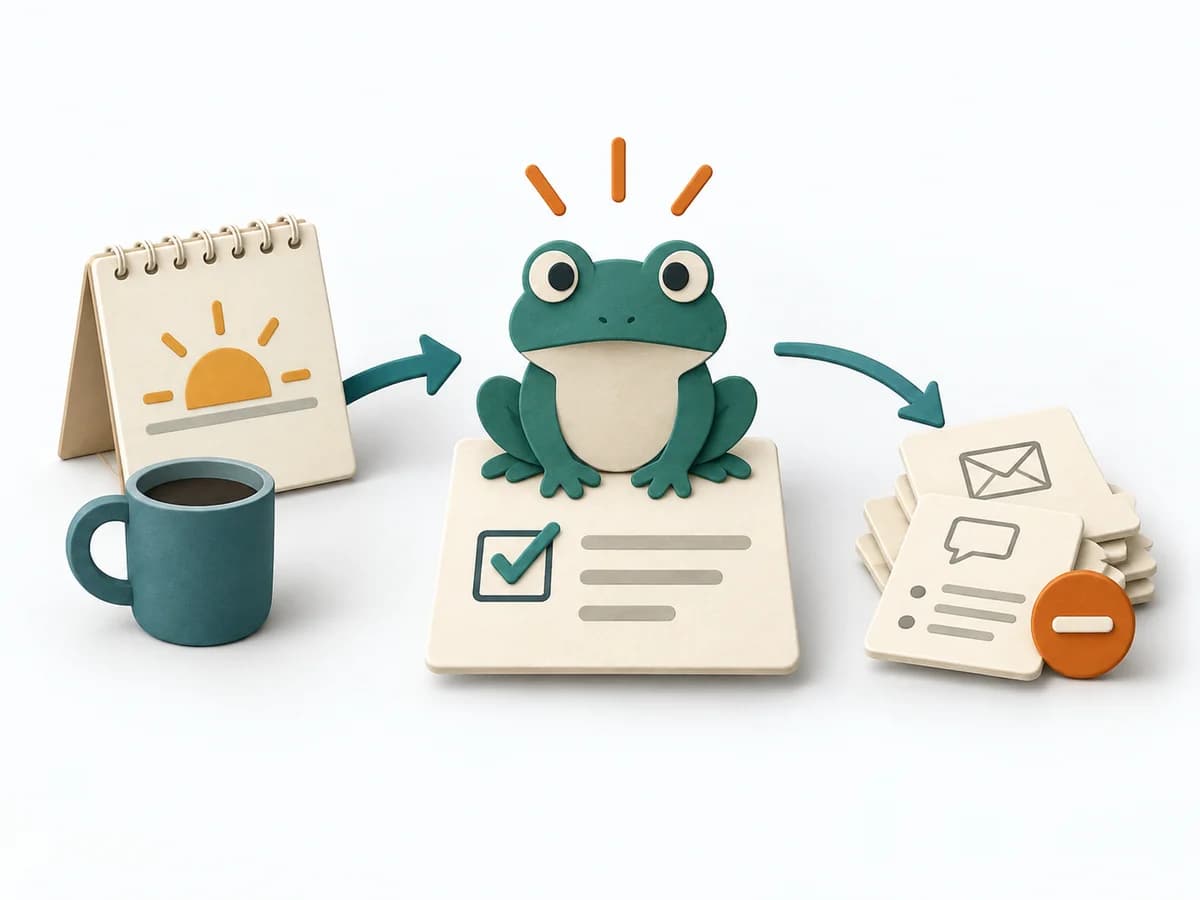 Operations Eat the Frog |
|---|---|---|---|---|
Purposedifferent | With a restless workday full of too many open items, the method creates radical simplicity. It directs attention to a short sequence instead of a broad, still-open field. | Growth often breaks down where a reinforcing mechanism builds up too much friction. A Flywheel shows the cycle of value, repetition, and reinforcement meant to sustain growth. | With an overloaded day full of too many tasks, a realistic picture of the day emerges. The method connects estimating, deciding, and buffer thinking so planning fits available energy and time. | The method protects energy and attention for the task that creates the largest progress and is often postponed. |
Complexitydifferent | Low | Medium | Low | Low |
Timedifferent | 5-10 min daily | 60-120 min | 10-20 min daily | 15-90 min daily |
Participantsdifferent | 1 | 3-8 | 1 | 1 |
Formatdifferent | Async | Workshop | Async | Async |
Outputdifferent | Daily Priority List, Completion Notes | Flywheel Map, Friction Points, Growth Levers, Experiment Backlog | Daily Plan, Time Estimates, Review Notes | Priority Task, Completion Note, Daily Focus |
Tagsno overlap | PrioritizationProductivityExecution | GrowthRetentionConversion | PlanningTime managementProductivityOperations | PrioritizationProductivityFocusExecution |