View methods side by side.
Choose up to four methods. Add them using the search and share the comparison by copying its link.
| Criterion | 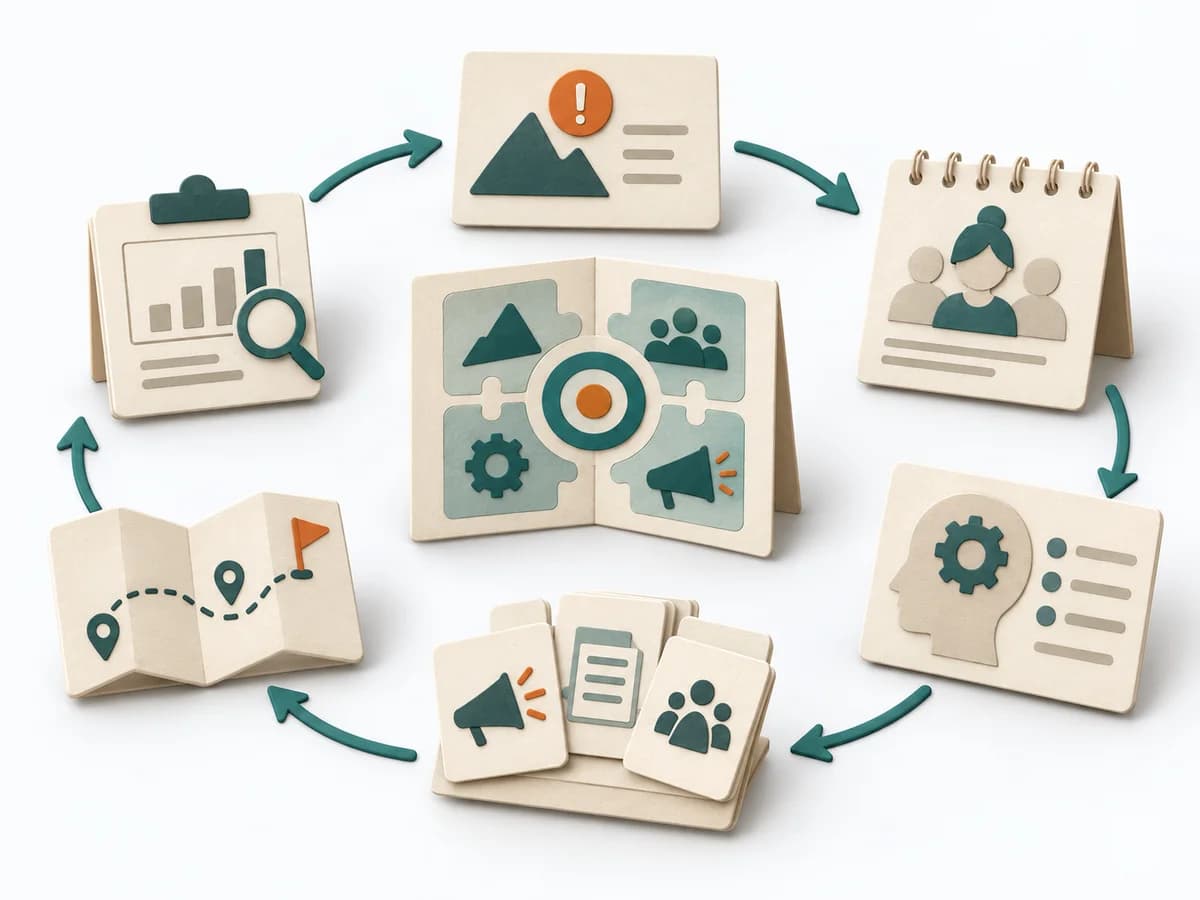 Systems Thinking Intervention Mapping |  UX Research User Interviews |  UX Research Empathy Mapping | 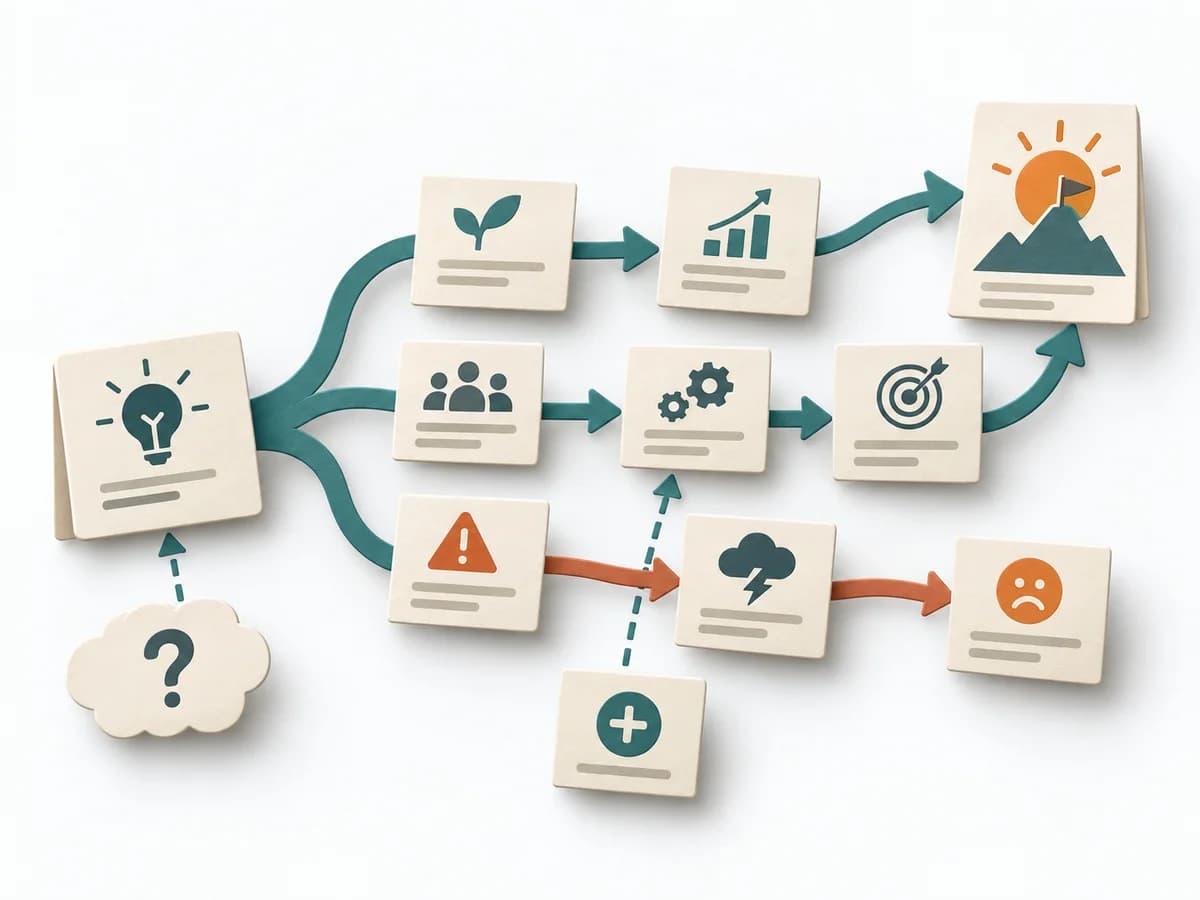 Systems Thinking Future Reality Tree |
|---|---|---|---|---|
Purposedifferent | Intervention Mapping translates a need for change into a planned, evaluable program. The method connects target group, determinants, actions, and measurement into a traceable chain. | When teams derive needs only from assumptions and real motives are missing, user interviews give direct access to behavior and meaning. Conversations from the target group's everyday life make patterns, tensions, and open questions solidly visible. | When a lot is assumed about a target group but little is seen jointly, empathy mapping makes knowledge and gaps directly comparable. The picture also shows which assumptions hold up and where evidence is missing. | A Future Reality Tree shows how desired actions are meant to lead to a better system state. The method checks whether a path of change holds together logically before time flows into implementation. |
Complexitydifferent | High | Low | Low | High |
Timedifferent | 1-5 Tage | 30–60 min per interview | 30–60 min | 2-4 h |
Participantsdifferent | 4-12 | 1 participant per interview | 4-8 | 3-8 |
Formatdifferent | Workshop + async | Workshop + async | Workshop | Workshop |
Outputdifferent | Logic Model, Change Objectives, Intervention Components, Evaluation Plan | Interview Notes, Themes, Insight Summary | Empathy Map, Assumptions List, Research Gaps | Future Reality Tree, Negative Branches, Assumption List, Improved Injections |
Tagsno overlap | ChangeSystems thinkingCapability | QualitativeResearchCustomerDiscovery | SynthesisQualitativeWorkshop | Theory of ConstraintsSystems thinkingChange |