View methods side by side.
Choose up to four methods. Add them using the search and share the comparison by copying its link.
| Criterion |  Systems Thinking Intervention Mapping | 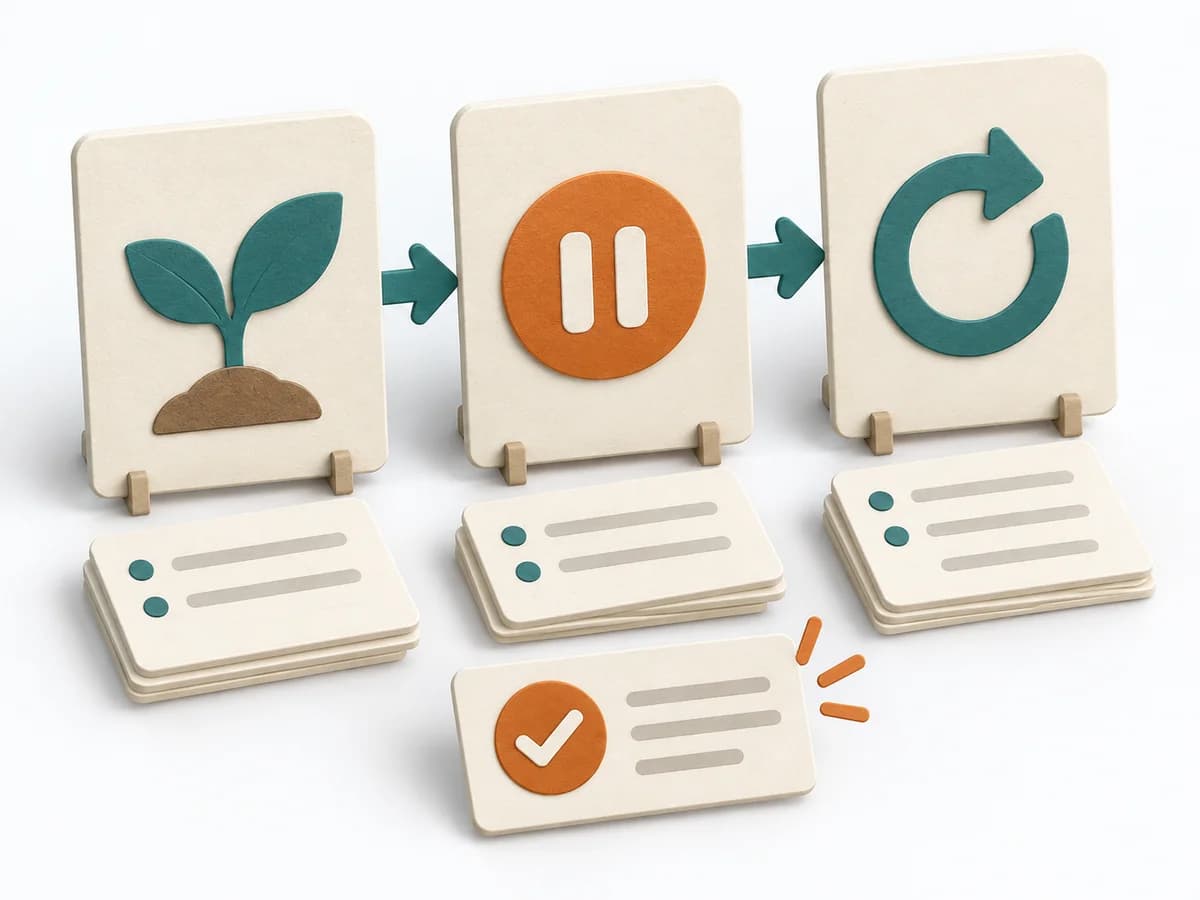 Agile Start Stop Continue |  Systems Thinking Leverage Points | 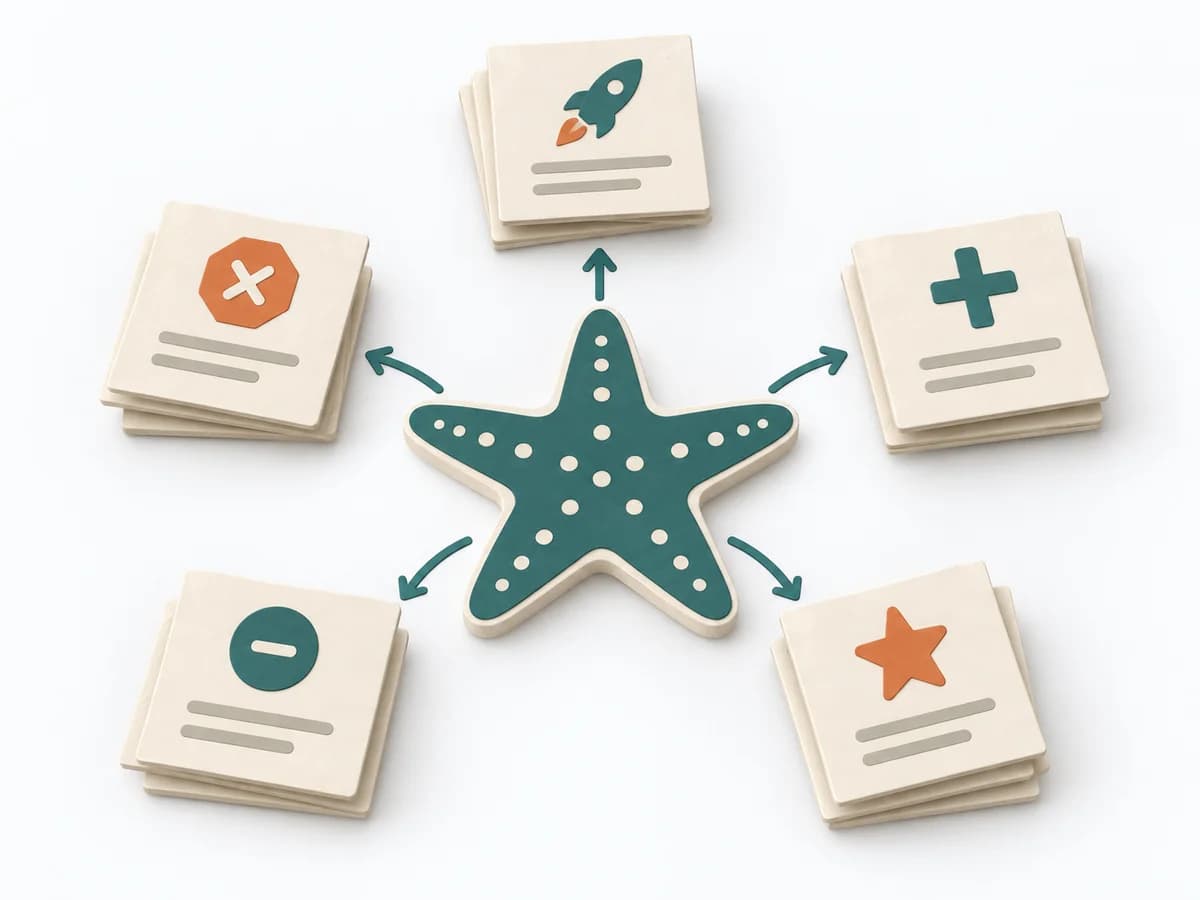 Agile Starfish Retrospective |
|---|---|---|---|---|
Purposedifferent | Intervention Mapping translates a need for change into a planned, evaluable program. The method connects target group, determinants, actions, and measurement into a traceable chain. | When a team wants to deliberately adjust its working behavior, it makes habits visible and assessable. It focuses on concrete changes instead of diffuse mood. | Leverage Points show exactly where interventions in a system produce a disproportionate effect. It draws relationships, patterns, and feedback loops. The result is captured as a leverage map and action strategy. | When improvement options need to be sorted more finely than just start and stop, it brings observations into clear kinds of action. This makes visible what should be done more, less, newly, or continued. |
Complexitydifferent | High | Low | High | Low |
Timedifferent | 1-5 Tage | 30-60 min | Half day | 45-90 min |
Participantsdifferent | 4-12 | 3-12 | 3-12 | 4-12 |
Formatdifferent | Workshop + async | Workshop | Workshop | Workshop |
Outputdifferent | Logic Model, Change Objectives, Intervention Components, Evaluation Plan | Start Stop Continue Board, Improvement Actions | Leverage Map, Action Strategy | Starfish Board, Practice Changes, Experiments |
Tagsno overlap | ChangeSystems thinkingCapability | RetrospectiveImprovementTeamReflection | Systems thinkingChangeStrategy | RetrospectiveImprovementExperimentsTeam |