View methods side by side.
Choose up to four methods. Add them using the search and share the comparison by copying its link.
| Criterion | 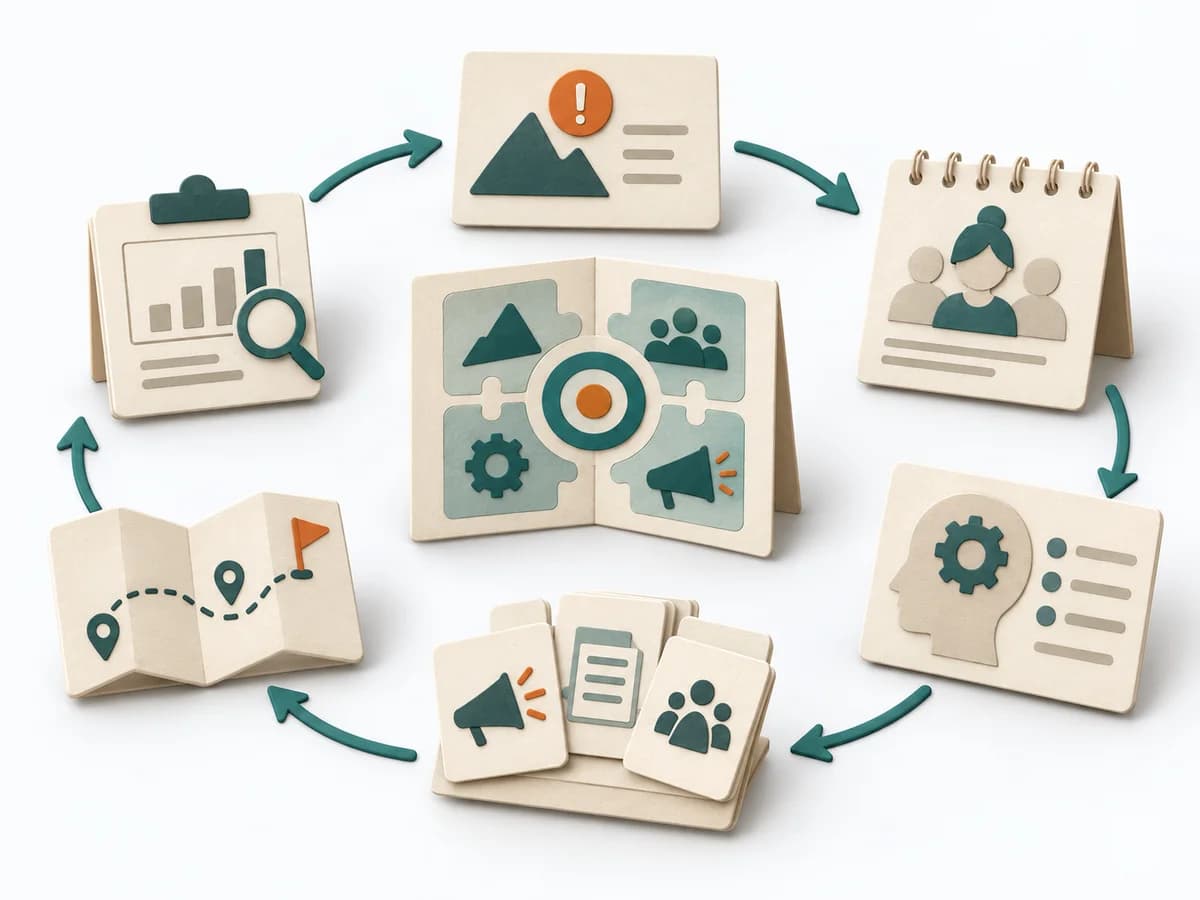 Systems Thinking Intervention Mapping |  Growth Flywheel | 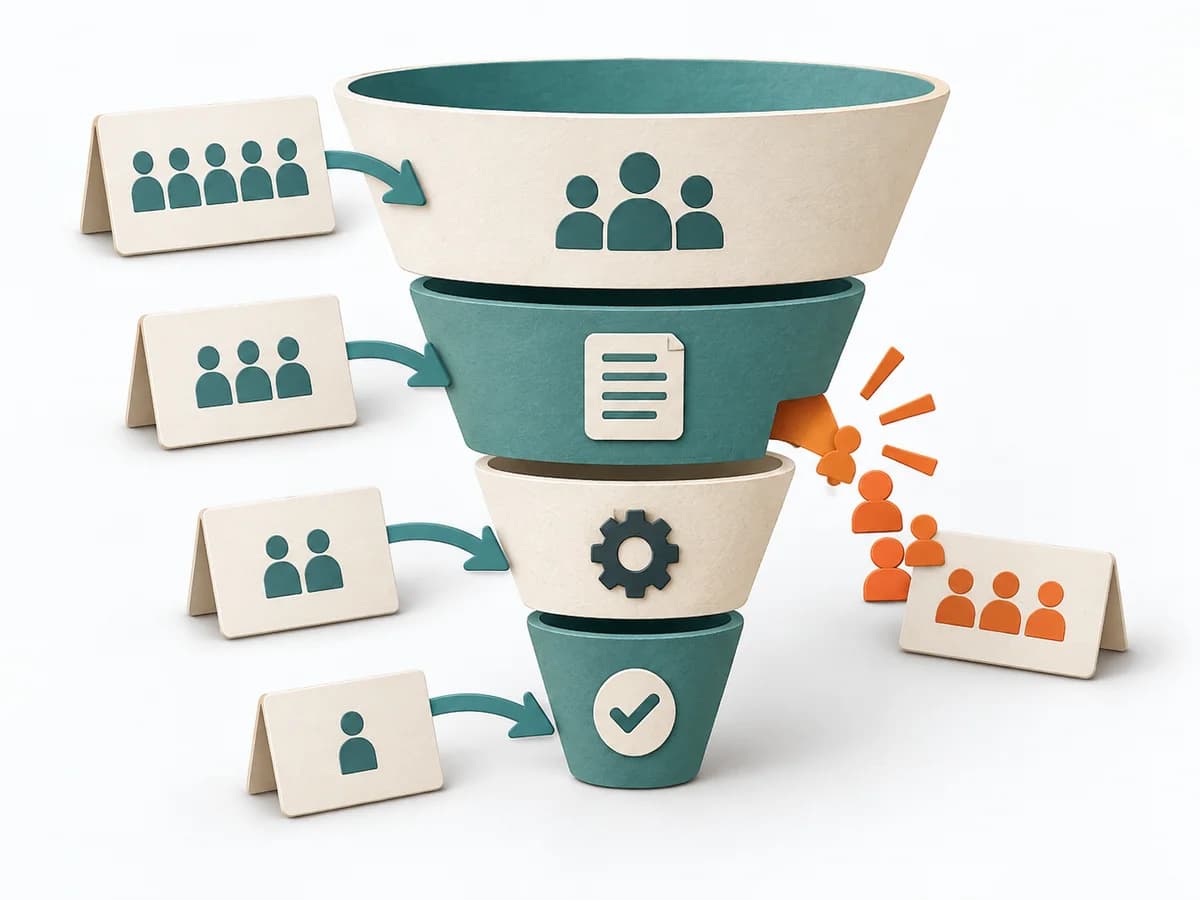 Growth Funnel Analysis |  Systems Thinking Leverage Points |
|---|---|---|---|---|
Purposedifferent | Intervention Mapping translates a need for change into a planned, evaluable program. The method connects target group, determinants, actions, and measurement into a traceable chain. | Growth often breaks down where a reinforcing mechanism builds up too much friction. A Flywheel shows the cycle of value, repetition, and reinforcement meant to sustain growth. | When many visitors or users drop off along the way, the reason behind the number often stays hidden. Funnel Analysis exposes these transitions and makes visible exactly where the path collapses. | Leverage Points show exactly where interventions in a system produce a disproportionate effect. It draws relationships, patterns, and feedback loops. The result is captured as a leverage map and action strategy. |
Complexitydifferent | High | Medium | Medium | High |
Timedifferent | 1-5 Tage | 60-120 min | 1-3 h | Half day |
Participantsdifferent | 4-12 | 3-8 | 1-5 | 3-12 |
Formatdifferent | Workshop + async | Workshop | Async | Workshop |
Outputdifferent | Logic Model, Change Objectives, Intervention Components, Evaluation Plan | Flywheel Map, Friction Points, Growth Levers, Experiment Backlog | Funnel report, Drop-off analysis, Optimization hypotheses | Leverage Map, Action Strategy |
Tagsno overlap | ChangeSystems thinkingCapability | GrowthRetentionConversion | AnalyticsConversionGrowth | Systems thinkingChangeStrategy |