View methods side by side.
Choose up to four methods. Add them using the search and share the comparison by copying its link.
| Criterion |  Systems Thinking Intervention Mapping | 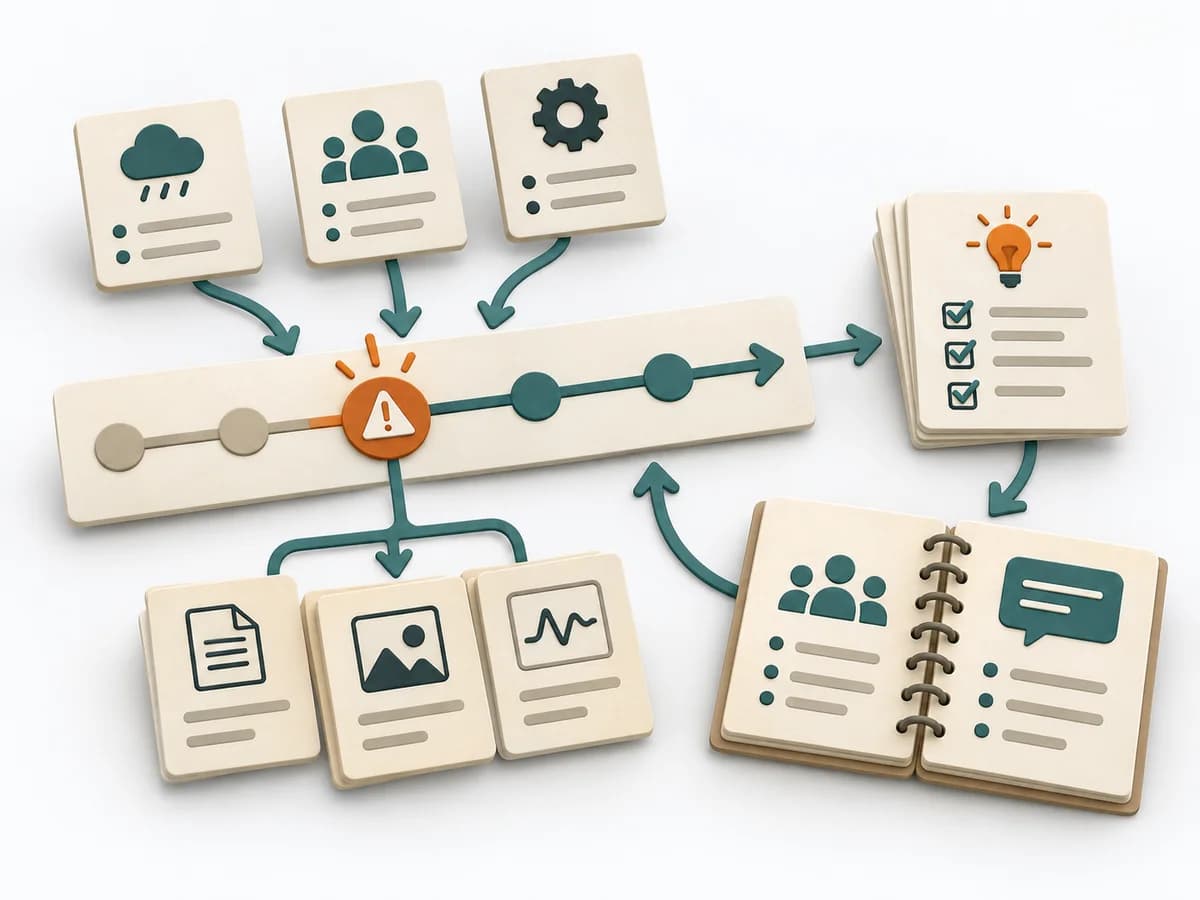 DevOps Blameless Postmortem |  Operations Learning Review | 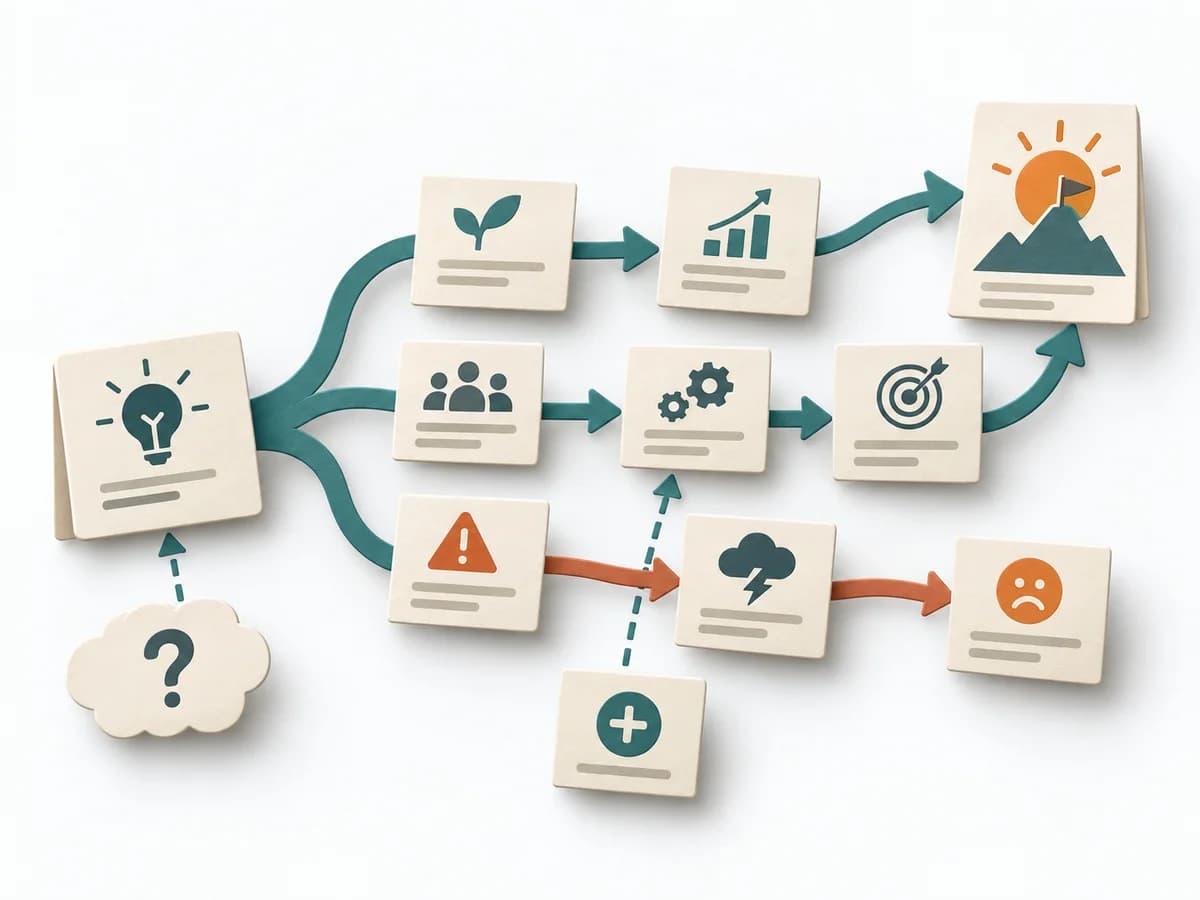 Systems Thinking Future Reality Tree |
|---|---|---|---|---|
Purposedifferent | Intervention Mapping translates a need for change into a planned, evaluable program. The method connects target group, determinants, actions, and measurement into a traceable chain. | After an incident with damage or a near miss, the method creates a sober field for learning without assigning blame. It directs attention to the course of events, conditions, and effective countermeasures. | After a project phase with mixed results, the method makes learning from the individual case reusable. It connects events, decisions, and systemic conditions into robust insights. | A Future Reality Tree shows how desired actions are meant to lead to a better system state. The method checks whether a path of change holds together logically before time flows into implementation. |
Complexitydifferent | High | Medium | Medium | High |
Timedifferent | 1-5 Tage | 30-90 min | 1-3 h | 2-4 h |
Participantsdifferent | 4-12 | 3-12 | 3-10 | 3-8 |
Formatdifferent | Workshop + async | Workshop + async | Workshop | Workshop |
Outputdifferent | Logic Model, Change Objectives, Intervention Components, Evaluation Plan | Postmortem Doc, Action Items, Timeline | Learning Review Notes, System Factors, Improvement Actions | Future Reality Tree, Negative Branches, Assumption List, Improved Injections |
Tagsno overlap | ChangeSystems thinkingCapability | Site Reliability EngineeringIncidentLearningReliability | LearningRetrospectiveIncidentOperations | Theory of ConstraintsSystems thinkingChange |