View methods side by side.
Choose up to four methods. Add them using the search and share the comparison by copying its link.
| Criterion |  Systems Thinking Intervention Mapping |  Operations After-Action Review | 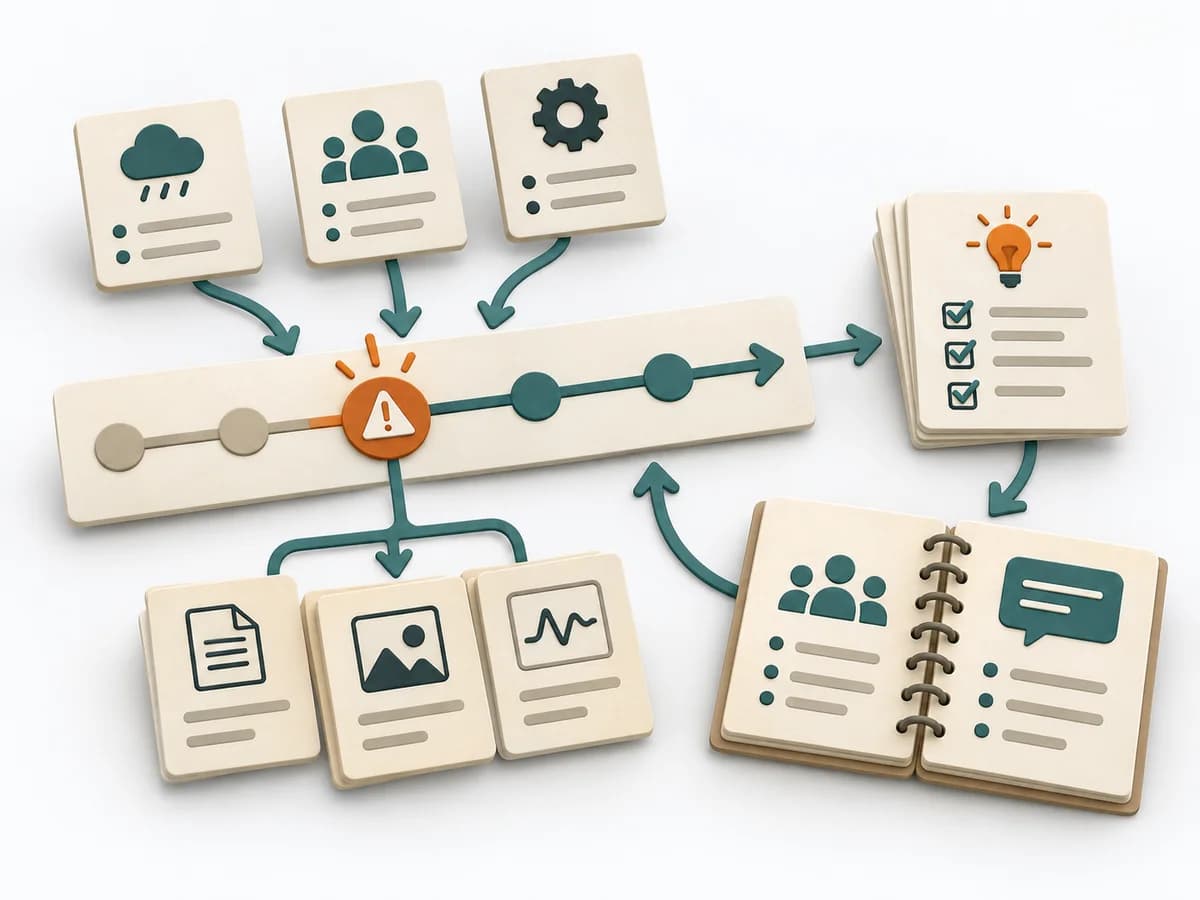 DevOps Blameless Postmortem | 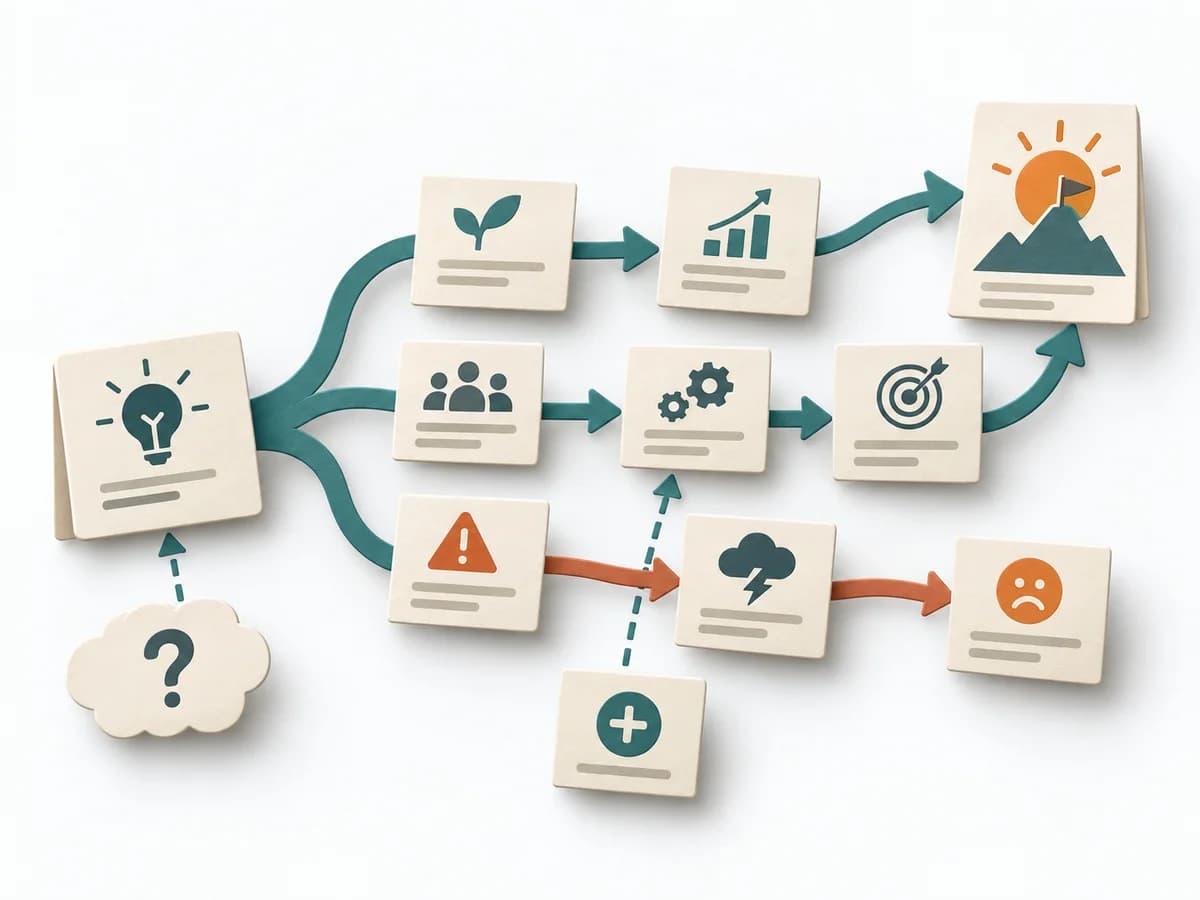 Systems Thinking Future Reality Tree |
|---|---|---|---|---|
Purposedifferent | Intervention Mapping translates a need for change into a planned, evaluable program. The method connects target group, determinants, actions, and measurement into a traceable chain. | After missions or project phases with unclear outcomes, the method makes visible what actually happened and what can be learned from it. It separates course, effect, and causes so experience turns into solid improvement. | After an incident with damage or a near miss, the method creates a sober field for learning without assigning blame. It directs attention to the course of events, conditions, and effective countermeasures. | A Future Reality Tree shows how desired actions are meant to lead to a better system state. The method checks whether a path of change holds together logically before time flows into implementation. |
Complexitydifferent | High | Low | Medium | High |
Timedifferent | 1-5 Tage | 20-45 min | 30-90 min | 2-4 h |
Participantsdifferent | 4-12 | 3-12 | 3-12 | 3-8 |
Formatdifferent | Workshop + async | Workshop + async | Workshop + async | Workshop |
Outputdifferent | Logic Model, Change Objectives, Intervention Components, Evaluation Plan | Lessons learned, Action items, Event summary | Postmortem Doc, Action Items, Timeline | Future Reality Tree, Negative Branches, Assumption List, Improved Injections |
Tagsno overlap | ChangeSystems thinkingCapability | LearningOperationsImprovement | Site Reliability EngineeringIncidentLearningReliability | Theory of ConstraintsSystems thinkingChange |