View methods side by side.
Choose up to four methods. Add them using the search and share the comparison by copying its link.
| Criterion |  Systems Thinking Intervention Mapping | 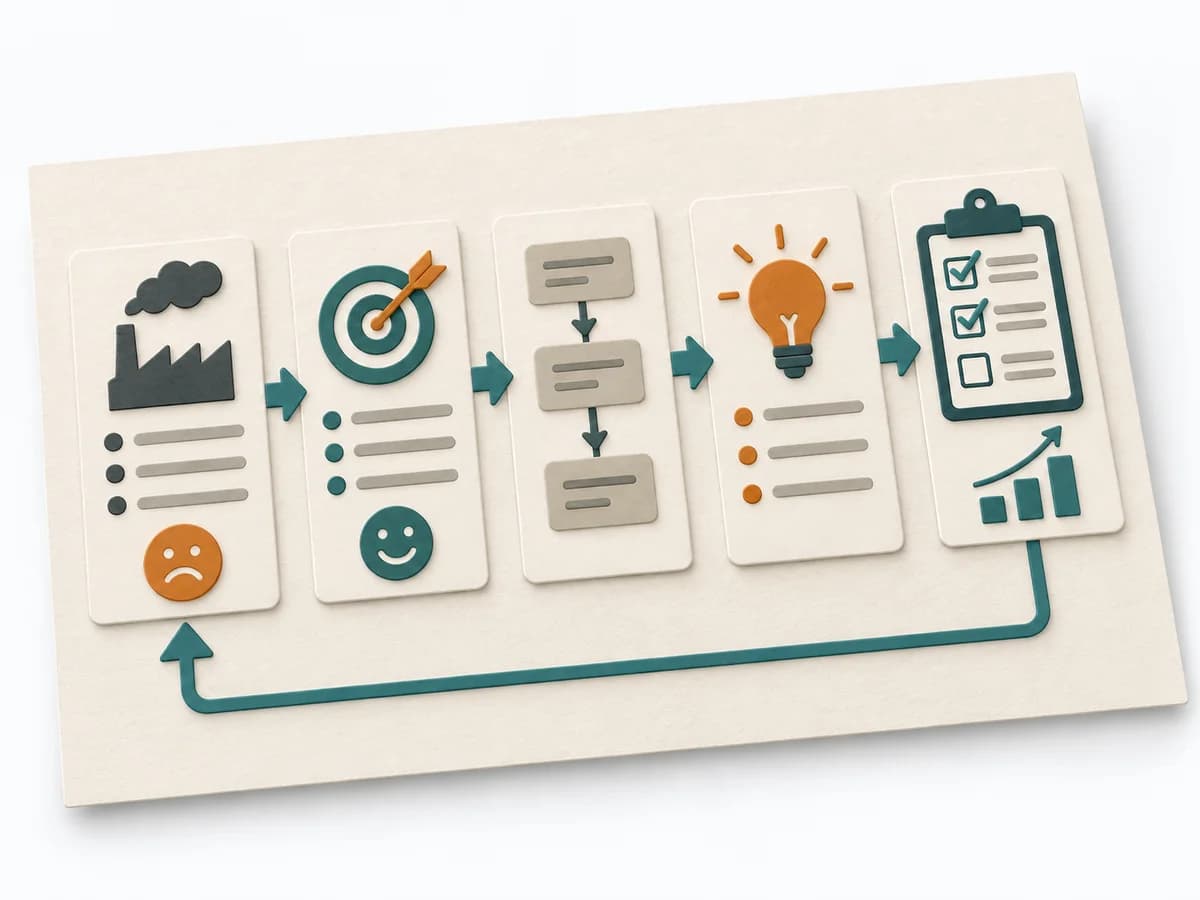 Operations A3 Problem Solving |  Decision Making Force Field Analysis |  Systems Thinking Leverage Points |
|---|---|---|---|---|
Purposedifferent | Intervention Mapping translates a need for change into a planned, evaluable program. The method connects target group, determinants, actions, and measurement into a traceable chain. | For a complex deviation with several people involved, the method bundles problem, analysis, and decision onto one page. It creates a shared working space where causes, countermeasures, and follow-up fit together. | In change initiatives, supporting and restraining forces sit at the table at the same time. Force Field Analysis makes these tensions explicit and shows where change can be pushed forward by strengthening or relieving. | Leverage Points show exactly where interventions in a system produce a disproportionate effect. It draws relationships, patterns, and feedback loops. The result is captured as a leverage map and action strategy. |
Complexitydifferent | High | Medium | Low | High |
Timedifferent | 1-5 Tage | 45-90 min | 45-90 min | Half day |
Participantsdifferent | 4-12 | 2-5 | 3-12 | 3-12 |
Formatdifferent | Workshop + async | Workshop + async | Workshop | Workshop |
Outputdifferent | Logic Model, Change Objectives, Intervention Components, Evaluation Plan | A3 Report, Action Plan, Root Cause Analysis | Force Field Map, Change Levers, Risk Notes | Leverage Map, Action Strategy |
Tagsno overlap | ChangeSystems thinkingCapability | LeanProblem solvingCoachingOperations | ChangeDecisionStrategy | Systems thinkingChangeStrategy |