View methods side by side.
Choose up to four methods. Add them using the search and share the comparison by copying its link.
| Criterion | 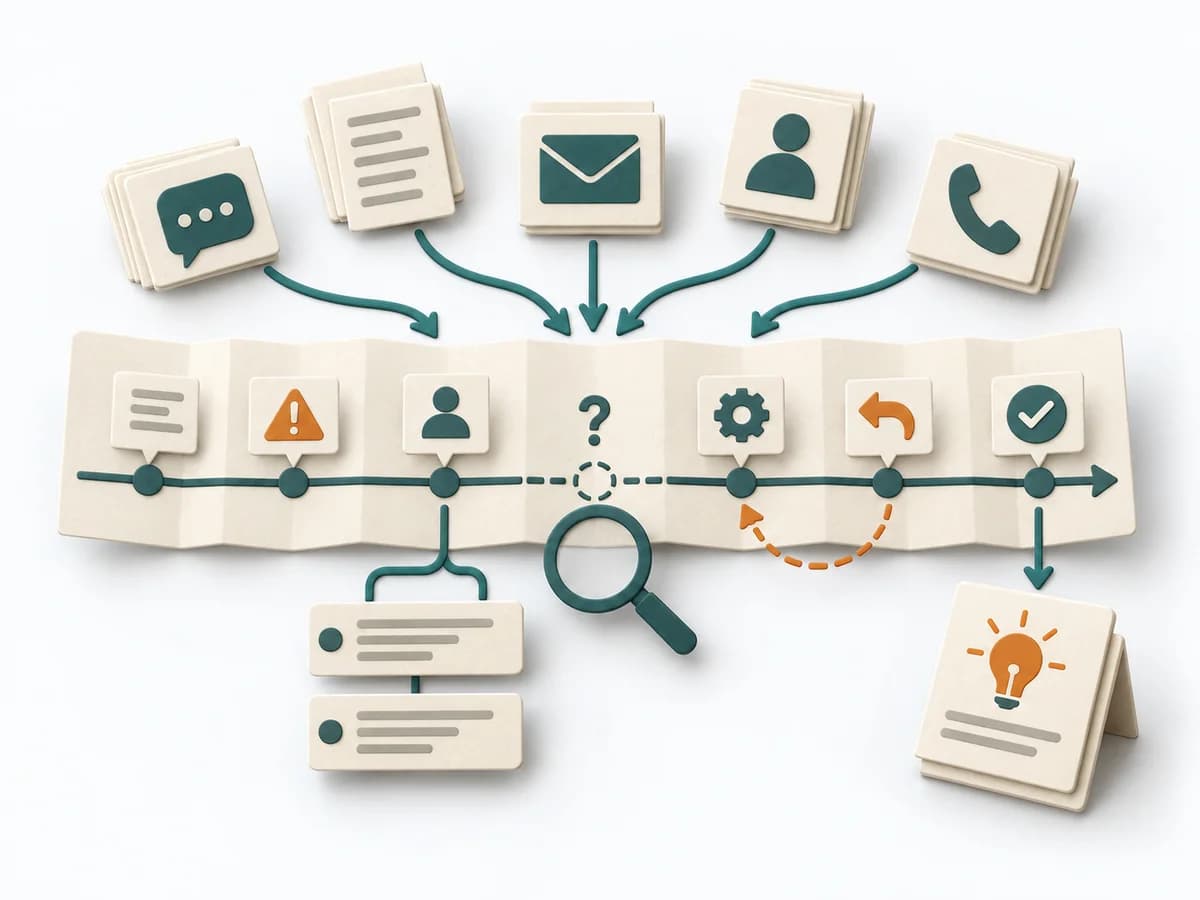 DevOps Incident Timeline Analysis |  DevOps Blameless Postmortem |  Facilitation Barcamp |  Operations Causal Factor Analysis |
|---|---|---|---|---|
Purposedifferent | For an incident with an unclear sequence, the method makes the timeline precisely visible. It separates perception, reaction, and delay so cause and effect become more clearly readable. | After an incident with damage or a near miss, the method creates a sober field for learning without assigning blame. It directs attention to the course of events, conditions, and effective countermeasures. | When many people can contribute knowledge and the flow should stay open, Barcamp provides a framework for self-organized sessions. The format channels energy without defining the content too narrowly in advance. | For an event with a complicated course, the method breaks down the contributing factors along the timeline. It shows how conditions, decisions, and reactions together produce a course of events. |
Complexitydifferent | Medium | Medium | Medium | High |
Timedifferent | 60-180 min | 30-90 min | Halber Tag bis 2 Tage | 2-6 h |
Participantsdifferent | 3-10 | 3-12 | 15-200 | 3-10 |
Formatdifferent | Workshop + async | Workshop + async | Workshop | Workshop + async |
Outputdifferent | Incident Timeline, Evidence Log, Delay Analysis, Improvement Actions | Postmortem Doc, Action Items, Timeline | Session Board, Session Notes, Community Learnings | Event Timeline, Causal Factor Chart, Cause List, Corrective Actions |
Tagsno overlap | IncidentTimelineSite Reliability Engineering | Site Reliability EngineeringIncidentLearningReliability | FacilitationLarge groupLearning | CausalityIncidentRoot causeTimeline |