View methods side by side.
Choose up to four methods. Add them using the search and share the comparison by copying its link.
| Criterion | 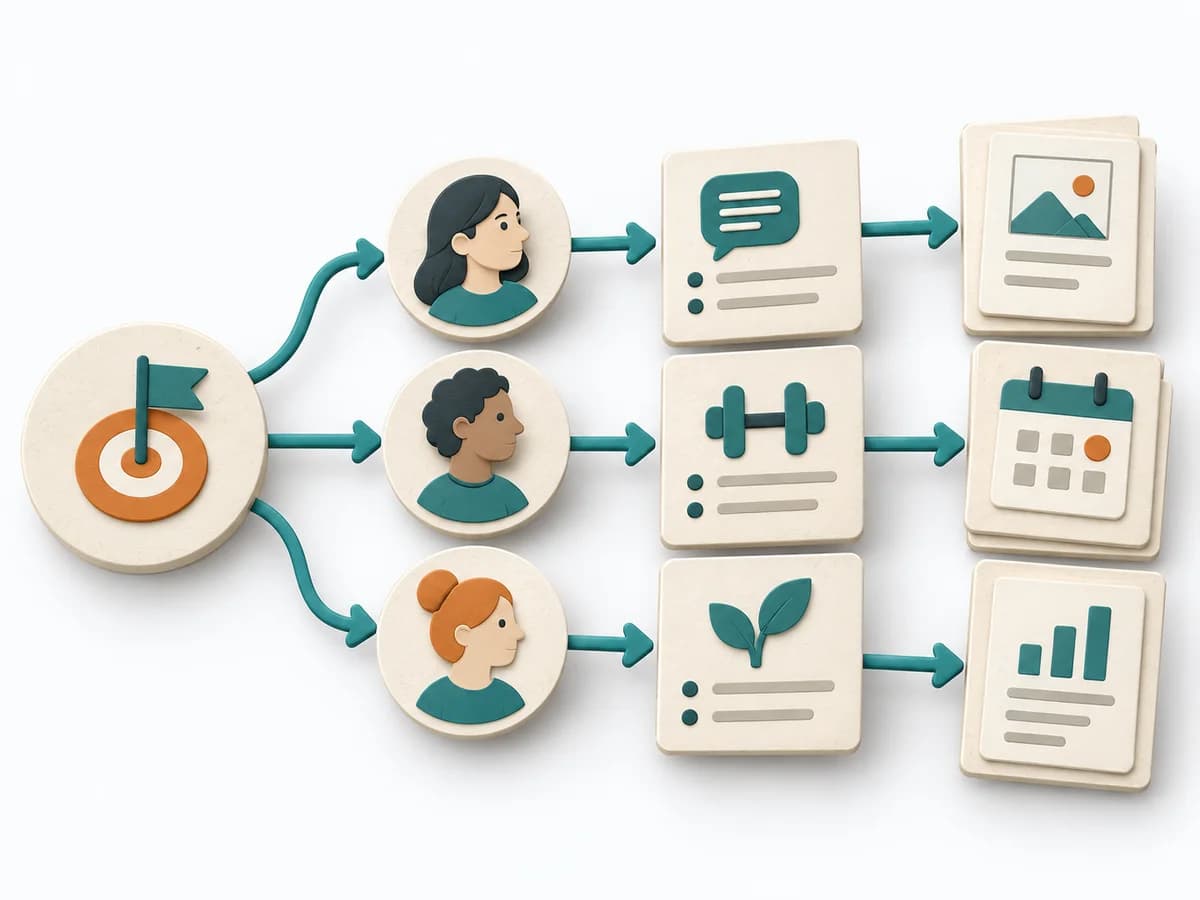 Product Strategy Impact Mapping |  Product Discovery Opportunity Scoring |  Product Strategy DIBB |  Decision Making Constraint Analysis |
|---|---|---|---|---|
Purposedifferent | When a goal needs to be connected to several possible paths, it shows chains of impact instead of feature lists. It connects business goal, behavior change, and measures. | When opportunities need ranking by their effect, it makes importance and satisfaction directly comparable. It separates problem, assumption, solution, and evidence. The result is captured as an opportunity-score table and top outcomes. | DIBB helps clarify target groups, value, goals, and priorities by making the logic behind a decision explicit. It captures results as a DIBB document, belief list, bet list, and learning report. | When an initiative stalls, the limit often lies not in the idea but in hard or soft boundary conditions. Constraint Analysis separates these limits and shows which of them can actually be shaped. |
Complexitydifferent | Medium | Medium | Low | Low |
Timedifferent | 45-90 min | 60-120 min | 1-2 h | 30-90 min |
Participantsdifferent | 3-8 | 3-6 | 2-8 | 2-8 |
Formatdifferent | Workshop | Workshop + async | Workshop + async | Workshop + async |
Outputdifferent | Impact Map, Outcome Hypotheses, Delivery Options | Opportunity Score Table, Top Outcomes | DIBB document, Belief list, Bet list, Learning report | Constraint List, Hard/Soft Classification, Option Impact Notes, Decision Boundaries |
Tagsno overlap | OutcomesStrategyBehaviorPlanning | PrioritizationDiscoveryOutcomesNeeds | StrategyDecisionAssumptionsHypothesis | ConstraintsDecisionPlanningOptions |