View methods side by side.
Choose up to four methods. Add them using the search and share the comparison by copying its link.
| Criterion | 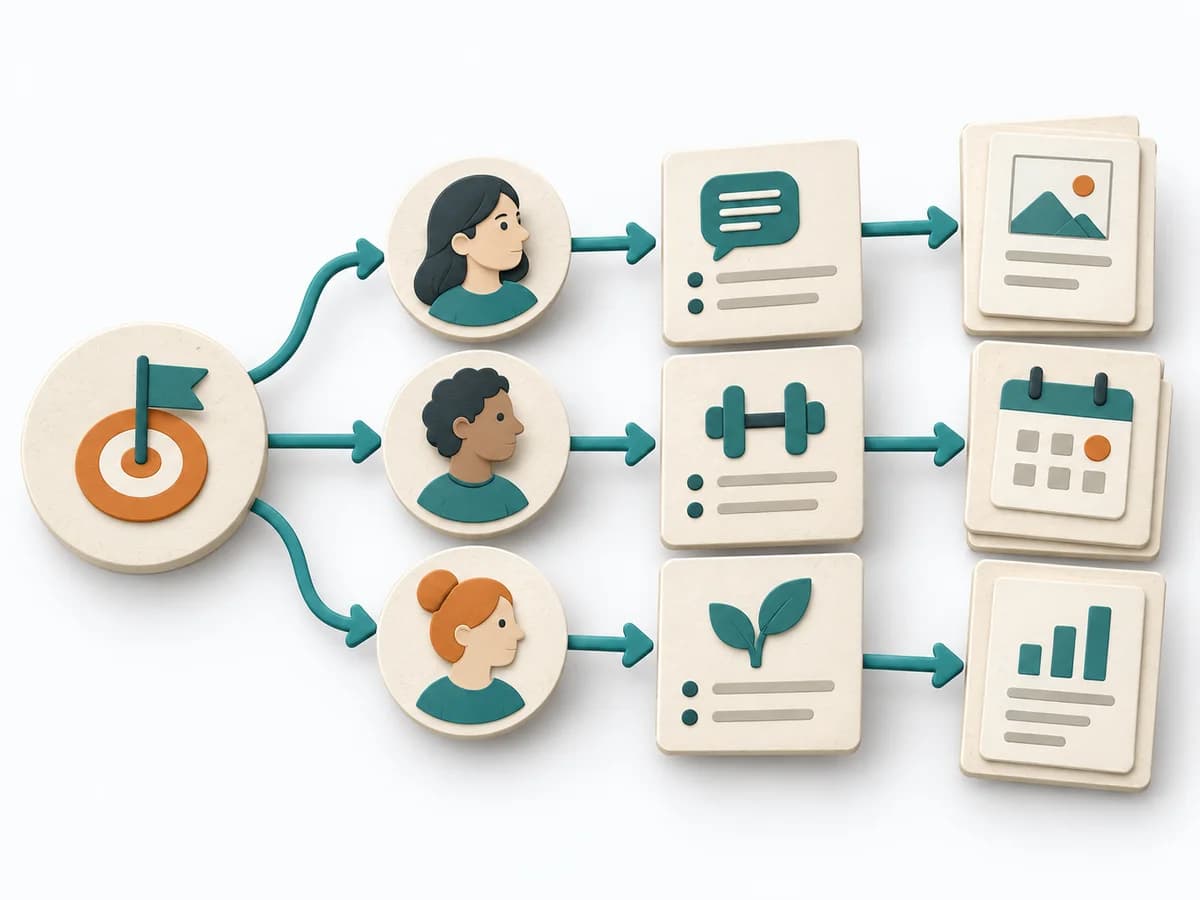 Product Strategy Impact Mapping |  Facilitation Mind Mapping | 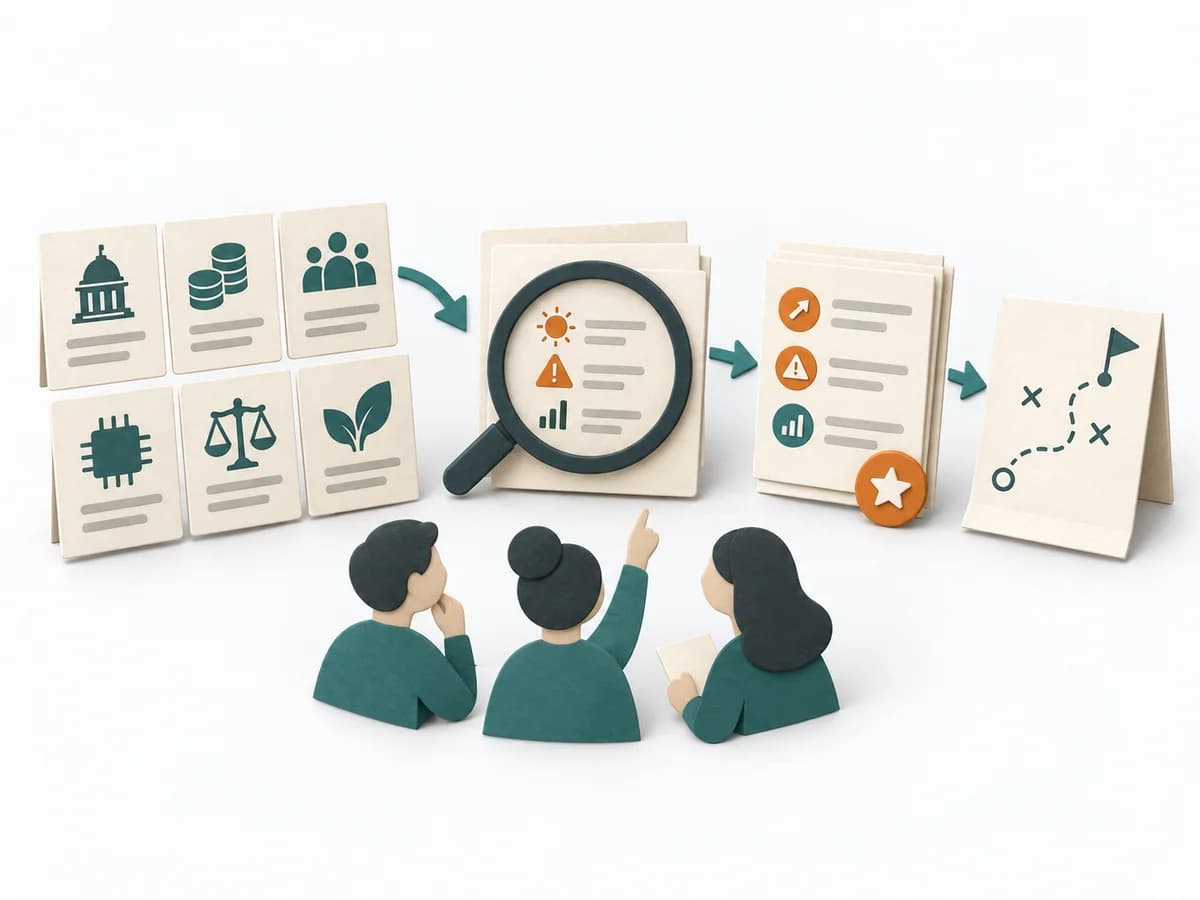 Business Strategy PESTLE Analysis | 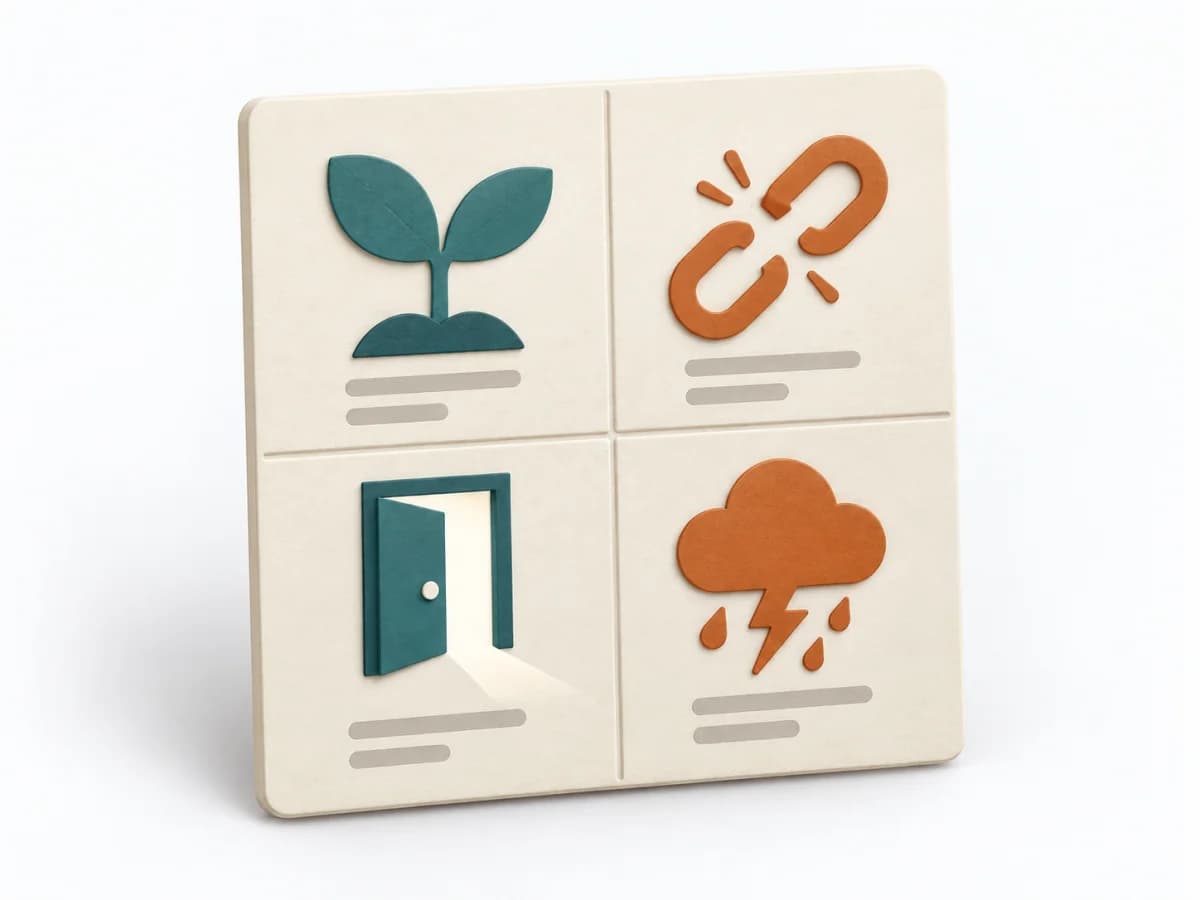 Business Strategy SWOT Analysis |
|---|---|---|---|---|
Purposedifferent | When a goal needs to be connected to several possible paths, it shows chains of impact instead of feature lists. It connects business goal, behavior change, and measures. | When a topic is still unclear and too many thoughts surface at once, Mind Mapping creates an open surface for ordering them. It makes connections, subtopics, and starting points visible without fixing them too early. | PESTLE Analysis makes political, economic, social, technological, legal, and environmental influences visible. The environment of an initiative is thereby read systematically instead of through isolated trends. | SWOT Analysis arranges strengths, weaknesses, opportunities, and threats into a compact picture of the situation. It keeps internal capabilities and external influences separate before strategic options emerge from them. |
Complexitydifferent | Medium | Low | Medium | Low |
Timedifferent | 45-90 min | 15-45 min | 1-3 h | 30-60 min |
Participantsdifferent | 3-8 | 1-10 | 2-10 | 3-12 |
Formatdifferent | Workshop | Workshop + async | Workshop + async | Workshop |
Outputdifferent | Impact Map, Outcome Hypotheses, Delivery Options | Mind Map, Topic Clusters, Open Questions | PESTLE Map, External Risks, Strategic Questions | SWOT matrix, Strategic options, Action list |
Tagsno overlap | OutcomesStrategyBehaviorPlanning | BrainstormingIdeasMappingStructureFacilitation | StrategyMarketAnalysis | StrategyAnalysisMarketPositioning |