View methods side by side.
Choose up to four methods. Add them using the search and share the comparison by copying its link.
| Criterion | 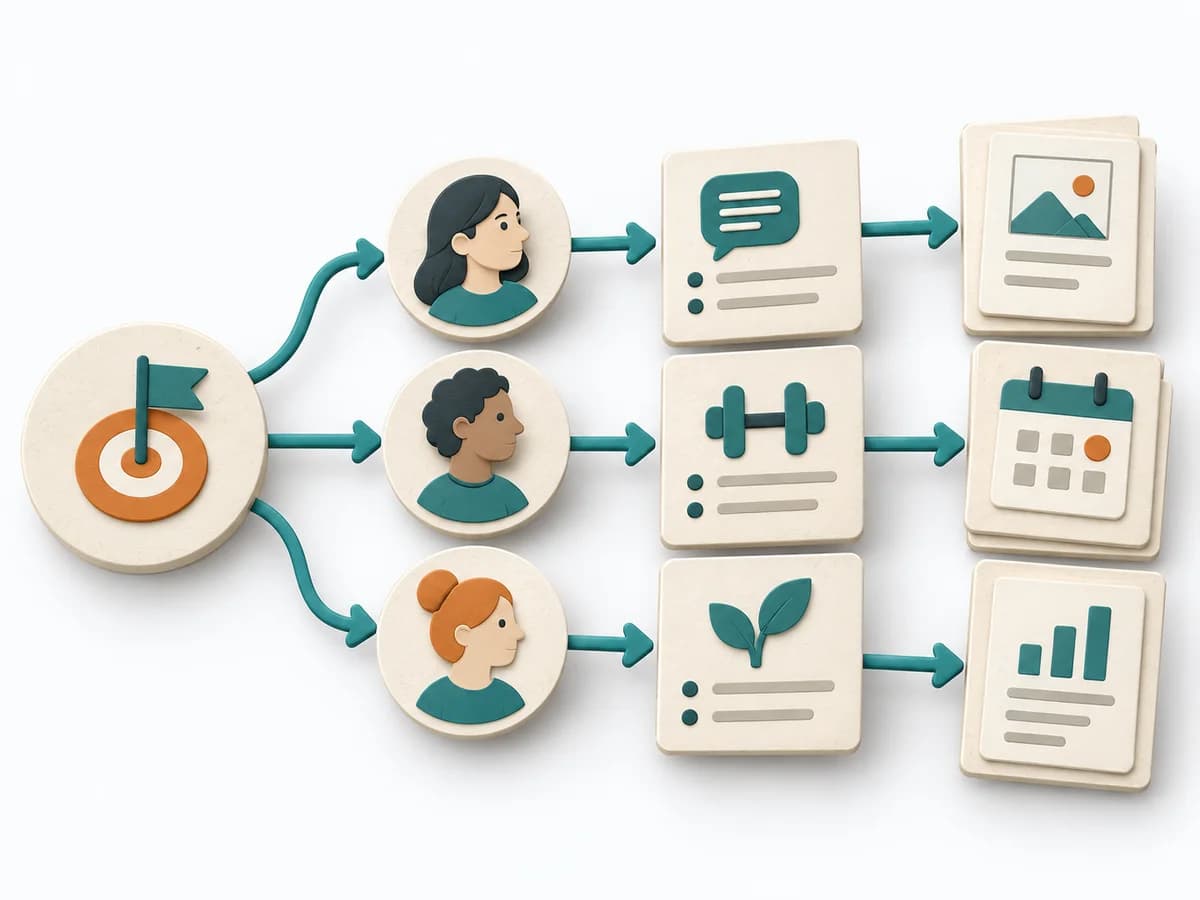 Product Strategy Impact Mapping | 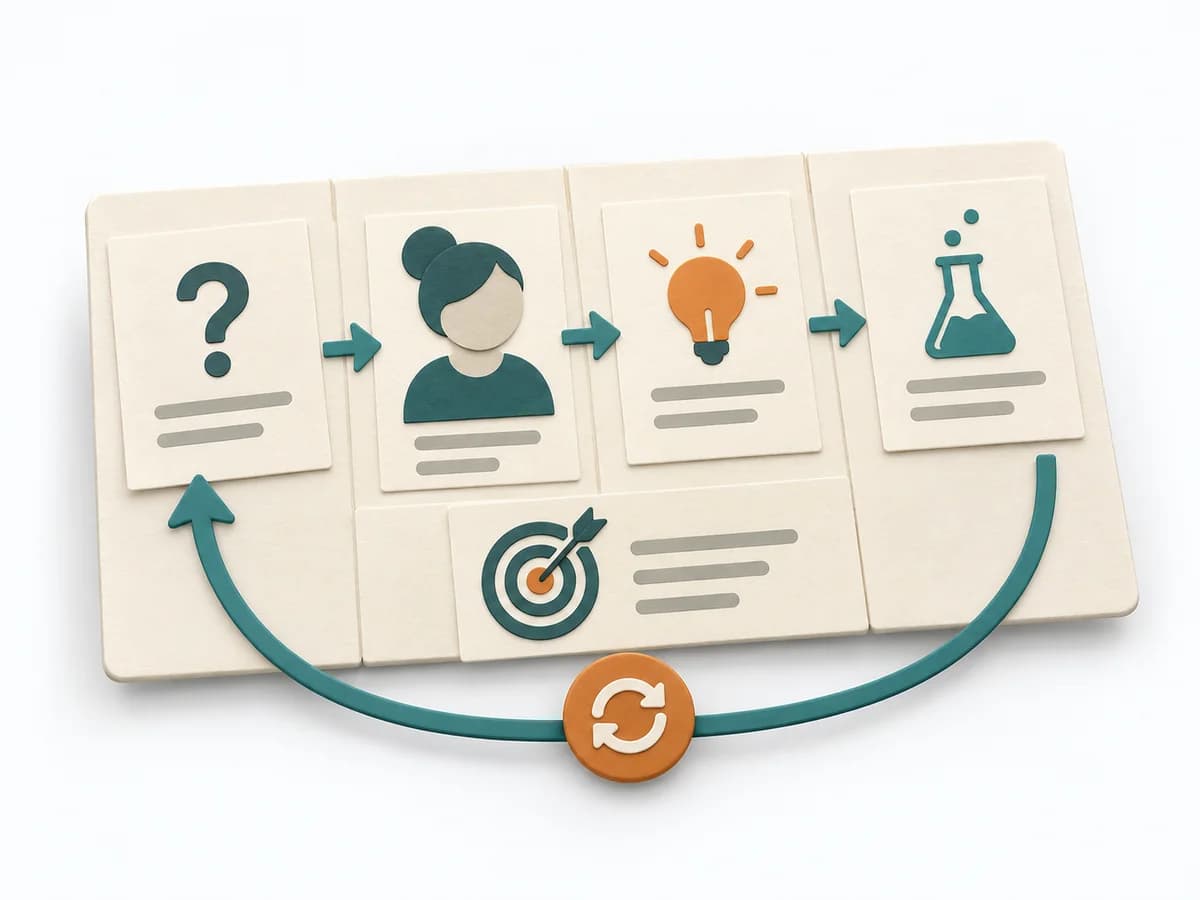 UX Design Lean UX Canvas | 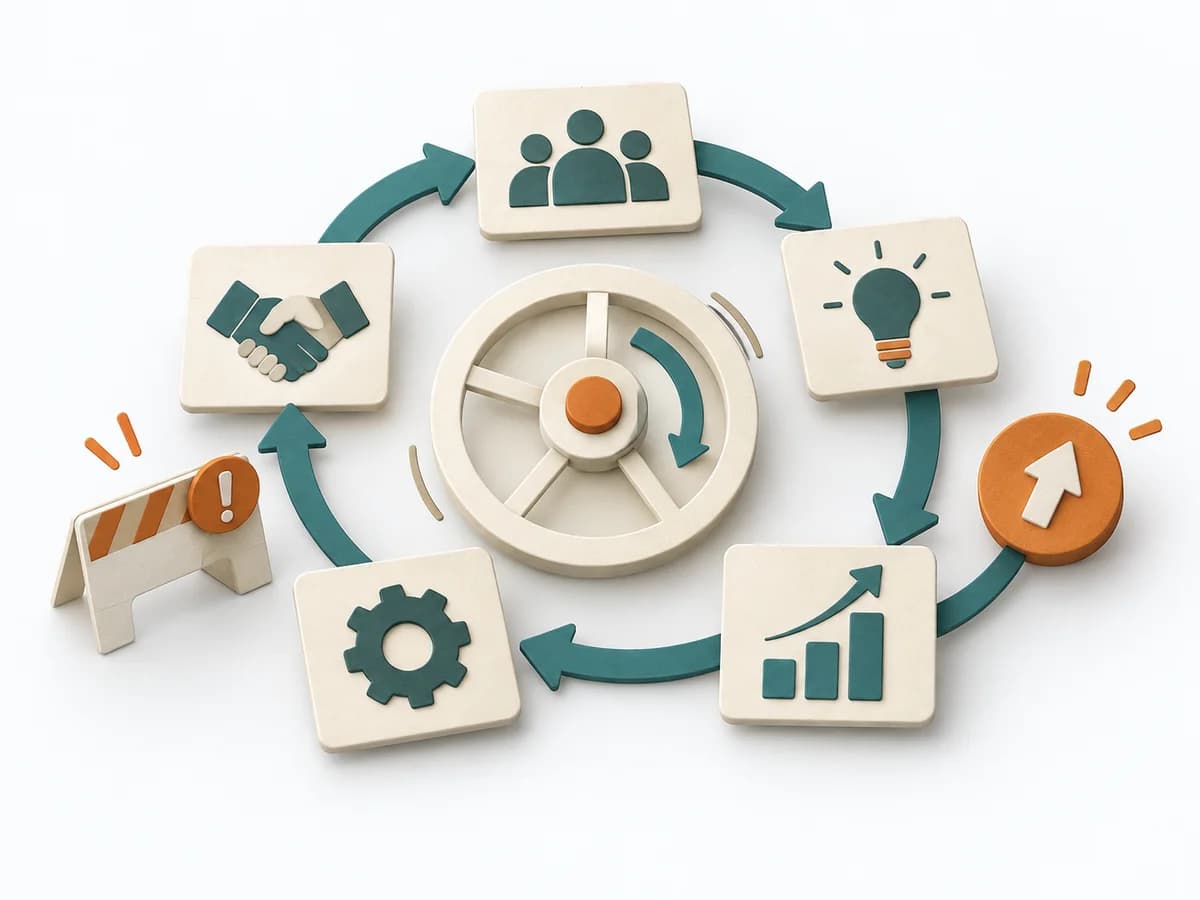 Growth Flywheel |  Product Strategy DIBB |
|---|---|---|---|---|
Purposedifferent | When a goal needs to be connected to several possible paths, it shows chains of impact instead of feature lists. It connects business goal, behavior change, and measures. | The Lean UX Canvas helps clarify user behavior, touchpoints, and concept decisions. It makes assumptions and desired outcomes visible and captures the result as a completed canvas, hypothesis list, and first experiment. | Growth often breaks down where a reinforcing mechanism builds up too much friction. A Flywheel shows the cycle of value, repetition, and reinforcement meant to sustain growth. | DIBB helps clarify target groups, value, goals, and priorities by making the logic behind a decision explicit. It captures results as a DIBB document, belief list, bet list, and learning report. |
Complexitydifferent | Medium | Medium | Medium | Low |
Timedifferent | 45-90 min | 2-3 h | 60-120 min | 1-2 h |
Participantsdifferent | 3-8 | 3-8 | 3-8 | 2-8 |
Formatdifferent | Workshop | Workshop + async | Workshop | Workshop + async |
Outputdifferent | Impact Map, Outcome Hypotheses, Delivery Options | Completed Lean UX Canvas, Hypothesis list, First experiment | Flywheel Map, Friction Points, Growth Levers, Experiment Backlog | DIBB document, Belief list, Bet list, Learning report |
Tagsno overlap | OutcomesStrategyBehaviorPlanning | CanvasHypothesisOutcomesDiscovery | GrowthRetentionConversion | StrategyDecisionAssumptionsHypothesis |