View methods side by side.
Choose up to four methods. Add them using the search and share the comparison by copying its link.
| Criterion | 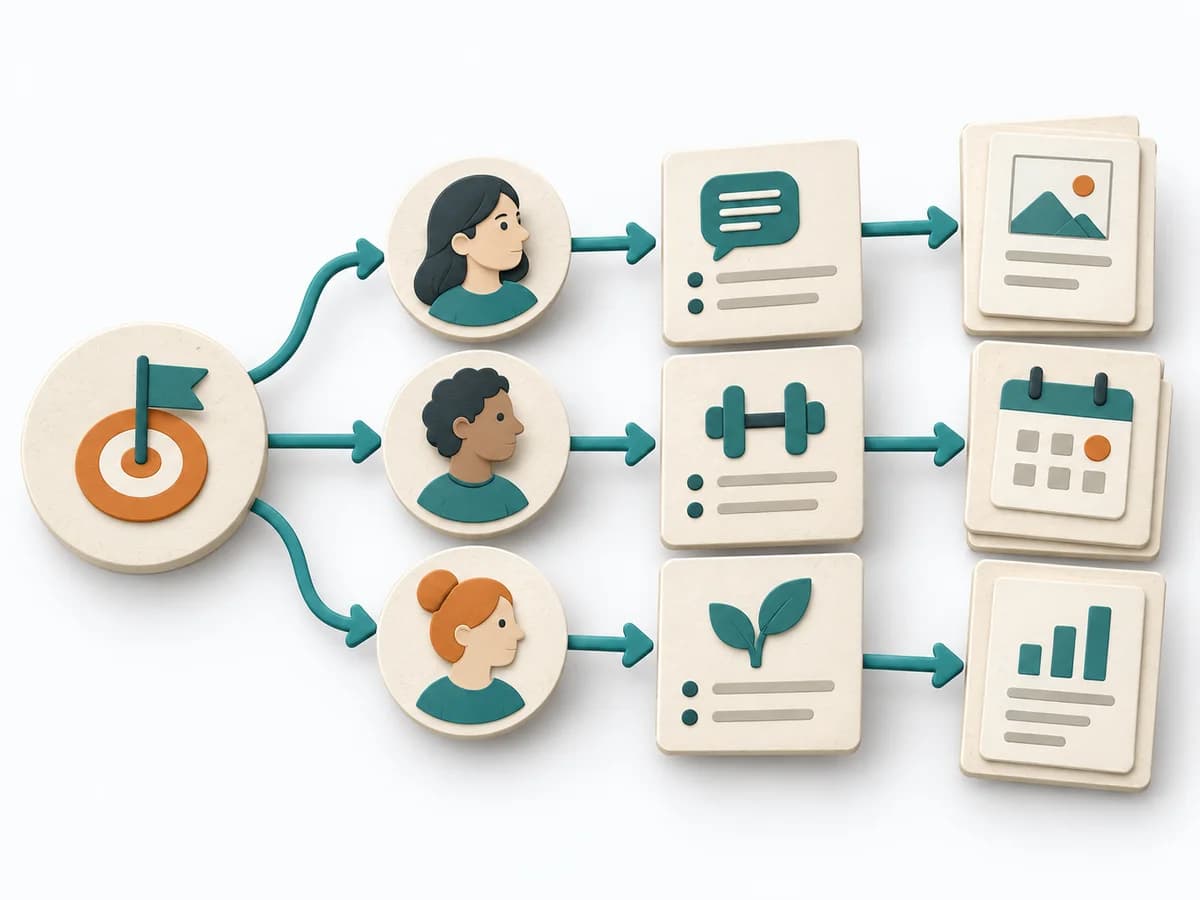 Product Strategy Impact Mapping |  Architecture ATAM (Architecture Tradeoff Analysis Method) |  Product Discovery Test Card |  Product Discovery Fake Door Test |
|---|---|---|---|---|
Purposedifferent | When a goal needs to be connected to several possible paths, it shows chains of impact instead of feature lists. It connects business goal, behavior change, and measures. | ATAM helps teams weigh architecture decisions when quality goals compete. The team considers business goals, stakeholder expectations, and technical decisions together. The evaluation shows which risks need further investigation. | The Test Card turns a critical assumption into a testable claim and specifies in advance which result counts as success. | When demand is still unclear, it measures interest in a feature before it is built. It separates real behavior from polite agreement and deliberately keeps build effort small. |
Complexitydifferent | Medium | High | Low | Medium |
Timedifferent | 45-90 min | Several meetings plus preparation and analysis; total effort depends on scope | 20-35 min | 1-5 Tage |
Participantsdifferent | 3-8 | Evaluation team, architects, and relevant stakeholders | 1-5 | Nutzertraffic |
Formatdifferent | Workshop | Workshop + async | Workshop + async | Async |
Outputdifferent | Impact Map, Outcome Hypotheses, Delivery Options | Prioritized quality scenarios in a utility tree, Architecture risks with reasoning and assumptions, Sensitivity and trade-off points, Findings report with open investigations | Test Card with a pre-set threshold | Click Data, Interest Signal, Learning Decision |
Tagsno overlap | OutcomesStrategyBehaviorPlanning | ArchitectureQualityRiskTradeoffsStakeholders | ExperimentsValidationDiscoveryHypothesis | ValidationExperimentsDemandDiscovery |