View methods side by side.
Choose up to four methods. Add them using the search and share the comparison by copying its link.
| Criterion | 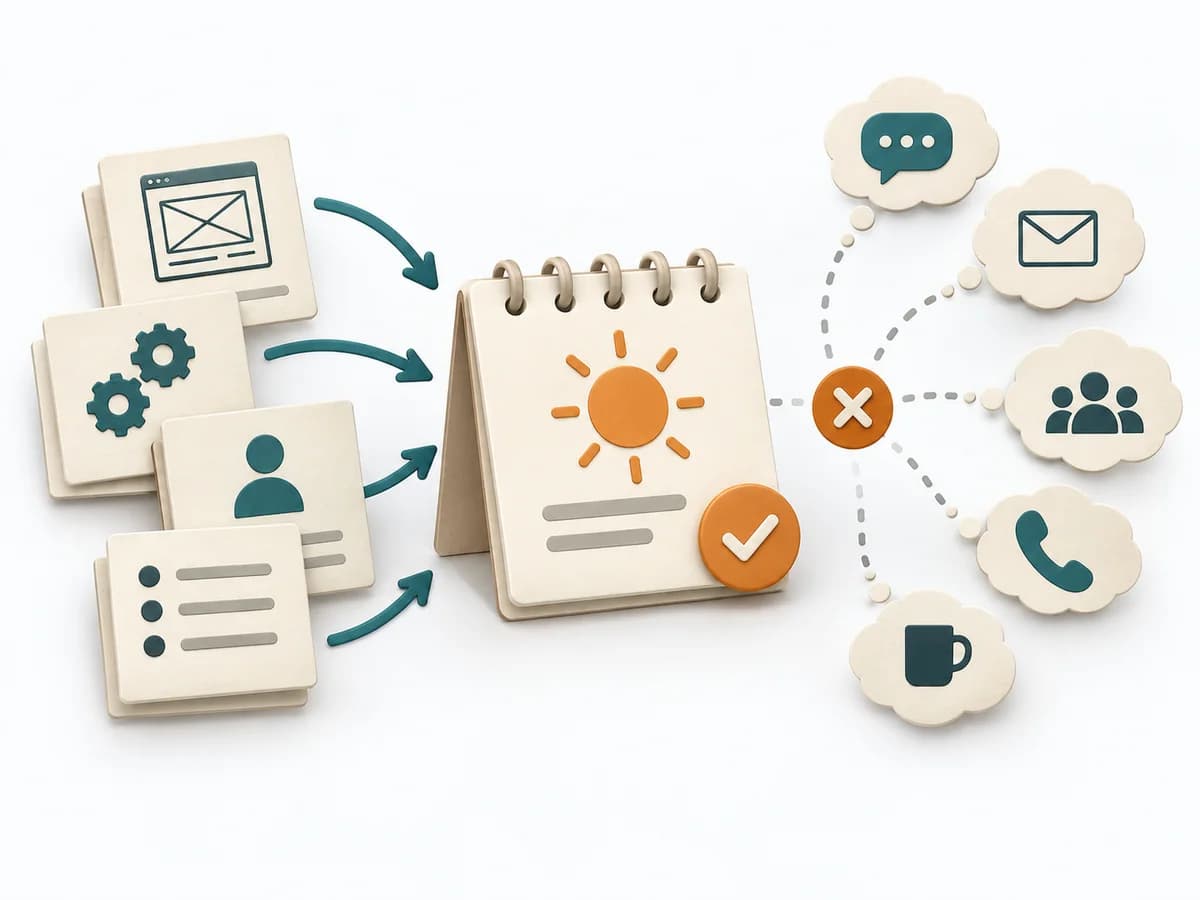 Agile Ideal Days |  Agile Planning Poker | 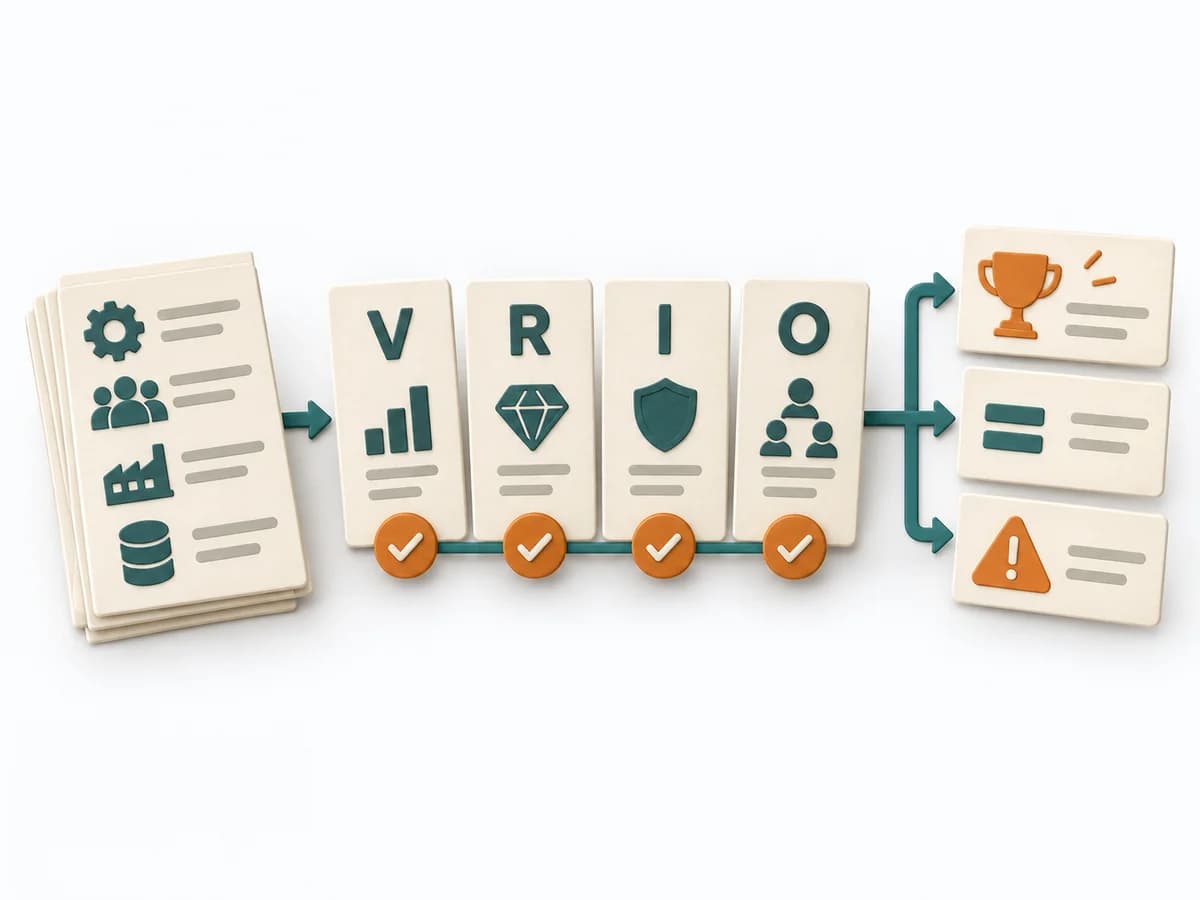 Business Strategy VRIO Framework |  Business Strategy Value Chain Analysis |
|---|---|---|---|---|
Purposedifferent | When effort needs to be thought of as real working time, it offers a simple common denominator for comparison. It sorts work by value, risk, and delivery ability. The result is captured as Ideal Day Estimates, Assumption Notes, and Capacity Caveats. | When estimates within the team diverge too much, it puts differing expectations on a common test bench. It separates rough complexity from unspoken assumptions. | The VRIO Framework rates resources and capabilities on whether they are Valuable, Rare, Inimitable, and Organized. It compares strengths, risks, market logic, and courses of action. The result is captured as a VRIO table and strategic actions. | Value Chain Analysis shows where value is created, costs accrue, and differentiation becomes possible along the process. It compares strengths, risks, market logic, and courses of action. The result is captured as a value-chain map and lever list. |
Complexitydifferent | Low | Low | Medium | High |
Timedifferent | 15-60 min | 2-5 min je Item | 90-180 min | Half day |
Participantsdifferent | 2-9 | 3-9 | 3-6 | 3-8 |
Formatdifferent | Workshop + async | Workshop + async | Workshop | Workshop |
Outputdifferent | Ideal Day Estimates, Assumption Notes, Capacity Caveats | Relative Estimates, Assumption Notes, Split Candidates | VRIO Table, Strategic Actions | Value Chain Map, Lever List |
Tagsno overlap | EstimationEffortAgile | EstimationAgileRelative sizingTeam | StrategyDiagnosisBusiness modelCapability | StrategyBusiness modelDiagnosisAnalysis |