View methods side by side.
Choose up to four methods. Add them using the search and share the comparison by copying its link.
| Criterion | 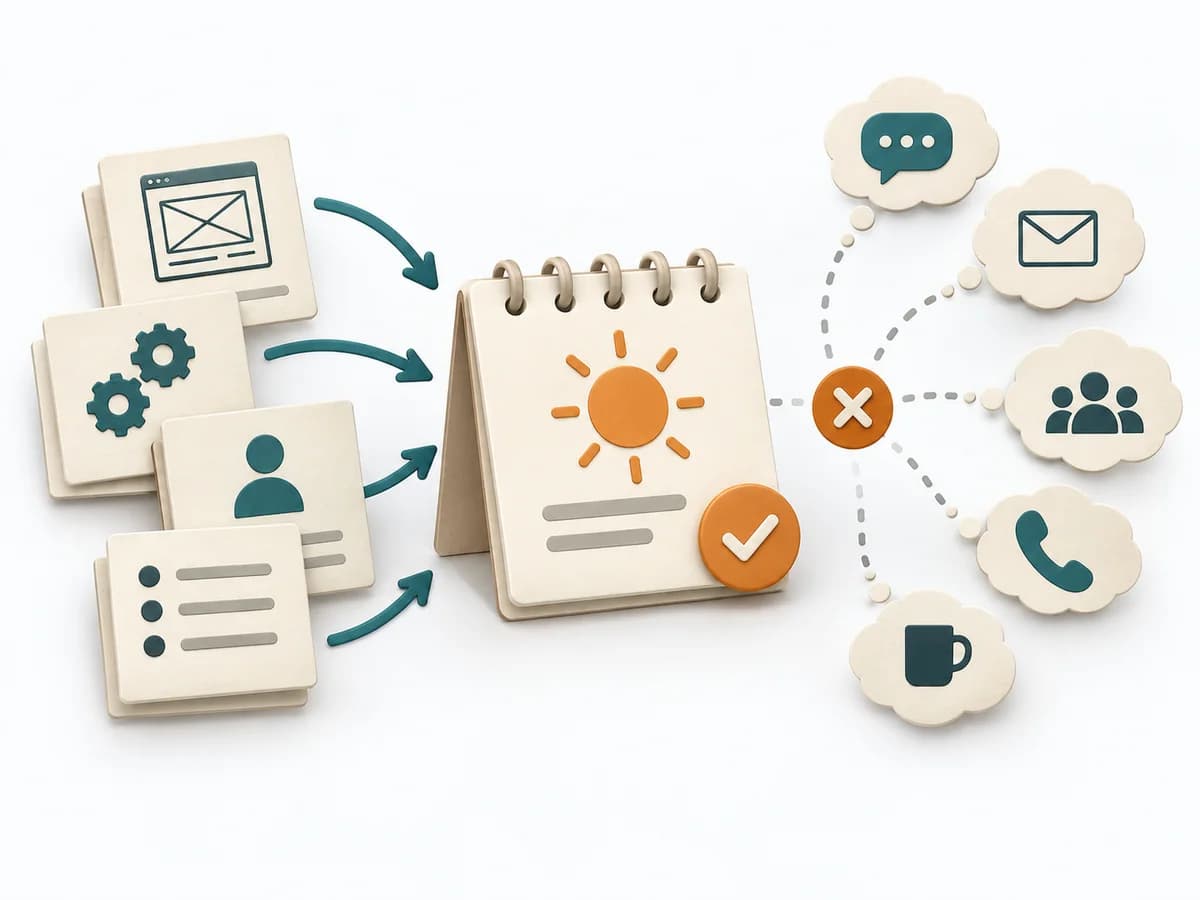 Agile Ideal Days | 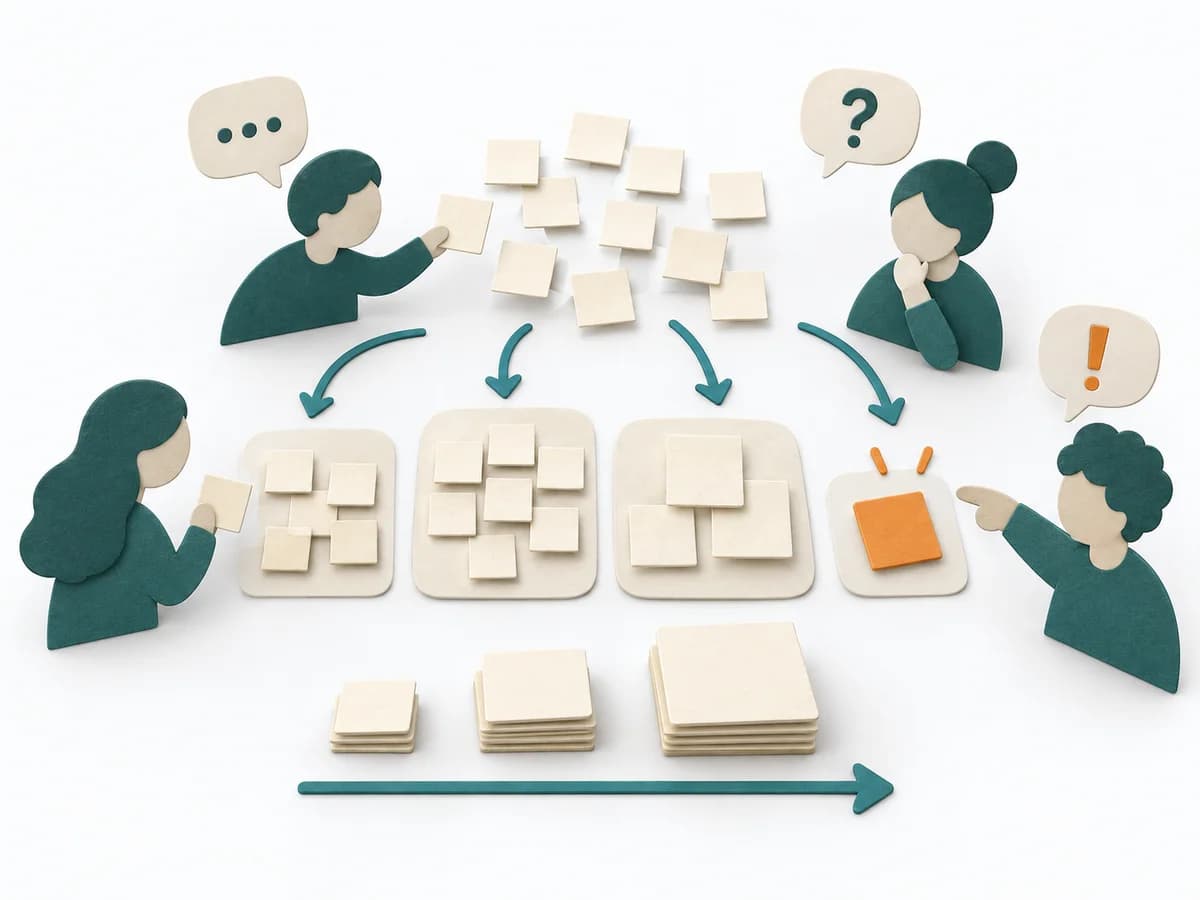 Agile Affinity Estimation |  Decision Making Force Field Analysis |  Agile Planning Poker |
|---|---|---|---|---|
Purposedifferent | When effort needs to be thought of as real working time, it offers a simple common denominator for comparison. It sorts work by value, risk, and delivery ability. The result is captured as Ideal Day Estimates, Assumption Notes, and Capacity Caveats. | When many tasks need to be classified quickly, it sorts them by perceived effort and similarity. It reduces the effort of fine-grained estimation for large volumes. | In change initiatives, supporting and restraining forces sit at the table at the same time. Force Field Analysis makes these tensions explicit and shows where change can be pushed forward by strengthening or relieving. | When estimates within the team diverge too much, it puts differing expectations on a common test bench. It separates rough complexity from unspoken assumptions. |
Complexitydifferent | Low | Medium | Low | Low |
Timedifferent | 15-60 min | 30-90 min | 45-90 min | 2-5 min je Item |
Participantsdifferent | 2-9 | 3-12 | 3-12 | 3-9 |
Formatdifferent | Workshop + async | Workshop | Workshop | Workshop + async |
Outputdifferent | Ideal Day Estimates, Assumption Notes, Capacity Caveats | Affinity Size Map, Grouped Estimates, Unclear Items | Force Field Map, Change Levers, Risk Notes | Relative Estimates, Assumption Notes, Split Candidates |
Tagsno overlap | EstimationEffortAgile | EstimationBacklogRelative sizing | ChangeDecisionStrategy | EstimationAgileRelative sizingTeam |