View methods side by side.
Choose up to four methods. Add them using the search and share the comparison by copying its link.
| Criterion |  Systems Thinking Iceberg Model |  Facilitation Delegation Poker | 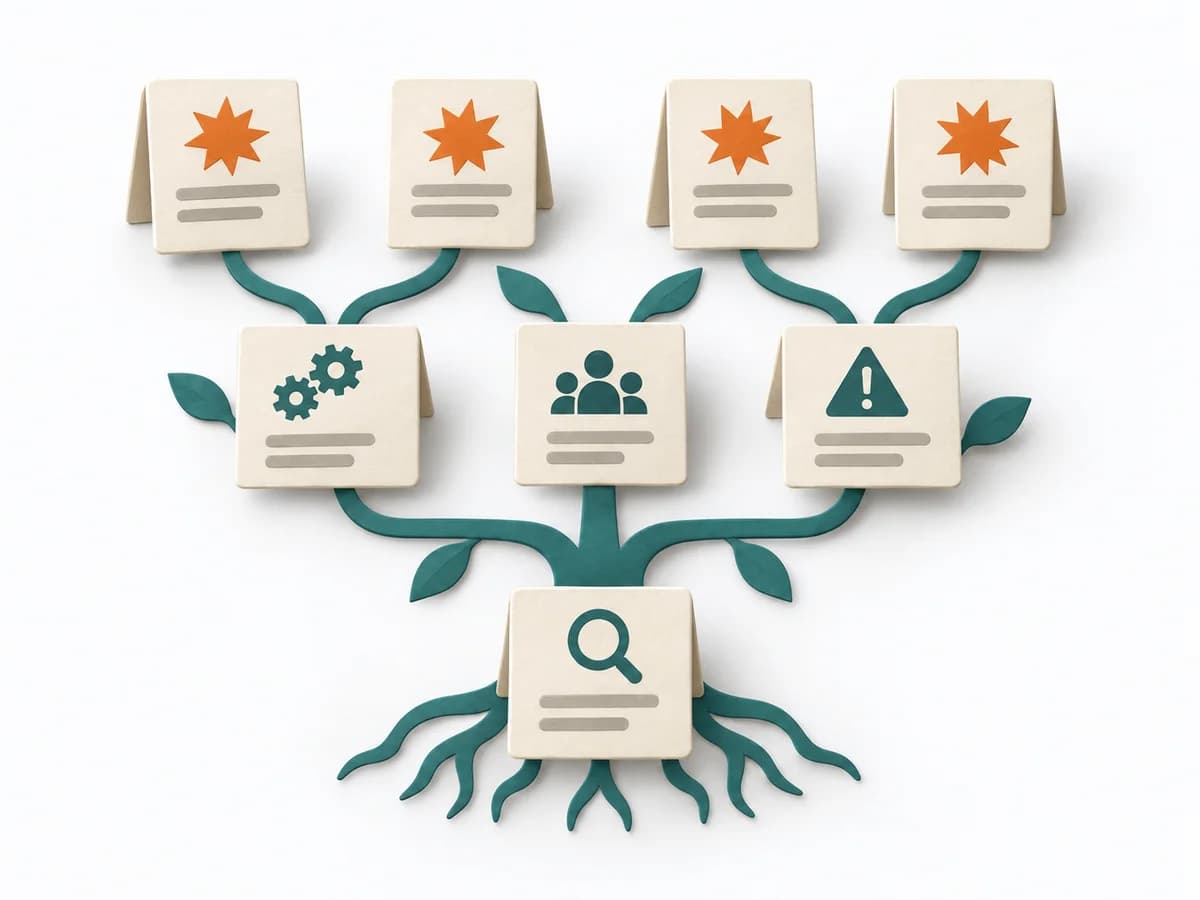 Operations Family Tree Analysis |  Operations Barrier Analysis |
|---|---|---|---|---|
Purposedifferent | The Iceberg Model separates visible events from patterns, structures, and mental models. This turns a single observation into a deeper understanding of why a problem keeps recurring. | When decisions get stuck between leadership and team, Delegation Poker clarifies the desired scope of autonomy. It shows how much decision-making latitude a role should actually get in practice. | For a series of incidents with a similar pattern, the method arranges individual events as branches of a common origin. It makes visible which conditions keep recurring. | For a risk that can only be managed through multiple layers of protection, the method examines the effectiveness of each barrier. It shows where safeguards are missing, too weak, or fail under real conditions. |
Complexitydifferent | Low | Low | Medium | Medium |
Timedifferent | 30-60 min | 45-90 min | 2-4 h | 2-4 h |
Participantsdifferent | 2-10 | 3-10 | 2-6 | 2-6 |
Formatdifferent | Workshop + async | Workshop | Workshop + async | Workshop + async |
Outputdifferent | Iceberg Worksheet, Pattern Notes, Intervention Ideas | Delegation Board, Decision Boundaries, Role Agreements | Family Tree Diagram, Pattern Notes, Systemic Measures | Barrier Inventory, Failure Analysis per Barrier, Action Backlog |
Tagsno overlap | Systems thinkingRoot causePatterns | AutonomyRolesTeam | Root causePatternsIncidentSystemic | Root causeSafetyIncident |