View methods side by side.
Choose up to four methods. Add them using the search and share the comparison by copying its link.
| Criterion | 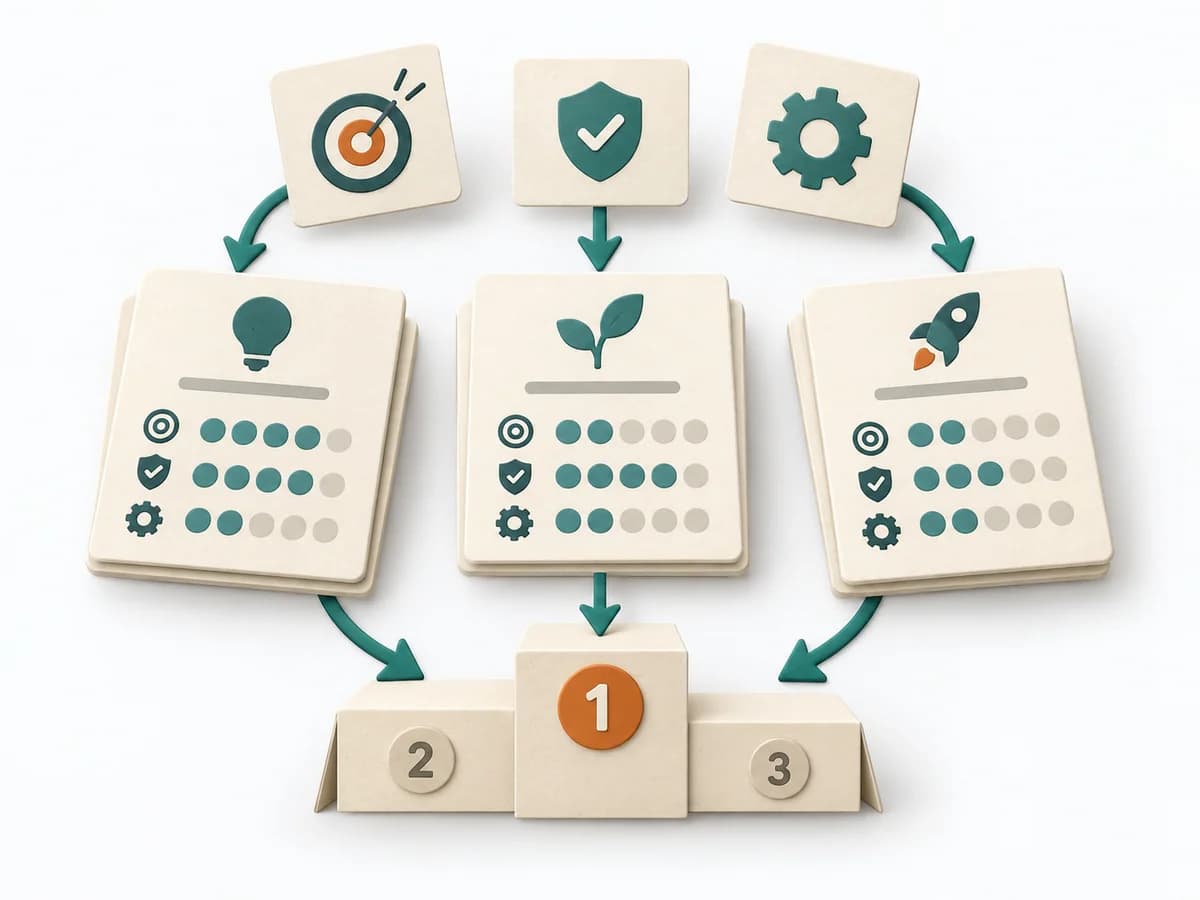 Product Strategy ICE Scoring |  Facilitation Expectation Mapping |  Decision Making RAPID |  Facilitation Stakeholder Salience Model |
|---|---|---|---|---|
Purposedifferent | When ideas need sorting quickly, it condenses impact, confidence, and effort into one compact score. It connects customer value, product logic, and decision priorities. The result is captured as an ICE table and top-ideas list. | When roles, interfaces, or projects fail because of differing expectations, Expectation Mapping surfaces these differences. It shows what each side takes for granted and where the pictures diverge. | In complex management decisions, clarity is often missing about who recommends, who agrees, and who makes the decision. RAPID creates this assignment and stabilizes decisions across several levels. | When stakeholders appear to matter very differently, the Stakeholder Salience Model rates their actual priority through power, legitimacy, and urgency. It turns individual contributions into a visible selection. The result is captured as a Salience diagram and a class-based strategy. |
Complexitydifferent | Low | Low | Medium | Medium |
Timedifferent | 30-60 min | 45-90 min | 45-90 min | 60-90 min |
Participantsdifferent | 2-8 | 3-12 | 3-12 | 3-6 |
Formatdifferent | Workshop + async | Workshop | Workshop + async | Workshop |
Outputdifferent | ICE Table, Top Idea List | Expectation Map, Alignment Notes, Agreements | RAPID Role Map, Recommendation, Decision Log | Salience Diagram, Strategy per Class |
Tagsno overlap | PrioritizationScoringGrowthDecision | AlignmentStakeholdersTeam | DecisionRolesGovernance | StakeholdersFacilitationAlignmentGovernance |