View methods side by side.
Choose up to four methods. Add them using the search and share the comparison by copying its link.
| Criterion |  Knowledge Modeling IBIS |  Facilitation Team Charter | 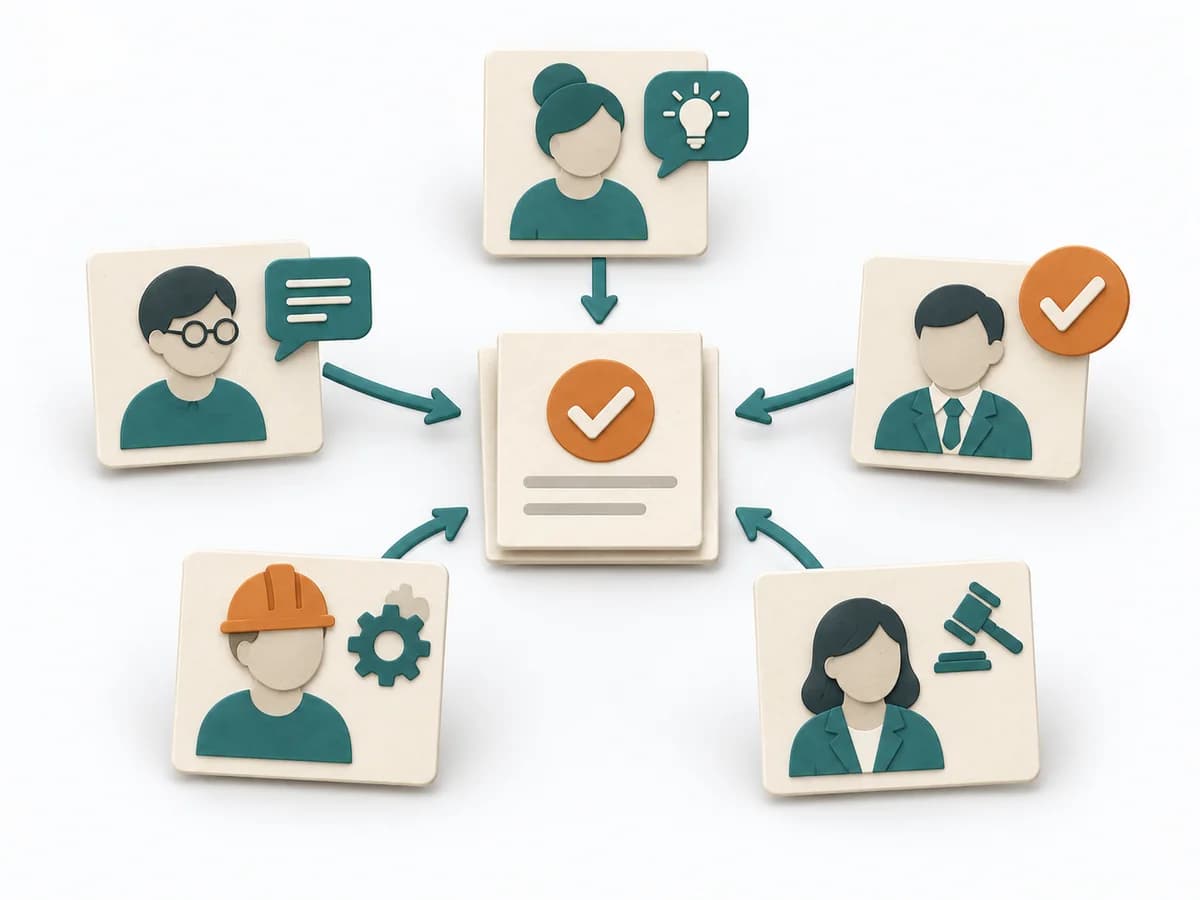 Decision Making RAPID | 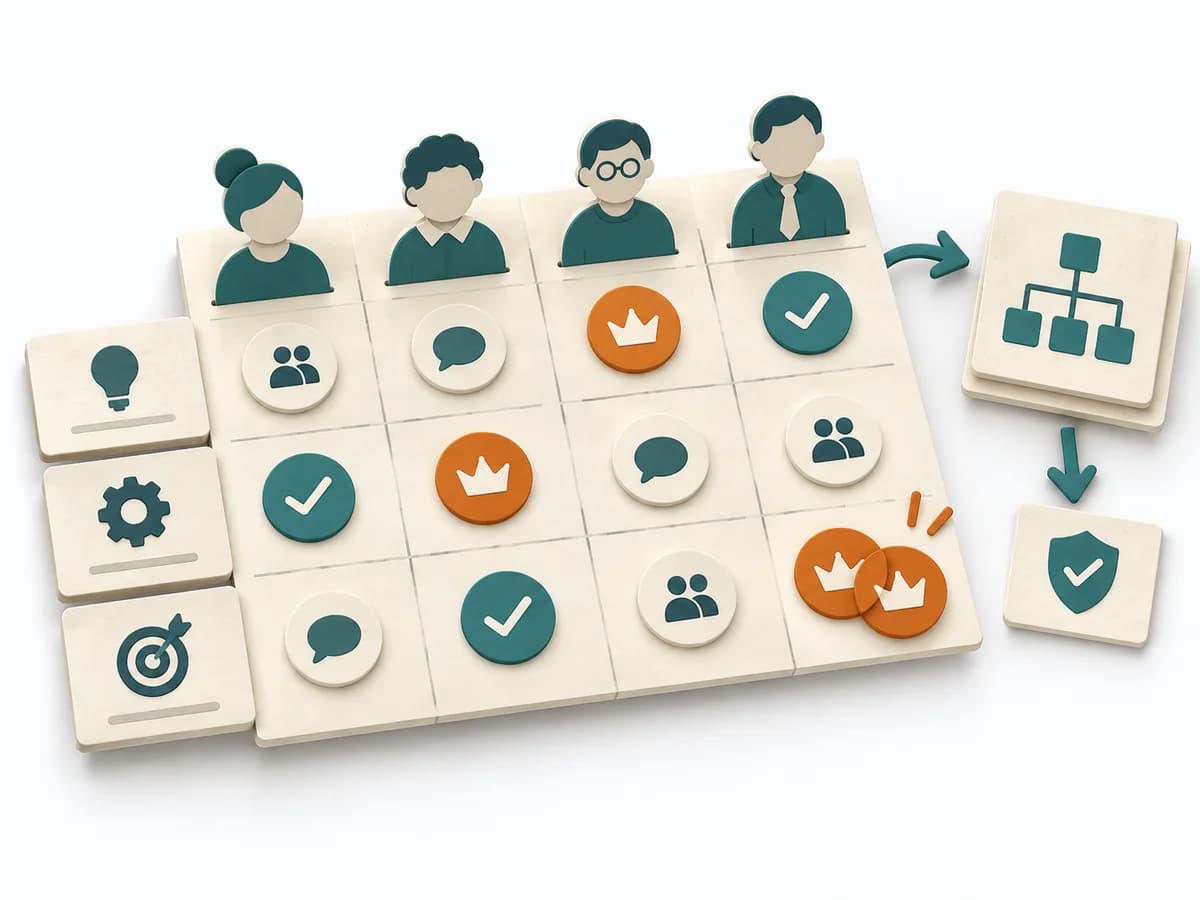 Decision Making Decision Rights Mapping |
|---|---|---|---|---|
Purposedifferent | IBIS structures thinking about complex questions as a sequence of issues, ideas, and arguments. The method keeps discussions open without forcing them into premature consensus. | When a team is starting fresh or working past each other, Team Charter clarifies the shared working basis. It visibly sets out how collaboration, decision paths, and mutual conduct should work day to day. | In complex management decisions, clarity is often missing about who recommends, who agrees, and who makes the decision. RAPID creates this assignment and stabilizes decisions across several levels. | In organizations with many stakeholders, it often blurs who actually decides and who is merely consulted. It separates options, evaluation criteria, and open risks. The result is captured as a Decision Rights matrix and an agreement. |
Complexitysame | Medium | Medium | Medium | Medium |
Timedifferent | 1-3 h | 2-4 h | 45-90 min | 90-180 min |
Participantsdifferent | 2-8 | 3-12 | 3-12 | 4-12 |
Formatdifferent | Workshop + async | Workshop | Workshop + async | Workshop |
Outputdifferent | Issue Map, Positions, Argument Notes | Team Charter, Working Norms, Role Notes | RAPID Role Map, Recommendation, Decision Log | Decision Rights Matrix, Agreement |
Tagsno overlap | RationaleKnowledgeDecision | TeamAlignmentCollaboration | DecisionRolesGovernance | DecisionGovernanceAlignmentResponsibility |