View methods side by side.
Choose up to four methods. Add them using the search and share the comparison by copying its link.
| Criterion |  Knowledge Modeling IBIS | 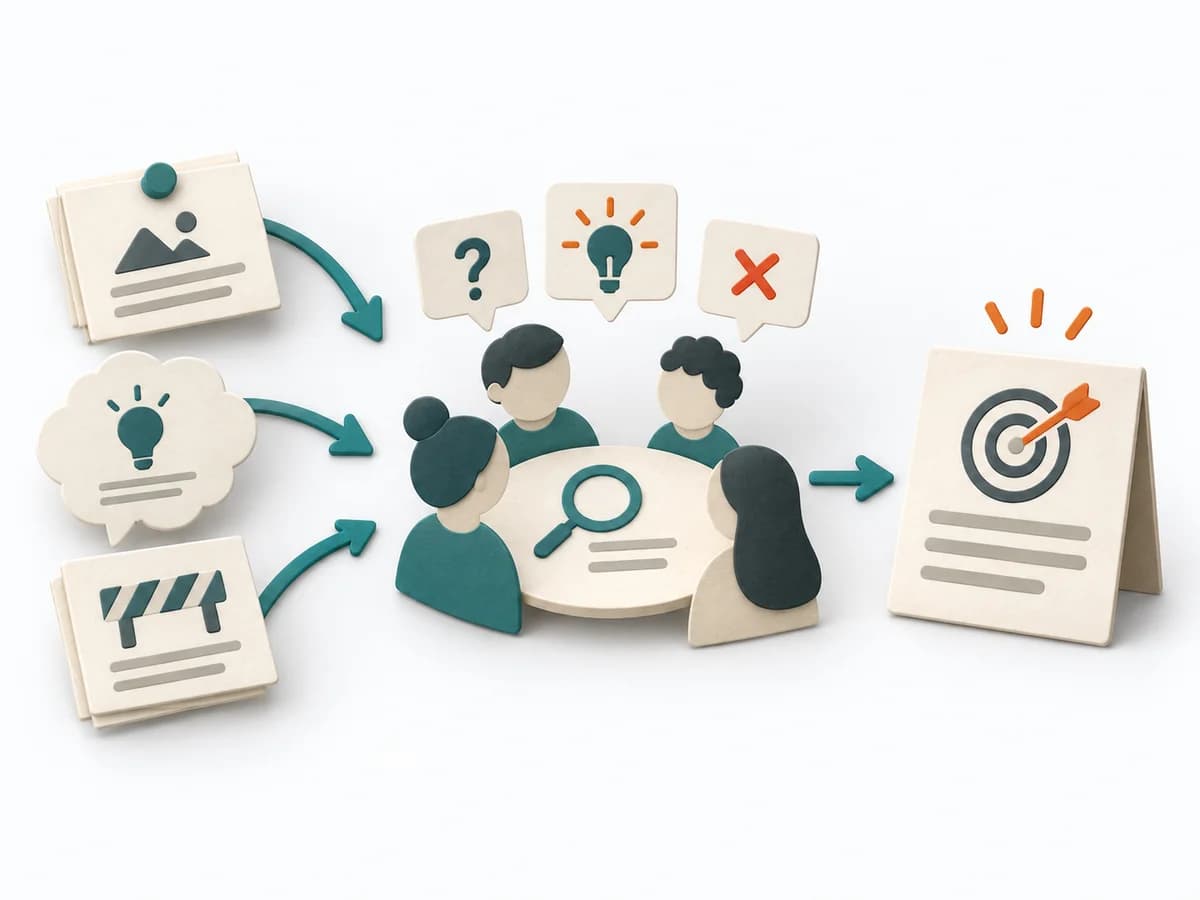 Facilitation Problem Framing Workshop |  Facilitation Stakeholder Mapping |  Facilitation Stakeholder Salience Model |
|---|---|---|---|---|
Purposedifferent | IBIS structures thinking about complex questions as a sequence of issues, ideas, and arguments. The method keeps discussions open without forcing them into premature consensus. | When a team works on symptoms but the real question stays fuzzy, a Problem Framing Workshop sharpens the view of the right problem. It separates observation, interpretation, and target picture from each other. | When an initiative depends on many people, interests, and power dynamics, Stakeholder Mapping systematically orders the environment. It shows who influences, who is affected, and where relationship management or safeguarding matters first. | When stakeholders appear to matter very differently, the Stakeholder Salience Model rates their actual priority through power, legitimacy, and urgency. It turns individual contributions into a visible selection. The result is captured as a Salience diagram and a class-based strategy. |
Complexitydifferent | Medium | Low | Low | Medium |
Timedifferent | 1-3 h | 60-120 min | 60–90 min | 60-90 min |
Participantsdifferent | 2-8 | 4-10 | 2-8 | 3-6 |
Formatdifferent | Workshop + async | Workshop | Workshop + async | Workshop |
Outputdifferent | Issue Map, Positions, Argument Notes | Problem Statement, Scope Boundaries, Assumption List, Next Analysis Questions | Stakeholder Map, Engagement Plan, Risk Notes | Salience Diagram, Strategy per Class |
Tagsno overlap | RationaleKnowledgeDecision | FacilitationAlignmentDiscovery | StakeholdersAlignmentFacilitationChange | StakeholdersFacilitationAlignmentGovernance |