View methods side by side.
Choose up to four methods. Add them using the search and share the comparison by copying its link.
| Criterion |  Knowledge Modeling IBIS |  UX Research Personas | 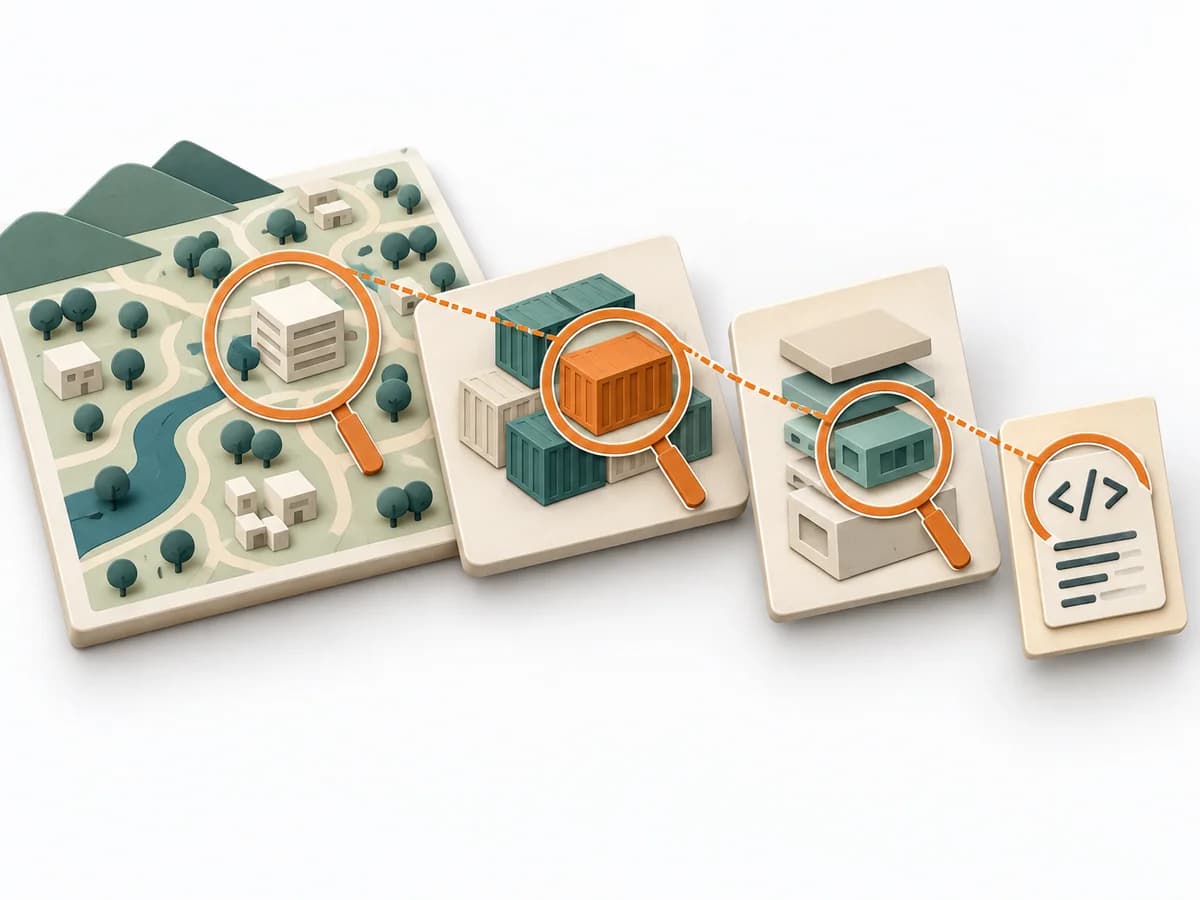 Architecture C4 Model |  Decision Making Argument Mapping |
|---|---|---|---|---|
Purposedifferent | IBIS structures thinking about complex questions as a sequence of issues, ideas, and arguments. The method keeps discussions open without forcing them into premature consensus. | When target groups stay too vague and teams talk about the same people differently, personas create a shared, solid picture of usage. Condensed profiles make needs, contexts, and differences tangible enough for decisions. | The C4 Model makes a system legible across several resolution levels, from context down to code. It suits situations where different audiences need to understand the same architecture from different altitudes. | When statements, evidence, and counterarguments get mixed up, a debate quickly loses its structure. Argument Mapping breaks a thesis down into its reasoning and makes visible what it really rests on. |
Complexitydifferent | Medium | Medium | Low | Medium |
Timedifferent | 1-3 h | 1-3 Tage | 1-4 h | 1-3 h |
Participantsdifferent | 2-8 | Internes Team | 1-5 | 1-8 |
Formatsame | Workshop + async | Workshop + async | Workshop + async | Workshop + async |
Outputdifferent | Issue Map, Positions, Argument Notes | Persona Profiles, Needs Summary, Scenario Notes | Context Diagram, Container Diagram, Component Diagram | Argument Map, Evidence Gaps, Decision Rationale |
Tagsno overlap | RationaleKnowledgeDecision | ResearchCustomerSynthesis | ArchitectureCommunicationVisualization | SensemakingDecisionRationale |