View methods side by side.
Choose up to four methods. Add them using the search and share the comparison by copying its link.
| Criterion |  Knowledge Modeling IBIS | 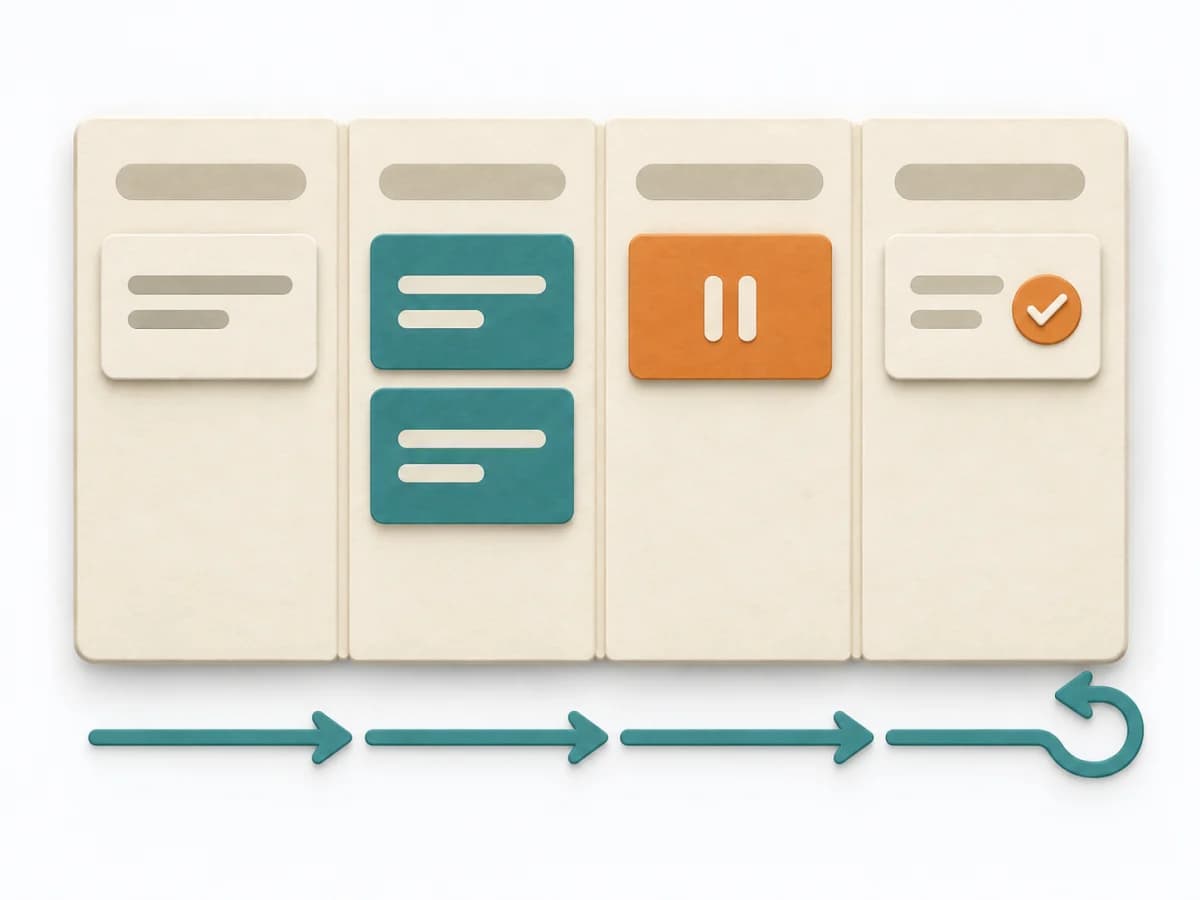 Engineering Kanban | 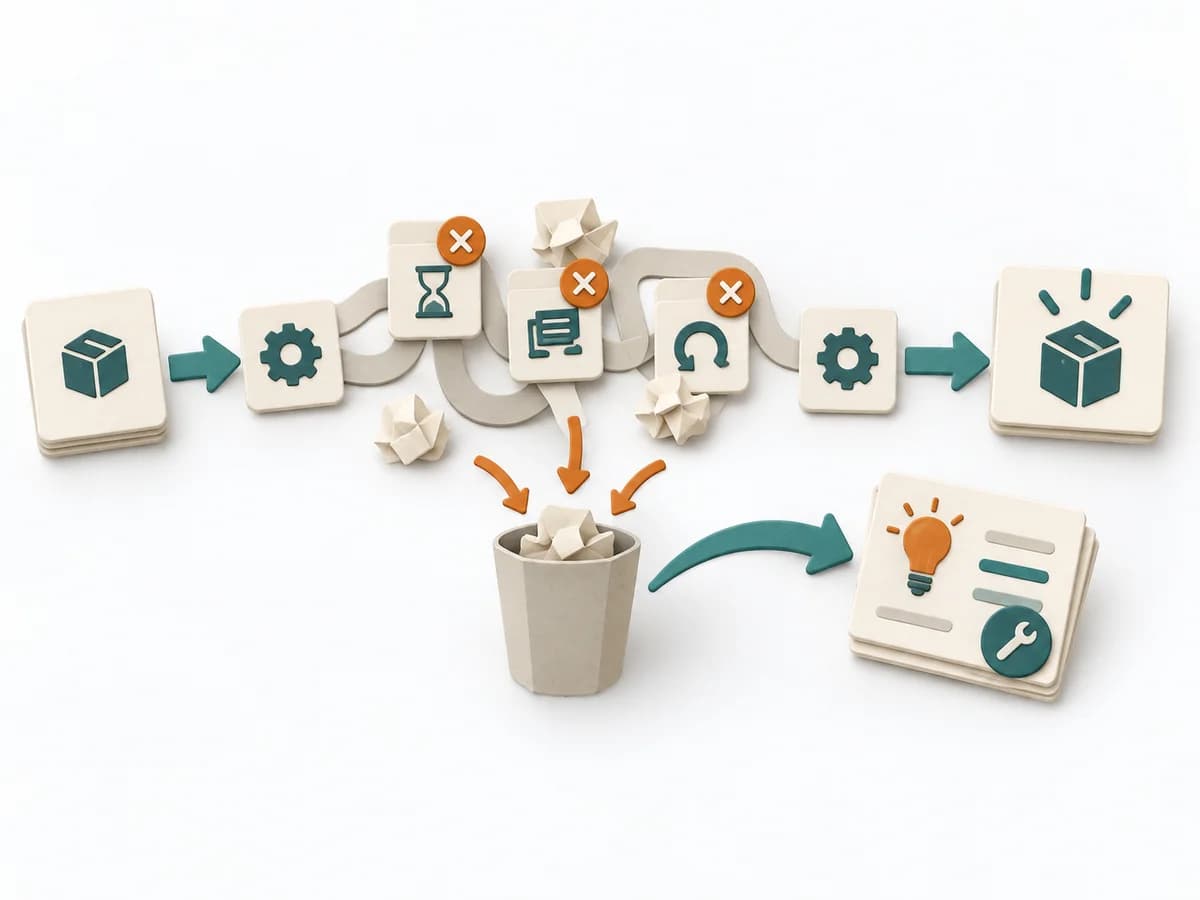 Operations Waste Analysis | 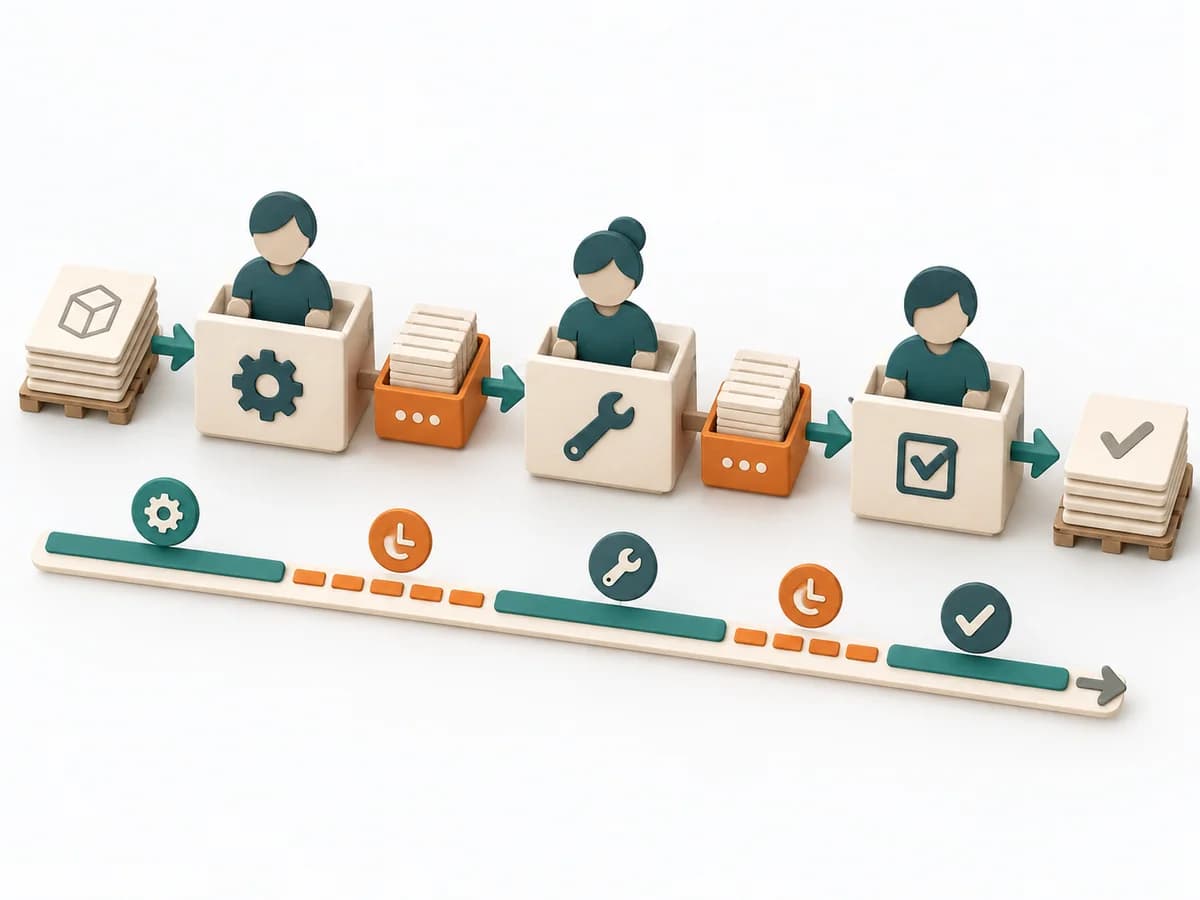 Delivery Value Stream Mapping |
|---|---|---|---|---|
Purposedifferent | IBIS structures thinking about complex questions as a sequence of issues, ideas, and arguments. The method keeps discussions open without forcing them into premature consensus. | When work sits in too many parallel streams, throughput suffers and no one sees the bottlenecks. Kanban makes the flow of work visible and limits overload so a system becomes calmer and more predictable. | For a process that keeps people busy but creates little value, the method exposes waste. It directs attention to unnecessary movement, waiting times, rework, and overdelivery. | When delivery work dissolves into wait times, handoffs, and hidden effort, Value Stream Mapping makes the actual flow visible. The method exposes bottlenecks, idle time, and feedback loops so lead time and improvement levers become tangible. |
Complexitydifferent | Medium | Medium | Low | Medium |
Timedifferent | 1-3 h | Ongoing | 45-120 min | 1-3 h |
Participantsdifferent | 2-8 | 2-12 | 2-8 | 4-10 |
Formatdifferent | Workshop + async | Workshop + async | Workshop | Workshop |
Outputdifferent | Issue Map, Positions, Argument Notes | Kanban board, WIP policies, Flow metrics | Waste Map, Prioritized Waste, Improvement Backlog | Current-state map, Future-state map, Bottleneck list |
Tagsno overlap | RationaleKnowledgeDecision | FlowVisual managementDelivery | WasteLeanProcess improvement | LeanFlowWasteDelivery |