View methods side by side.
Choose up to four methods. Add them using the search and share the comparison by copying its link.
| Criterion |  Knowledge Modeling IBIS | 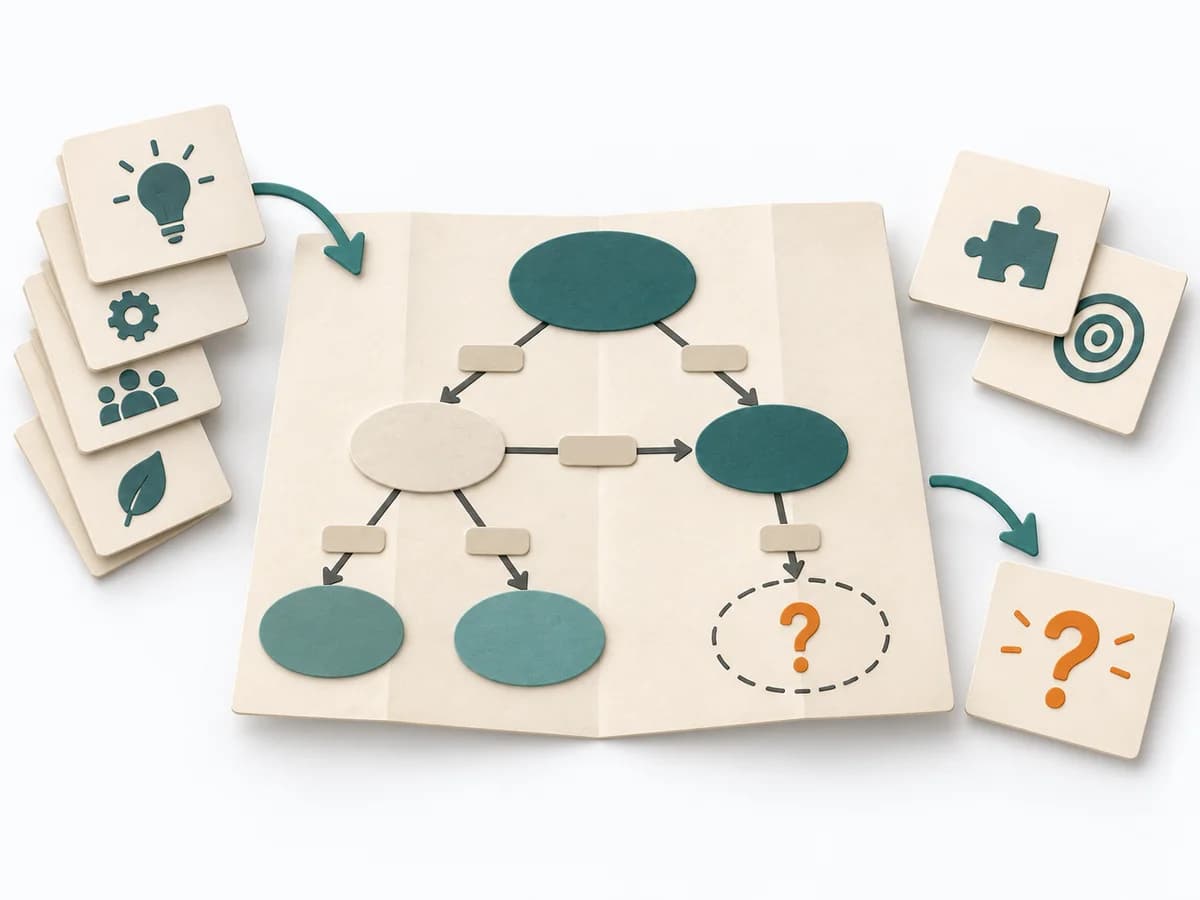 Knowledge Modeling Concept Mapping | 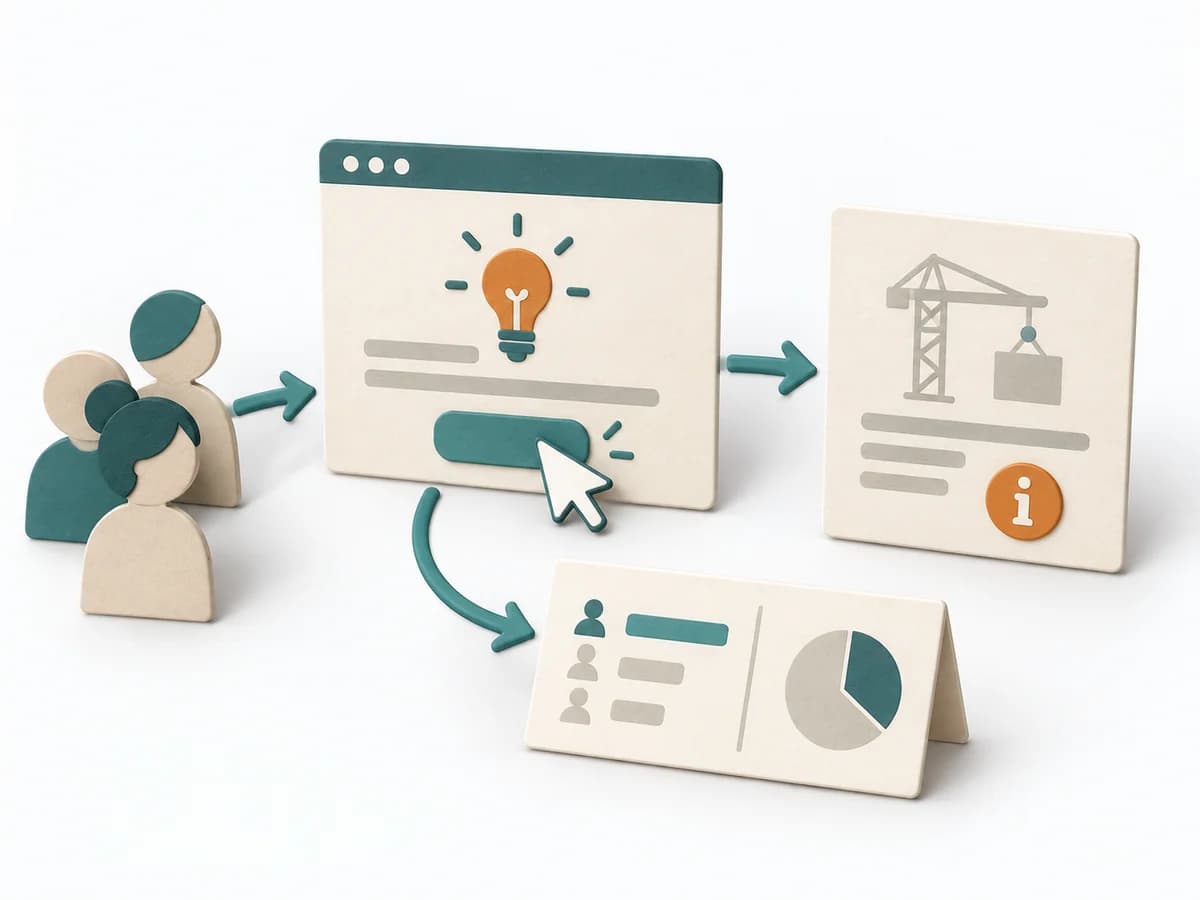 Product Discovery Fake Door Test |  Decision Making Argument Mapping |
|---|---|---|---|---|
Purposedifferent | IBIS structures thinking about complex questions as a sequence of issues, ideas, and arguments. The method keeps discussions open without forcing them into premature consensus. | Concept Mapping arranges terms and relationships in a network that makes subject-matter connections tangible. It fits when a topic needs to be understood structurally rather than linearly. | When demand is still unclear, it measures interest in a feature before it is built. It separates real behavior from polite agreement and deliberately keeps build effort small. | When statements, evidence, and counterarguments get mixed up, a debate quickly loses its structure. Argument Mapping breaks a thesis down into its reasoning and makes visible what it really rests on. |
Complexitysame | Medium | Medium | Medium | Medium |
Timedifferent | 1-3 h | 1-2 h | 1-5 Tage | 1-3 h |
Participantsdifferent | 2-8 | 1-8 | Nutzertraffic | 1-8 |
Formatdifferent | Workshop + async | Workshop + async | Async | Workshop + async |
Outputdifferent | Issue Map, Positions, Argument Notes | Concept Map, Relationship Labels, Knowledge Gaps | Click Data, Interest Signal, Learning Decision | Argument Map, Evidence Gaps, Decision Rationale |
Tagsno overlap | RationaleKnowledgeDecision | KnowledgeConceptsMappingSensemaking | ValidationExperimentsDemandDiscovery | SensemakingDecisionRationale |