View methods side by side.
Choose up to four methods. Add them using the search and share the comparison by copying its link.
| Criterion |  Knowledge Modeling IBIS | 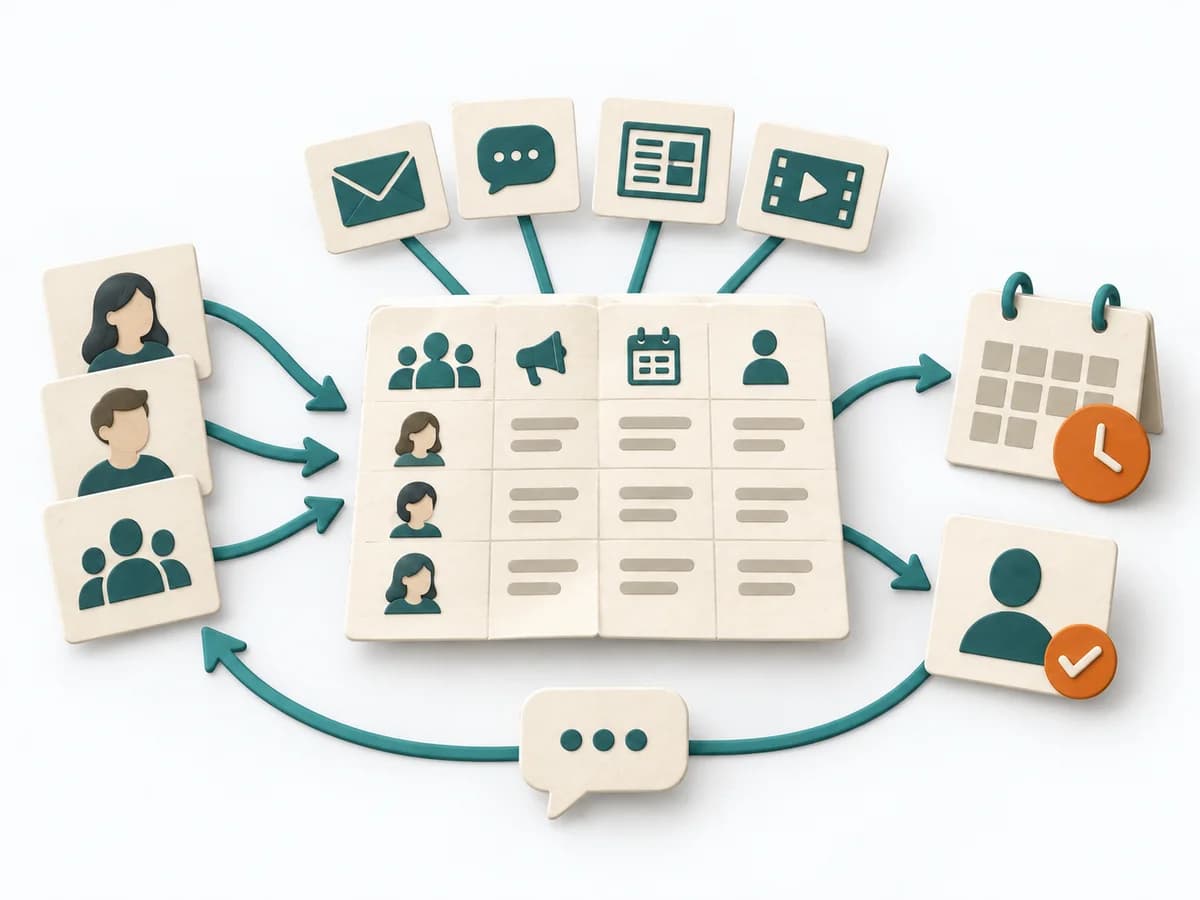 Delivery Communication Plan | 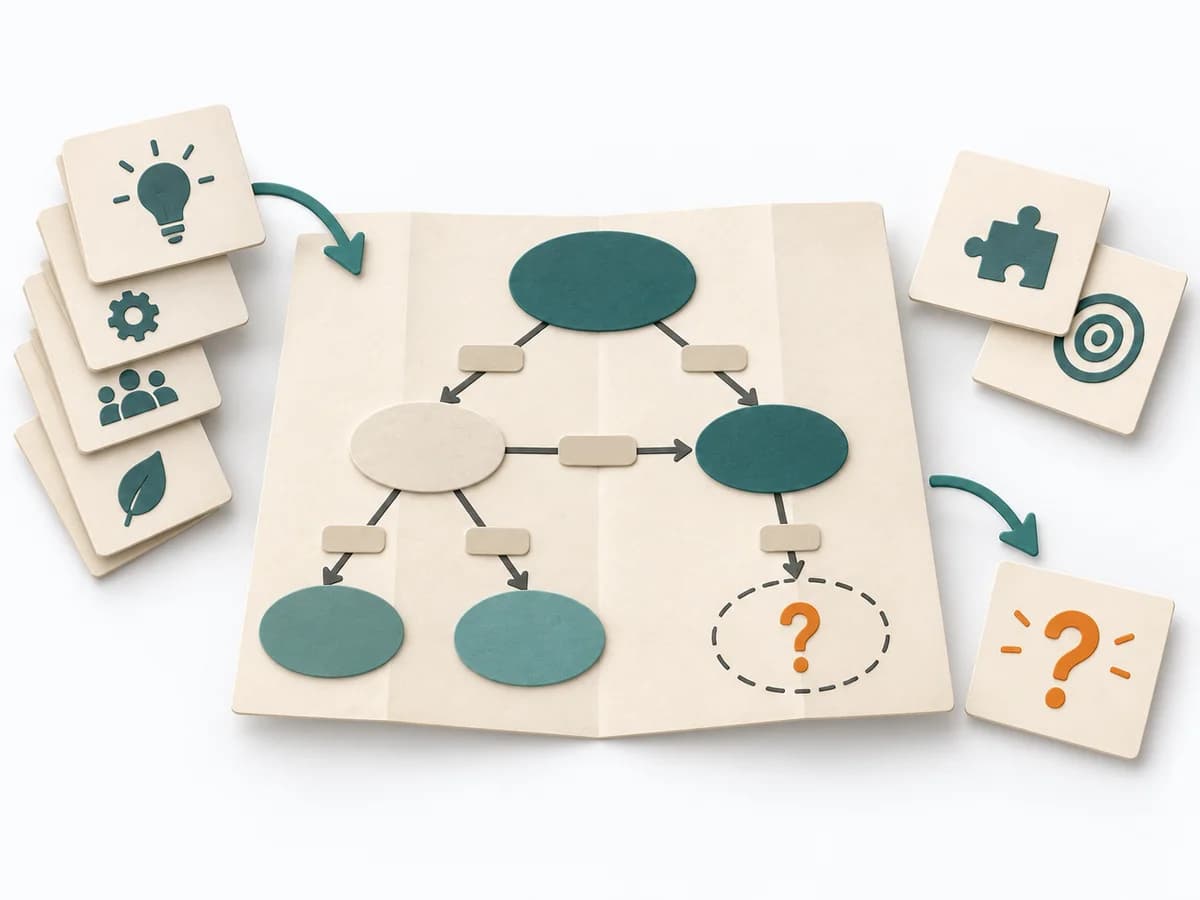 Knowledge Modeling Concept Mapping |  Decision Making Constraint Analysis |
|---|---|---|---|---|
Purposedifferent | IBIS structures thinking about complex questions as a sequence of issues, ideas, and arguments. The method keeps discussions open without forcing them into premature consensus. | When many people need to be informed in parallel and messages would otherwise arrive unevenly or too late, a Communication Plan orders communication reliably. Channels, audiences, and cadences interlock so important information doesn't get lost. | Concept Mapping arranges terms and relationships in a network that makes subject-matter connections tangible. It fits when a topic needs to be understood structurally rather than linearly. | When an initiative stalls, the limit often lies not in the idea but in hard or soft boundary conditions. Constraint Analysis separates these limits and shows which of them can actually be shaped. |
Complexitydifferent | Medium | Low | Medium | Low |
Timedifferent | 1-3 h | 45-90 min | 1-2 h | 30-90 min |
Participantsdifferent | 2-8 | 2-6 | 1-8 | 2-8 |
Formatsame | Workshop + async | Workshop + async | Workshop + async | Workshop + async |
Outputdifferent | Issue Map, Positions, Argument Notes | Communication Plan, Channel Matrix, Message Cadence | Concept Map, Relationship Labels, Knowledge Gaps | Constraint List, Hard/Soft Classification, Option Impact Notes, Decision Boundaries |
Tagsno overlap | RationaleKnowledgeDecision | CommunicationStakeholdersDeliveryPlanning | KnowledgeConceptsMappingSensemaking | ConstraintsDecisionPlanningOptions |