View methods side by side.
Choose up to four methods. Add them using the search and share the comparison by copying its link.
| Criterion |  Engineering Hypothesis-Driven Troubleshooting | 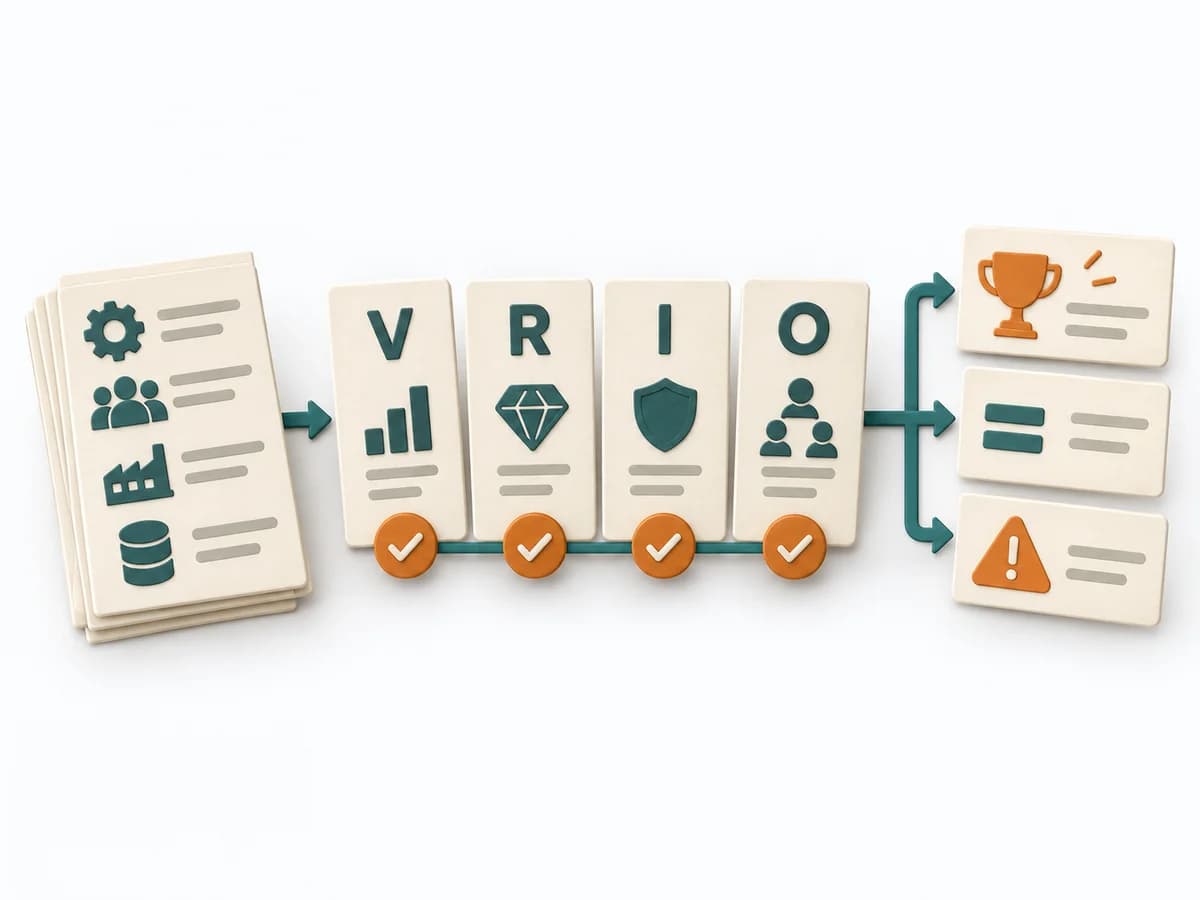 Business Strategy VRIO Framework |  Product Discovery Test Card |  Product Discovery Fake Door Test |
|---|---|---|---|---|
Purposedifferent | When systems fail unexpectedly, spontaneous attempts often produce more noise than insight. Hypothesis-driven Troubleshooting translates symptoms into testable assumptions and makes troubleshooting learnable. | The VRIO Framework rates resources and capabilities on whether they are Valuable, Rare, Inimitable, and Organized. It compares strengths, risks, market logic, and courses of action. The result is captured as a VRIO table and strategic actions. | The Test Card turns a critical assumption into a testable claim and specifies in advance which result counts as success. | When demand is still unclear, it measures interest in a feature before it is built. It separates real behavior from polite agreement and deliberately keeps build effort small. |
Complexitydifferent | Medium | Medium | Low | Medium |
Timedifferent | 30-240 min | 90-180 min | 20-35 min | 1-5 Tage |
Participantsdifferent | 1-6 | 3-6 | 1-5 | Nutzertraffic |
Formatdifferent | Workshop + async | Workshop | Workshop + async | Async |
Outputdifferent | Hypothesis Log, Test Plan, Evidence Notes, Diagnosis Summary | VRIO Table, Strategic Actions | Test Card with a pre-set threshold | Click Data, Interest Signal, Learning Decision |
Tagsno overlap | TroubleshootingProblem solvingDiagnosis | StrategyDiagnosisBusiness modelCapability | ExperimentsValidationDiscoveryHypothesis | ValidationExperimentsDemandDiscovery |