View methods side by side.
Choose up to four methods. Add them using the search and share the comparison by copying its link.
| Criterion |  Engineering Hypothesis-Driven Troubleshooting | 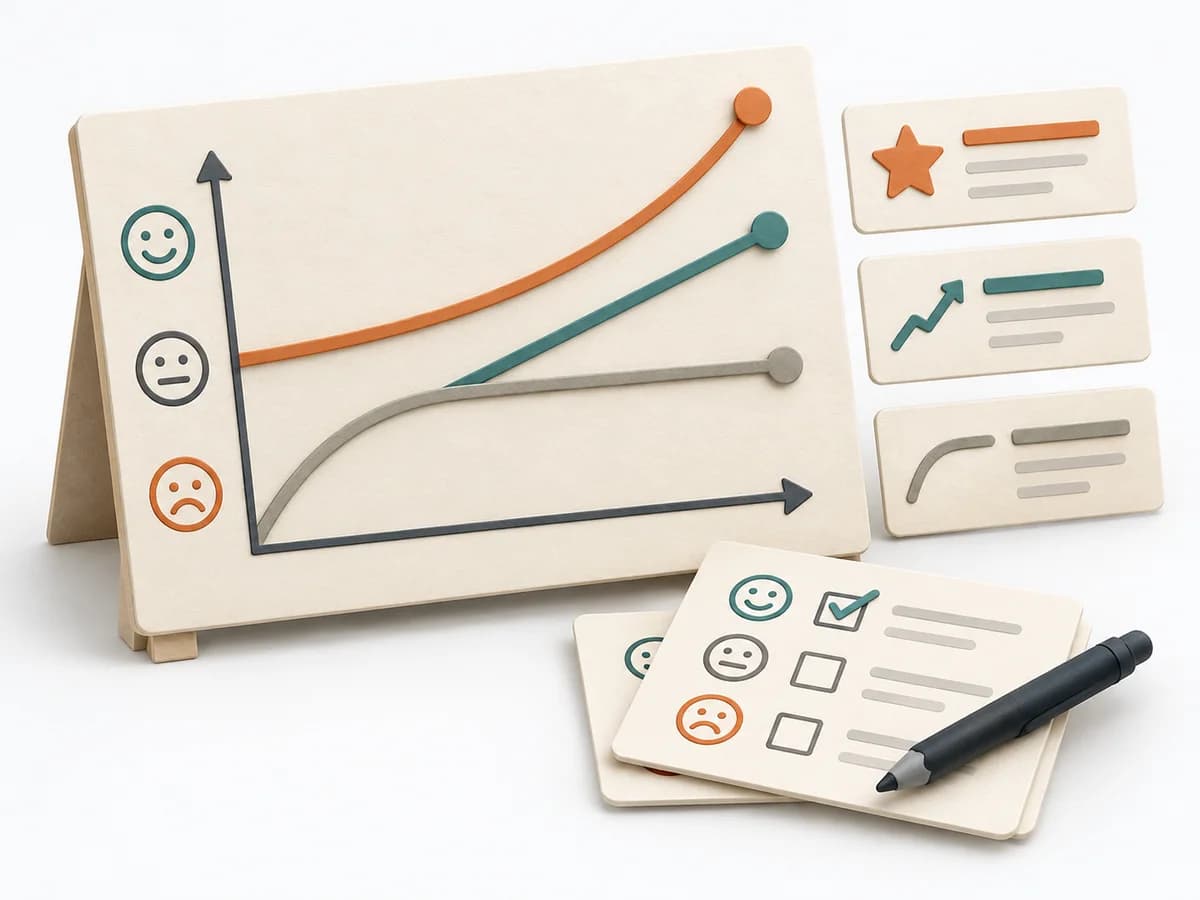 Product Discovery Kano Model |  Operations Change Analysis | 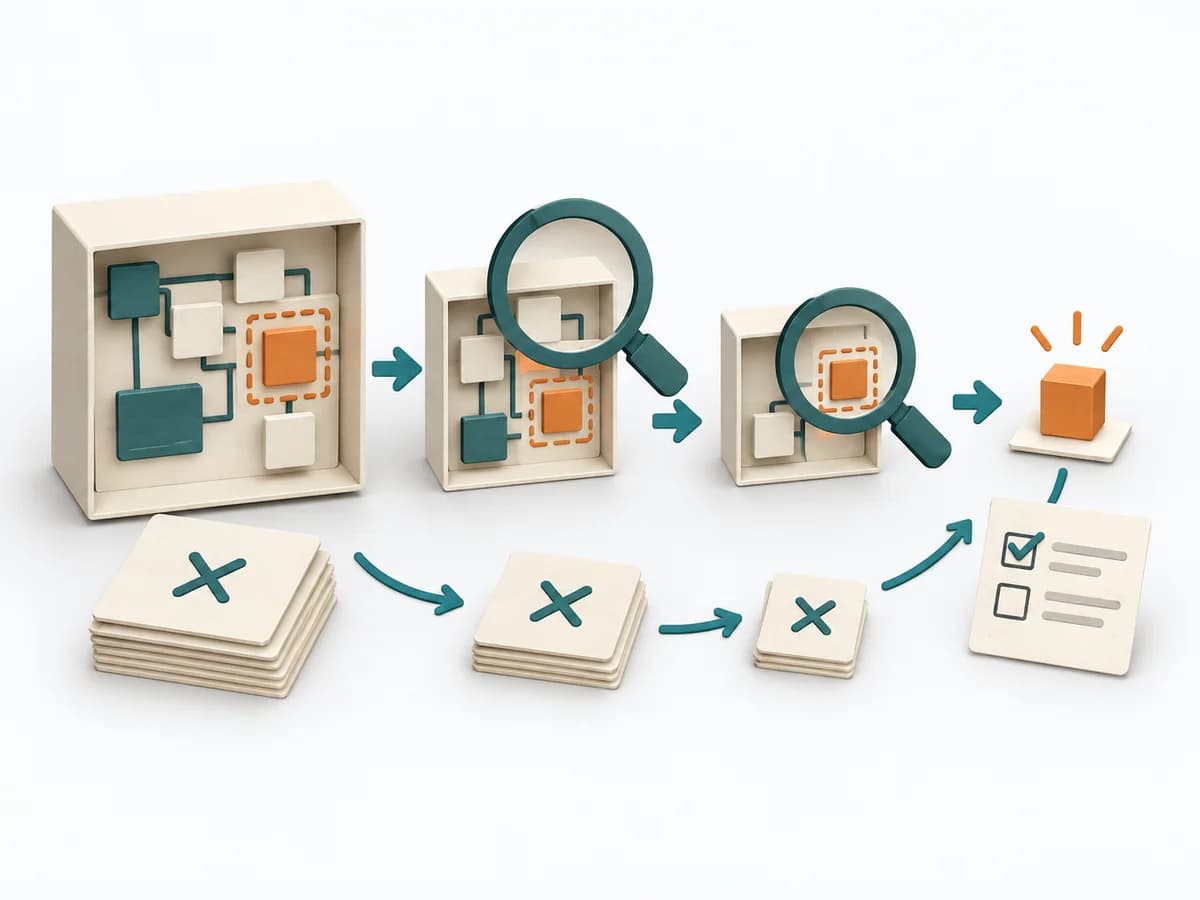 Engineering Fault Isolation |
|---|---|---|---|---|
Purposedifferent | When systems fail unexpectedly, spontaneous attempts often produce more noise than insight. Hypothesis-driven Troubleshooting translates symptoms into testable assumptions and makes troubleshooting learnable. | When features need to be distinguished by their effect on satisfaction, it makes expectations and surprises comparable. It separates basic needs, performance contribution, and delight. | For a deviation after a change, the method isolates the influence of the altered condition. It narrows down which differences are relevant and which are just accompanying noise. | In technical failures, the visible symptom often gets mixed up with the actual cause. Fault Isolation narrows the fault space and progressively reduces which part of the system is truly affected. |
Complexitysame | Medium | Medium | Medium | Medium |
Timedifferent | 30-240 min | 1-2 Tage | 45-120 min | 30-180 min |
Participantsdifferent | 1-6 | 10-50 | 2-6 | 1-6 |
Formatsame | Workshop + async | Workshop + async | Workshop + async | Workshop + async |
Outputdifferent | Hypothesis Log, Test Plan, Evidence Notes, Diagnosis Summary | Kano Matrix, Feature Classes, Priority Themes | Change Matrix, Cause Hypotheses, Validation Questions, Action List | Fault Isolation Map, Test Log, Excluded Hypotheses, Narrowed Fault Area |
Tagsno overlap | TroubleshootingProblem solvingDiagnosis | SatisfactionPrioritizationCustomer | ChangeRoot causeTroubleshootingComparison | TroubleshootingDiagnosisEngineering |