View methods side by side.
Choose up to four methods. Add them using the search and share the comparison by copying its link.
| Criterion |  Engineering Hypothesis-Driven Troubleshooting |  Product Discovery Jobs to Be Done | 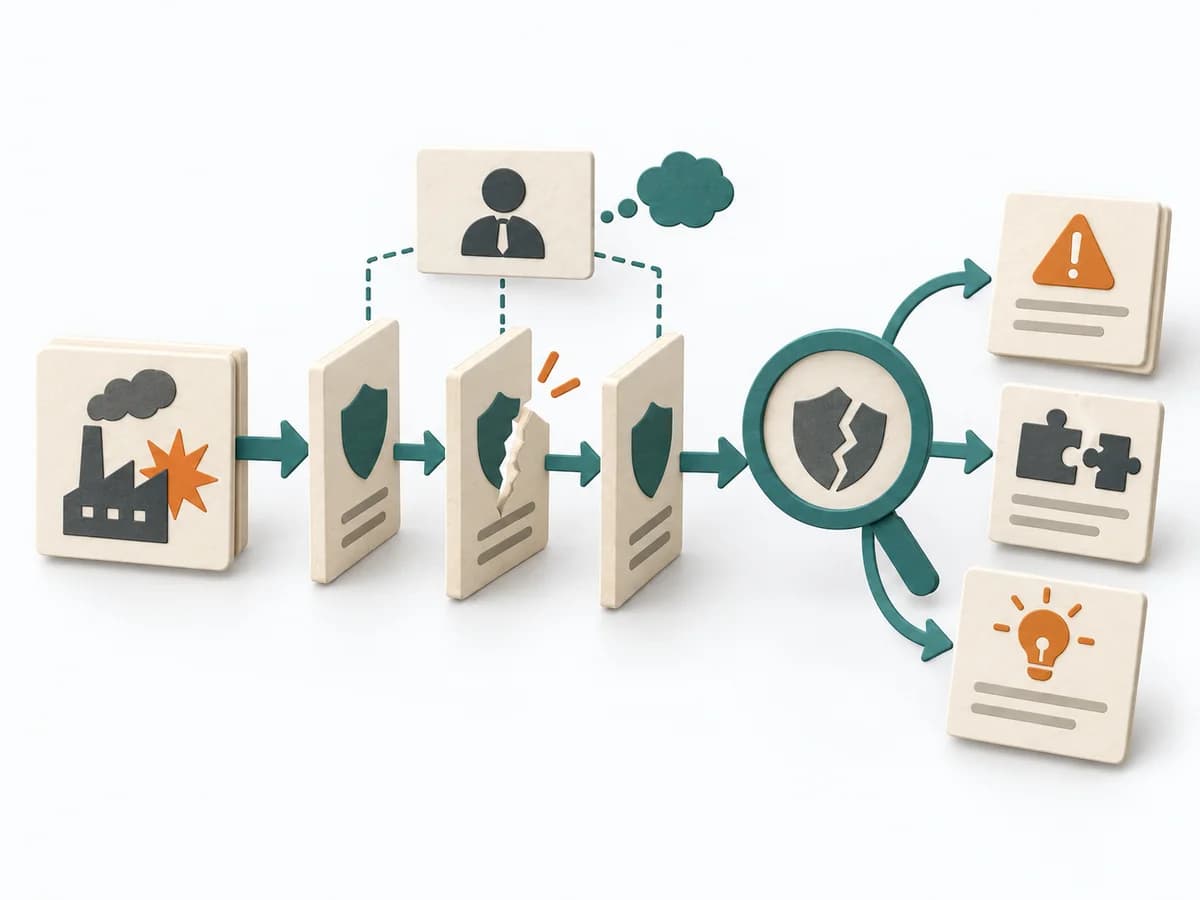 Operations MORT Analysis |  Operations Barrier Analysis |
|---|---|---|---|---|
Purposedifferent | When systems fail unexpectedly, spontaneous attempts often produce more noise than insight. Hypothesis-driven Troubleshooting translates symptoms into testable assumptions and makes troubleshooting learnable. | When switching motives and progress are unclear, it reconstructs the situation from real customer circumstances. It shows why a switch happens and what kind of progress is being sought. | For a safety-relevant event or a system with high protection requirements, the method examines where controls failed. It exposes both technical and organizational gaps. | For a risk that can only be managed through multiple layers of protection, the method examines the effectiveness of each barrier. It shows where safeguards are missing, too weak, or fail under real conditions. |
Complexitydifferent | Medium | Medium | High | Medium |
Timedifferent | 30-240 min | 1-3 Wochen | Mehrere Tage bis Wochen | 2-4 h |
Participantsdifferent | 1-6 | 5-12 Interviews | 2-6 | 2-6 |
Formatsame | Workshop + async | Workshop + async | Workshop + async | Workshop + async |
Outputdifferent | Hypothesis Log, Test Plan, Evidence Notes, Diagnosis Summary | Job Stories, Outcome Statements, Opportunity List | MORT Worksheets, Findings per Branch, Corrective Actions, Systemic Recommendations | Barrier Inventory, Failure Analysis per Barrier, Action Backlog |
Tagsno overlap | TroubleshootingProblem solvingDiagnosis | CustomerOutcomesNeeds | Root causeSafetySystemicIncident | Root causeSafetyIncident |