View methods side by side.
Choose up to four methods. Add them using the search and share the comparison by copying its link.
Selected:Hypothesis-Driven TroubleshootingExpectation MappingStakeholder MappingSpotify Model Mapping
| Criterion | 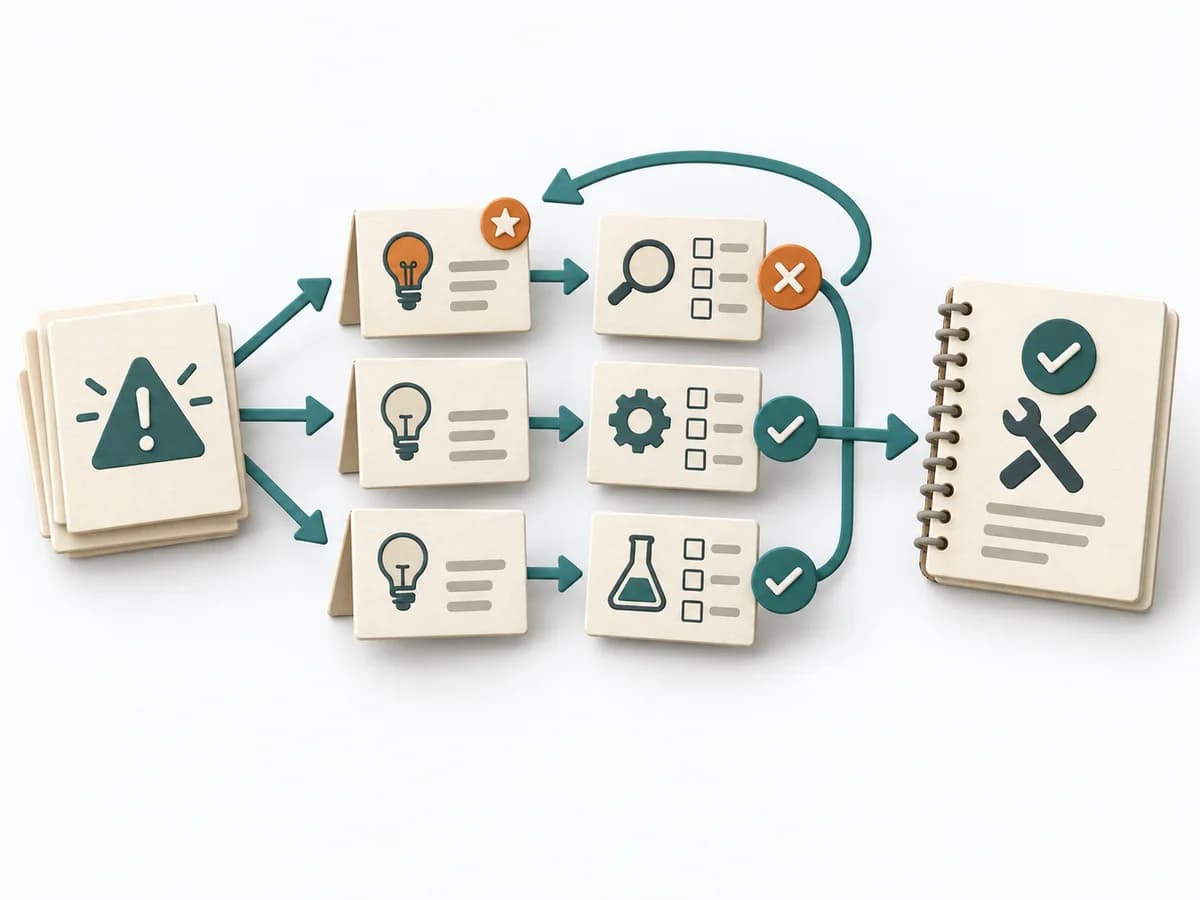 Engineering Hypothesis-Driven Troubleshooting | 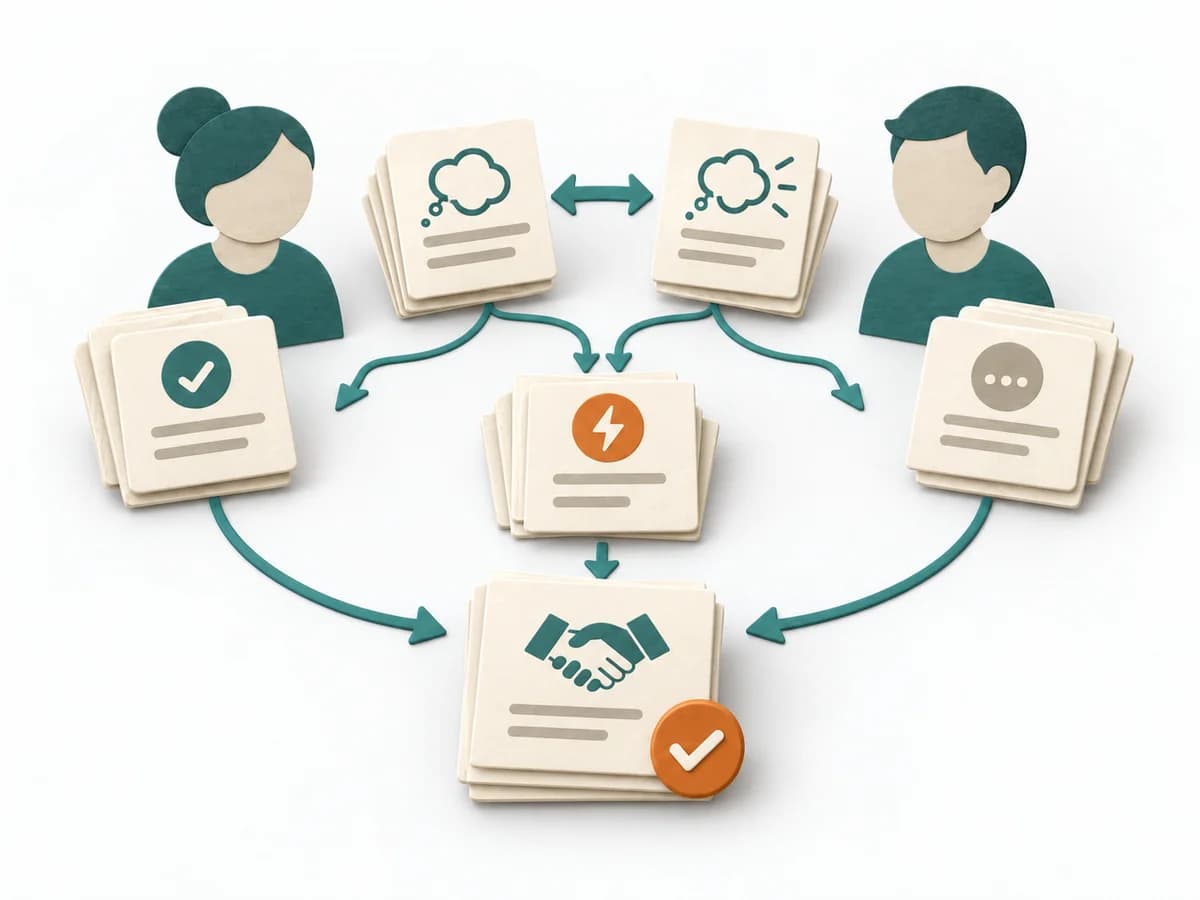 Facilitation Expectation Mapping |  Facilitation Stakeholder Mapping | 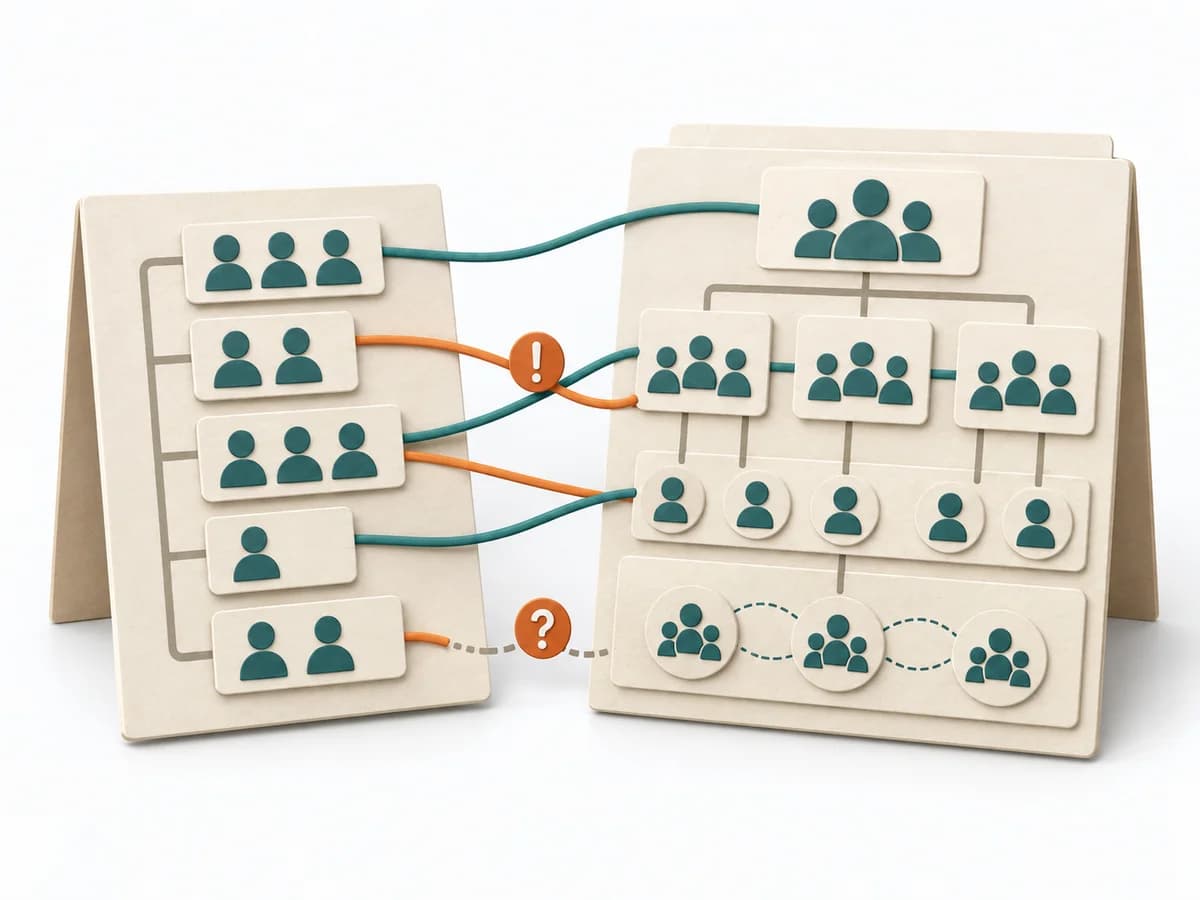 Team Design Spotify Model Mapping |
|---|---|---|---|---|
Purposedifferent | When systems fail unexpectedly, spontaneous attempts often produce more noise than insight. Hypothesis-driven Troubleshooting translates symptoms into testable assumptions and makes troubleshooting learnable. | When roles, interfaces, or projects fail because of differing expectations, Expectation Mapping surfaces these differences. It shows what each side takes for granted and where the pictures diverge. | When an initiative depends on many people, interests, and power dynamics, Stakeholder Mapping systematically orders the environment. It shows who influences, who is affected, and where relationship management or safeguarding matters first. | When a team landscape has grown without clear grouping, it maps roles and relationships onto the Spotify model. It clarifies responsibility, interaction, and load between teams. The result is captured as a Spotify model map and action list. |
Complexitydifferent | Medium | Low | Low | Medium |
Timedifferent | 30-240 min | 45-90 min | 60–90 min | 90-180 min |
Participantsdifferent | 1-6 | 3-12 | 2-8 | 5-15 |
Formatdifferent | Workshop + async | Workshop | Workshop + async | Workshop |
Outputdifferent | Hypothesis Log, Test Plan, Evidence Notes, Diagnosis Summary | Expectation Map, Alignment Notes, Agreements | Stakeholder Map, Engagement Plan, Risk Notes | Spotify Model Map, Action List |
Tagsno overlap | TroubleshootingProblem solvingDiagnosis | AlignmentStakeholdersTeam | StakeholdersAlignmentFacilitationChange | TeamOrganizationAlignmentDiagnosis |