View methods side by side.
Choose up to four methods. Add them using the search and share the comparison by copying its link.
| Criterion | 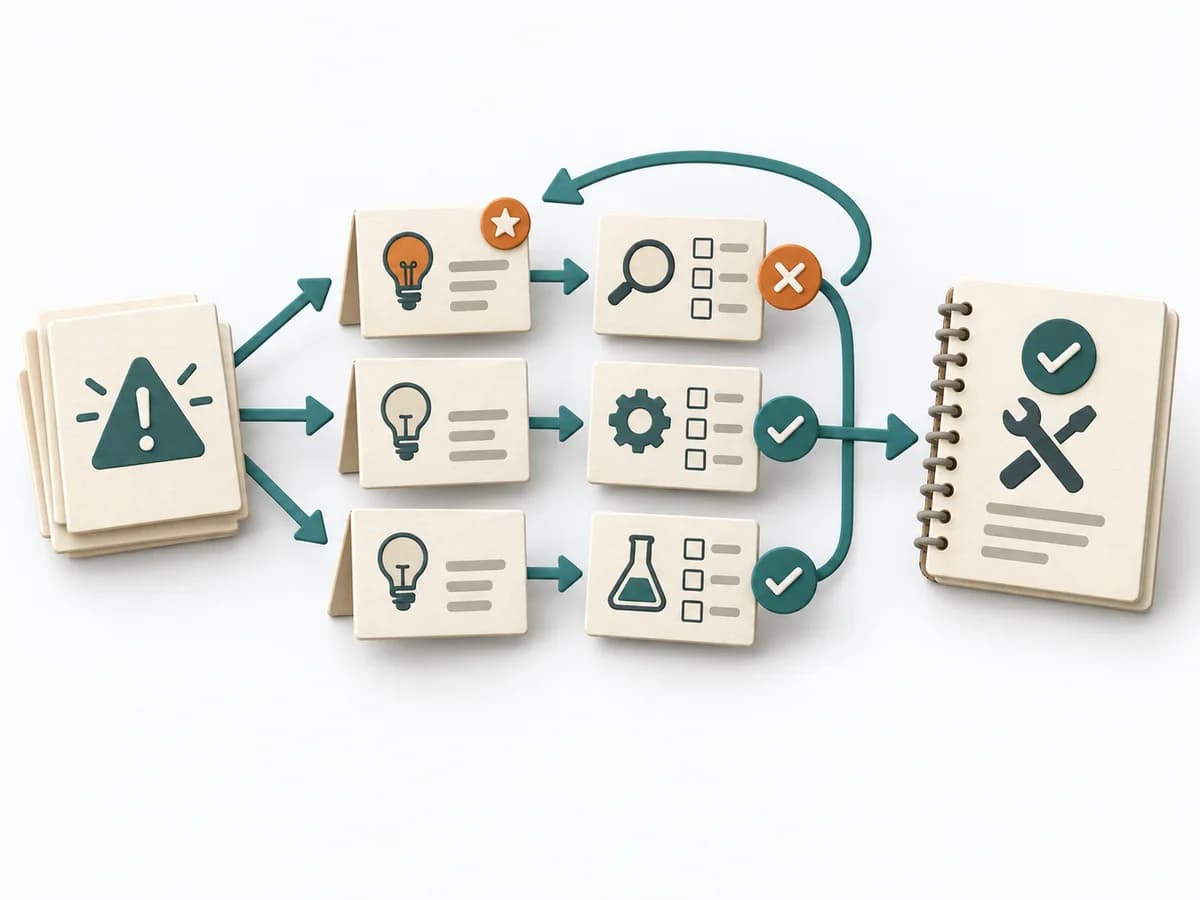 Engineering Hypothesis-Driven Troubleshooting | 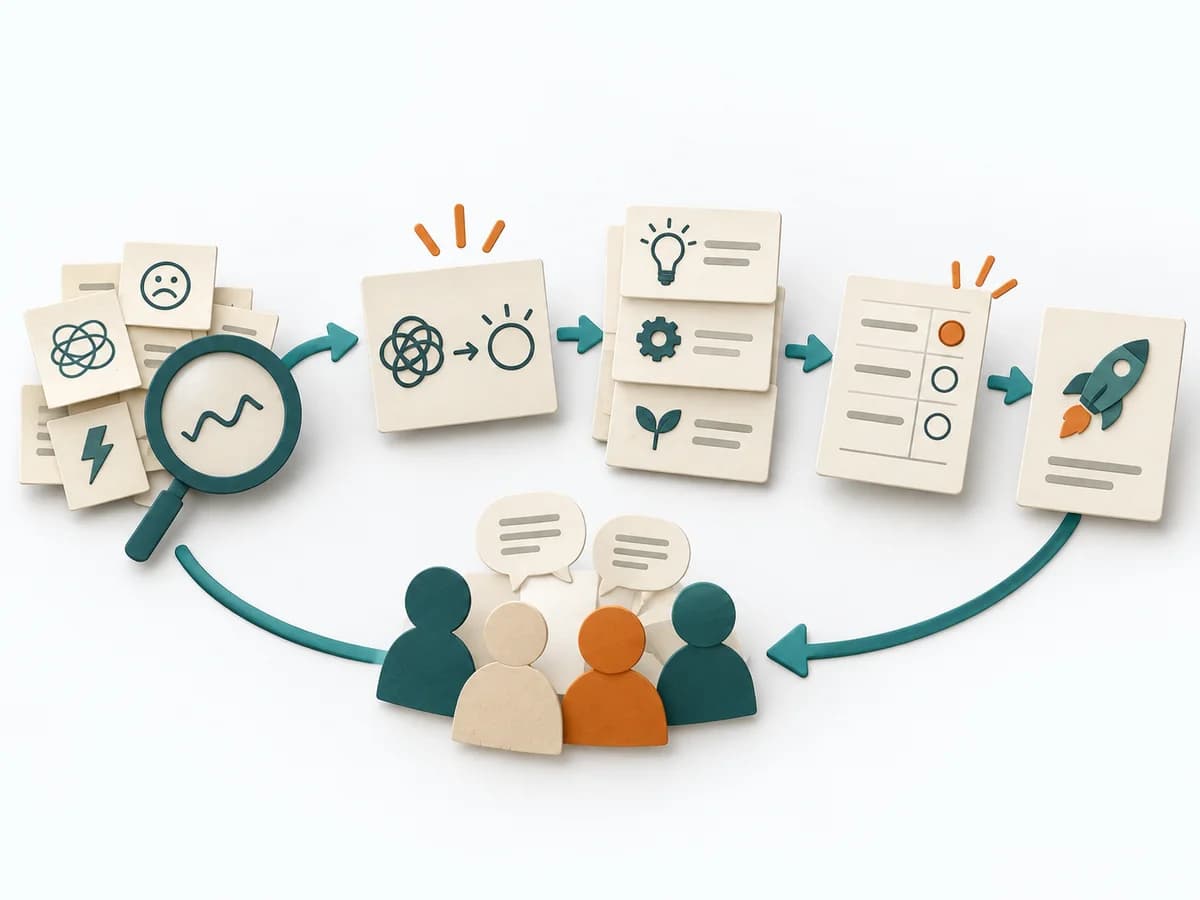 Facilitation Decision Jam | 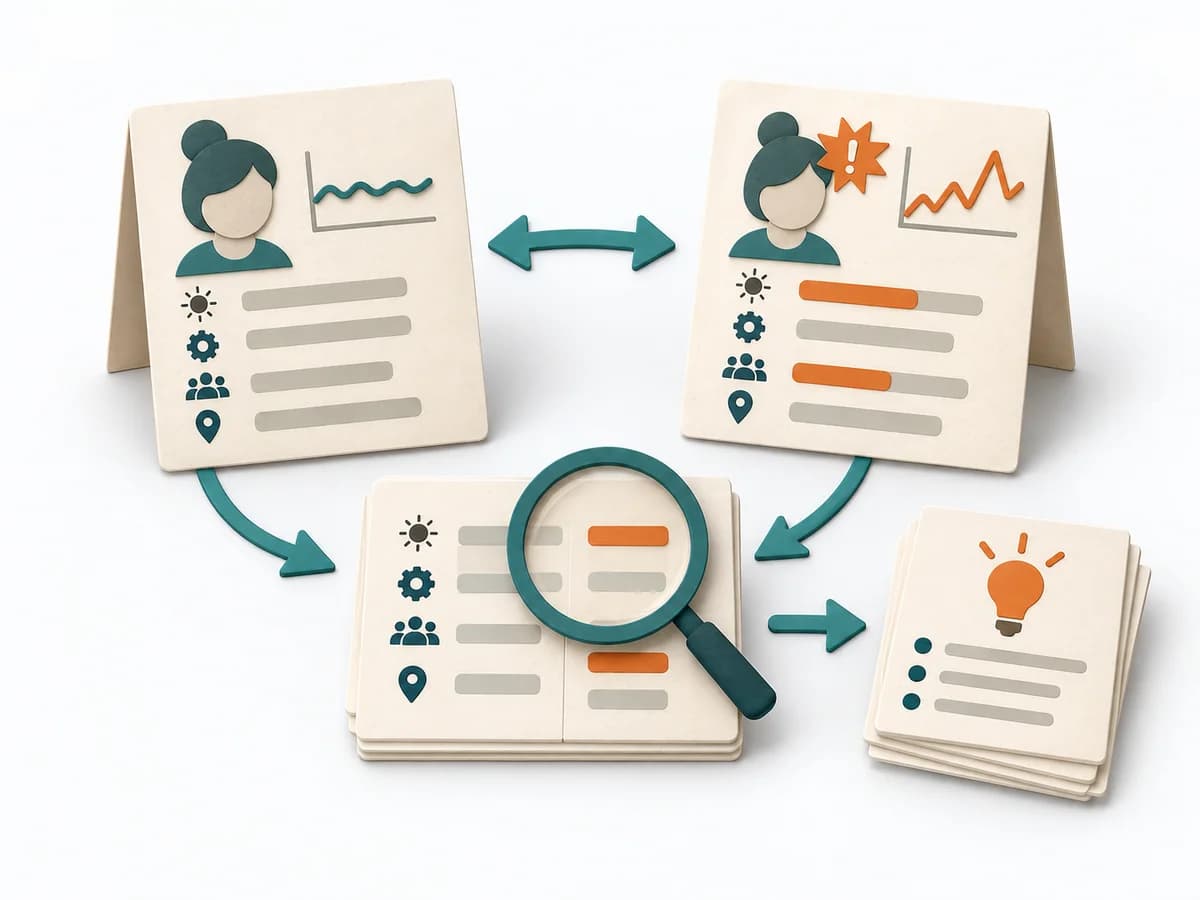 Operations Change Analysis |  Operations 5 Whys |
|---|---|---|---|---|
Purposedifferent | When systems fail unexpectedly, spontaneous attempts often produce more noise than insight. Hypothesis-driven Troubleshooting translates symptoms into testable assumptions and makes troubleshooting learnable. | When a decision is stuck, Decision Jam loosens the knot through structured separation of problem, idea, and selection. The format creates movement without jumping prematurely at the first seemingly elegant answer. | For a deviation after a change, the method isolates the influence of the altered condition. It narrows down which differences are relevant and which are just accompanying noise. | For a single, hard-to-explain deviation, the method exposes the causal chain behind the visible symptom. It keeps the cause open until a controllable condition emerges instead of a mere description. |
Complexitydifferent | Medium | Low | Medium | Low |
Timedifferent | 30-240 min | 60-90 min | 45-120 min | 15-30 min |
Participantsdifferent | 1-6 | 4-10 | 2-6 | 2-6 |
Formatdifferent | Workshop + async | Workshop | Workshop + async | Workshop |
Outputdifferent | Hypothesis Log, Test Plan, Evidence Notes, Diagnosis Summary | Problem Cluster, Prioritized Challenge, Experiment | Change Matrix, Cause Hypotheses, Validation Questions, Action List | Root cause notes, Countermeasures |
Tagsno overlap | TroubleshootingProblem solvingDiagnosis | FacilitationDecisionProblem solvingWorkshop | ChangeRoot causeTroubleshootingComparison | Root causeIncidentLeanProblem solving |