View methods side by side.
Choose up to four methods. Add them using the search and share the comparison by copying its link.
| Criterion |  Engineering Hypothesis-Driven Troubleshooting |  Decision Making Assumption Surfacing | 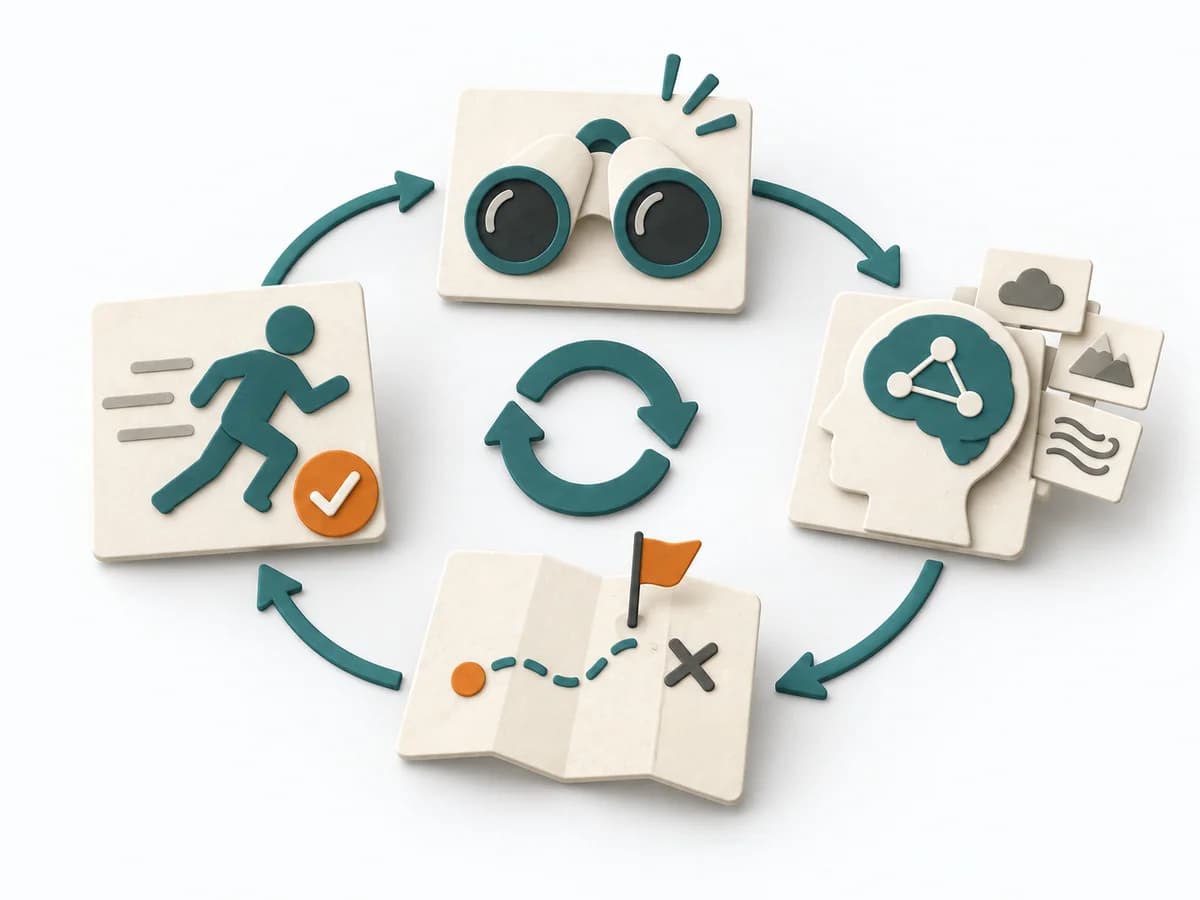 Decision Making OODA Loop |  Product Discovery Assumption Mapping |
|---|---|---|---|---|
Purposedifferent | When systems fail unexpectedly, spontaneous attempts often produce more noise than insight. Hypothesis-driven Troubleshooting translates symptoms into testable assumptions and makes troubleshooting learnable. | Plans often contain assumptions that were never openly stated and remain dangerous precisely because of that. Assumption Surfacing makes these silent premises visible and prioritizes which of them carry the initiative or could sink it. | In dynamic situations, decisions become outdated faster than they can be prepared. The OODA Loop holds observing, orienting, deciding, and acting together as a recurring rhythm so reaction does not slide into inertia. | When assumptions still sit unordered in the room, it weighs uncertainty against leverage. It makes visible which hypotheses should be checked first. |
Complexitydifferent | Medium | Low | Medium | Medium |
Timedifferent | 30-240 min | 45-90 min | 15-60 min je Zyklus | 45-60 min |
Participantsdifferent | 1-6 | 2-8 | 1-8 | 2-8 |
Formatsame | Workshop + async | Workshop + async | Workshop + async | Workshop + async |
Outputdifferent | Hypothesis Log, Test Plan, Evidence Notes, Diagnosis Summary | Assumption List, Critical Assumptions, Learning Plan | Situation Assessment, Decision Loop, Action Updates | Assumption map, Test backlog, Risk ranking |
Tagsno overlap | TroubleshootingProblem solvingDiagnosis | AssumptionsRiskDecisionDiscovery | DecisionChangeLearningStrategy | AssumptionsRiskExperimentsValidation |