View methods side by side.
Choose up to four methods. Add them using the search and share the comparison by copying its link.
| Criterion |  Innovation How Might We |  Facilitation Expectation Mapping | 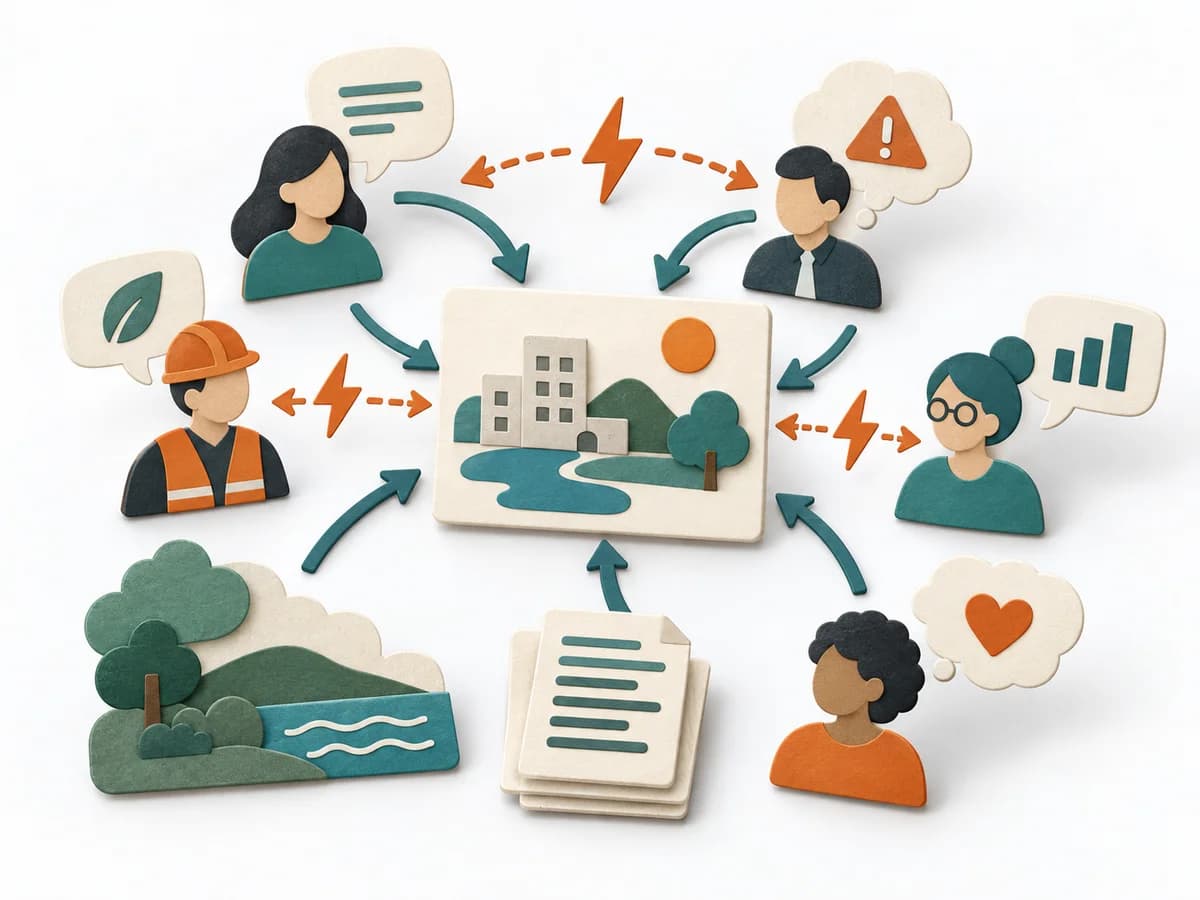 Systems Thinking Rich Picture |  Facilitation Power Interest Grid |
|---|---|---|---|---|
Purposedifferent | With a stuck problem carrying many implicit assumptions, the method translates observations into open, workable questions. It sharpens the problem frame without pre-thinking the solution, turning frustration or fuzziness into a search space with clear direction. | When roles, interfaces, or projects fail because of differing expectations, Expectation Mapping surfaces these differences. It shows what each side takes for granted and where the pictures diverge. | A Rich Picture brings an unclear situation onto a shared drawing. It captures actors, tensions, information flows, and blind spots before the team jumps to solutions too early. | When many stakeholders compete for attention at once, the Power Interest Grid sorts them by influence and stake. It turns individual contributions into a visible selection. The result is captured as a Power Interest Grid and a stakeholder-specific strategy. |
Complexitysame | Low | Low | Low | Low |
Timedifferent | 30–45 min | 45-90 min | 30-90 min | 30-60 min |
Participantsdifferent | 1-10 | 3-12 | 2-10 | 2-8 |
Formatdifferent | Workshop + async | Workshop | Workshop | Workshop |
Outputdifferent | HMW Questions, Challenge Framing, Idea Prompts | Expectation Map, Alignment Notes, Agreements | Rich Picture, Problem Framing Notes | Power Interest Grid, Strategy per Stakeholder |
Tagsno overlap | FramingOpportunityIdeationQuestions | AlignmentStakeholdersTeam | Systems thinkingSoft systemsFramingVisualization | StakeholdersFacilitationAlignmentPlanning |