View methods side by side.
Choose up to four methods. Add them using the search and share the comparison by copying its link.
| Criterion | 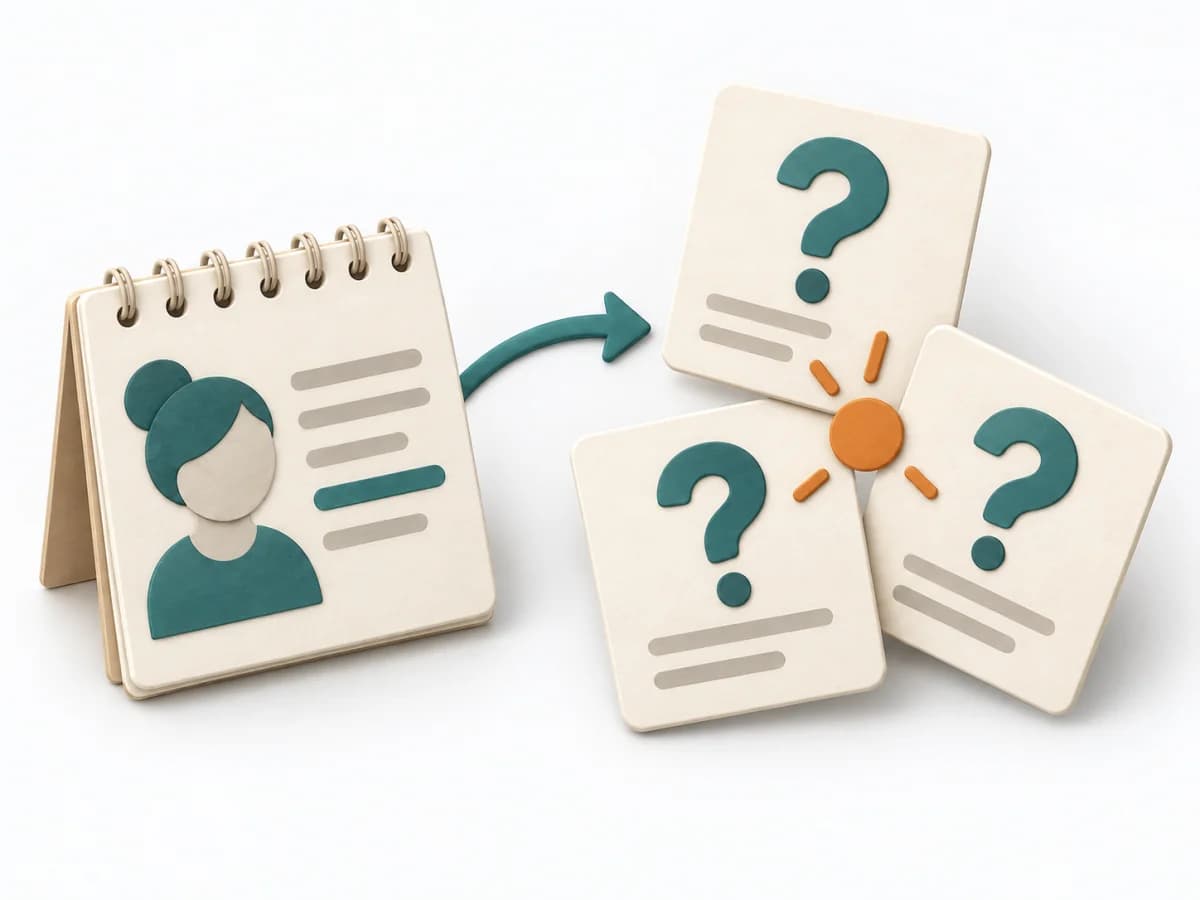 Innovation How Might We |  Systems Thinking CATWOE Analysis |  Decision Making OODA Loop |  Decision Making Delphi Method |
|---|---|---|---|---|
Purposedifferent | With a stuck problem carrying many implicit assumptions, the method translates observations into open, workable questions. It sharpens the problem frame without pre-thinking the solution, turning frustration or fuzziness into a search space with clear direction. | CATWOE structures a problem from six viewpoints and prevents too narrow a view of the situation. Different experiences of the system become comparably discussable this way. | In dynamic situations, decisions become outdated faster than they can be prepared. The OODA Loop holds observing, orienting, deciding, and acting together as a recurring rhythm so reaction does not slide into inertia. | When knowledge is distributed and direct dominance should be avoided, groups quickly fall under the sway of their opinion leaders. The Delphi Method gathers assessments iteratively and gradually brings expert judgments closer together. |
Complexitydifferent | Low | Medium | Medium | High |
Timedifferent | 30–45 min | 45-90 min | 15-60 min je Zyklus | 1-4 Wochen |
Participantsdifferent | 1-10 | 3-8 | 1-8 | 6-30 Experten |
Formatdifferent | Workshop + async | Workshop + async | Workshop + async | Async |
Outputdifferent | HMW Questions, Challenge Framing, Idea Prompts | CATWOE Canvas, Root Definition, Stakeholder Perspectives, Constraints | Situation Assessment, Decision Loop, Action Updates | Expert Forecast, Consensus Range, Assumption Notes |
Tagsno overlap | FramingOpportunityIdeationQuestions | Systems thinkingFramingStakeholders | DecisionChangeLearningStrategy | ForecastingExpertsDecisionStrategy |