View methods side by side.
Choose up to four methods. Add them using the search and share the comparison by copying its link.
| Criterion | 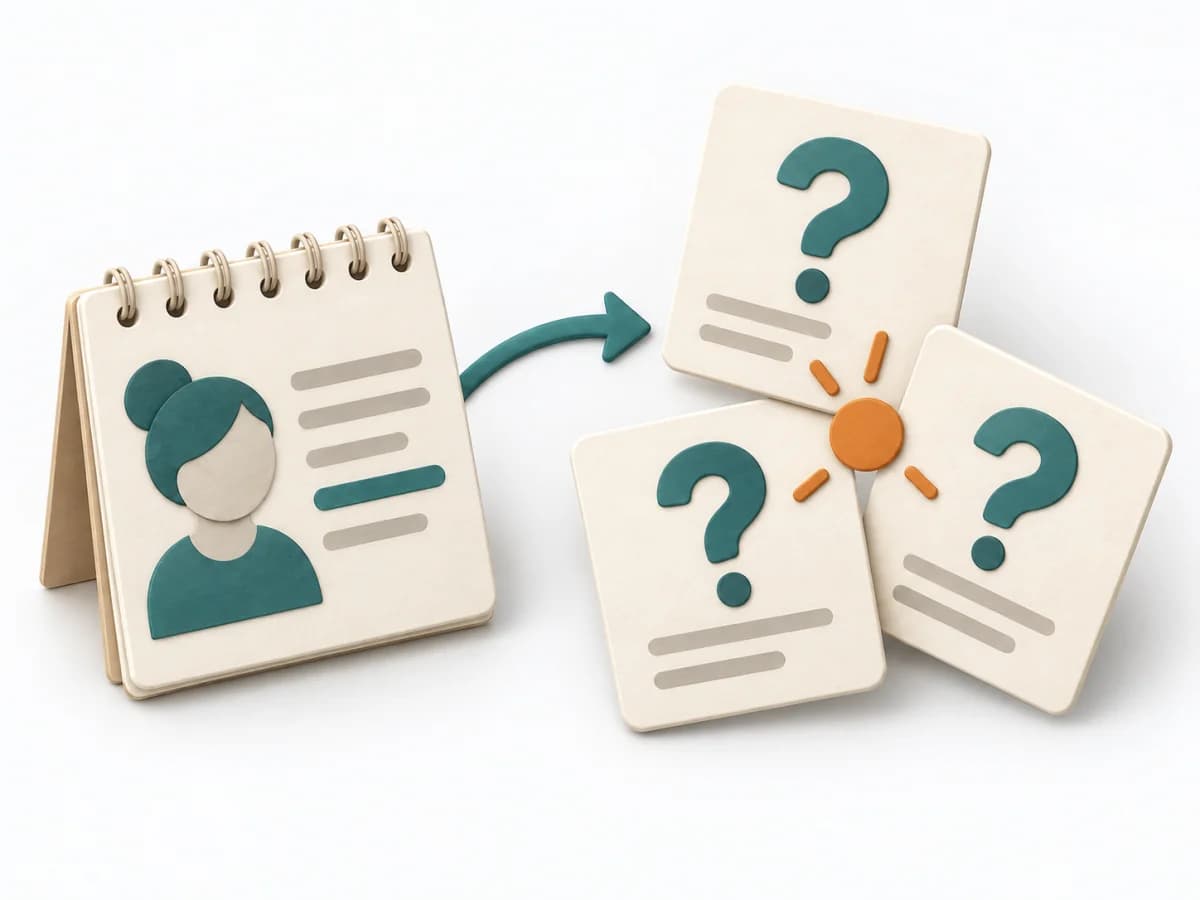 Innovation How Might We | 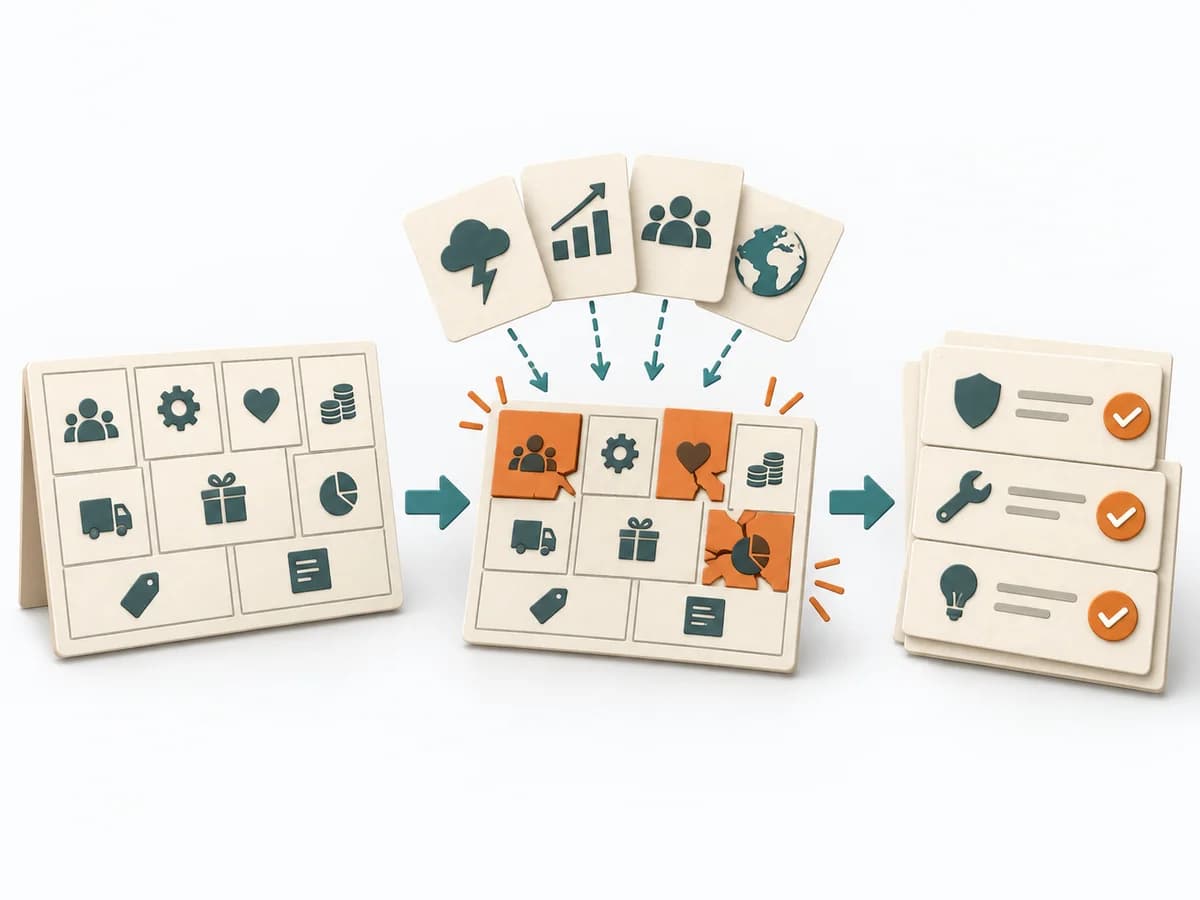 Business Strategy Business Model Stress Test |  Product Strategy DIBB | 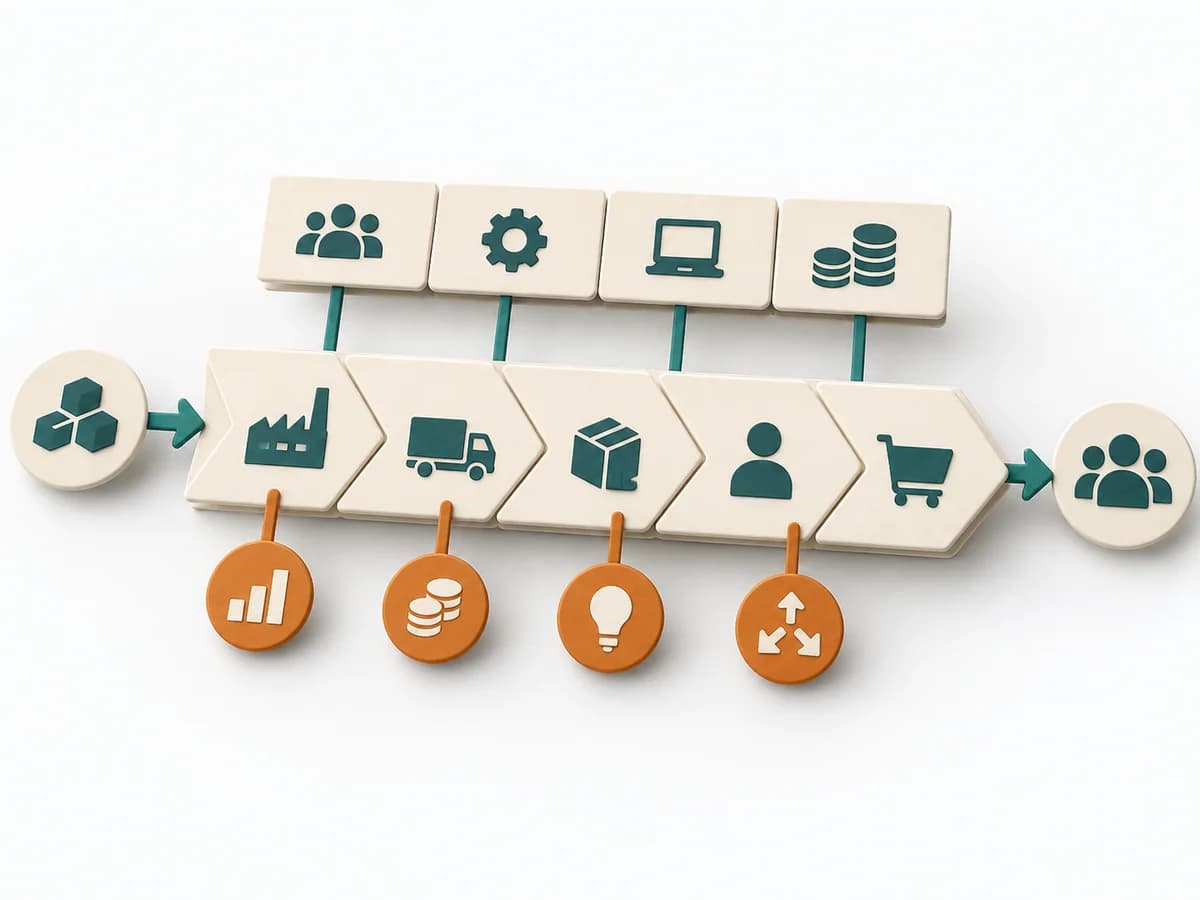 Business Strategy Value Chain Analysis |
|---|---|---|---|---|
Purposedifferent | With a stuck problem carrying many implicit assumptions, the method translates observations into open, workable questions. It sharpens the problem frame without pre-thinking the solution, turning frustration or fuzziness into a search space with clear direction. | A Business Model Stress Test checks how well a business model holds up under pressure and headwinds. It compares strengths, risks, market logic, and courses of action. The result is captured as a stress-test report and action plan per scenario. | DIBB helps clarify target groups, value, goals, and priorities by making the logic behind a decision explicit. It captures results as a DIBB document, belief list, bet list, and learning report. | Value Chain Analysis shows where value is created, costs accrue, and differentiation becomes possible along the process. It compares strengths, risks, market logic, and courses of action. The result is captured as a value-chain map and lever list. |
Complexitydifferent | Low | High | Low | High |
Timedifferent | 30–45 min | Half day | 1-2 h | Half day |
Participantsdifferent | 1-10 | 3-8 | 2-8 | 3-8 |
Formatdifferent | Workshop + async | Workshop | Workshop + async | Workshop |
Outputdifferent | HMW Questions, Challenge Framing, Idea Prompts | Stress Test Report, Action Plan per Scenario | DIBB document, Belief list, Bet list, Learning report | Value Chain Map, Lever List |
Tagsno overlap | FramingOpportunityIdeationQuestions | StrategyBusiness modelRiskDiagnosis | StrategyDecisionAssumptionsHypothesis | StrategyBusiness modelDiagnosisAnalysis |