View methods side by side.
Choose up to four methods. Add them using the search and share the comparison by copying its link.
| Criterion | 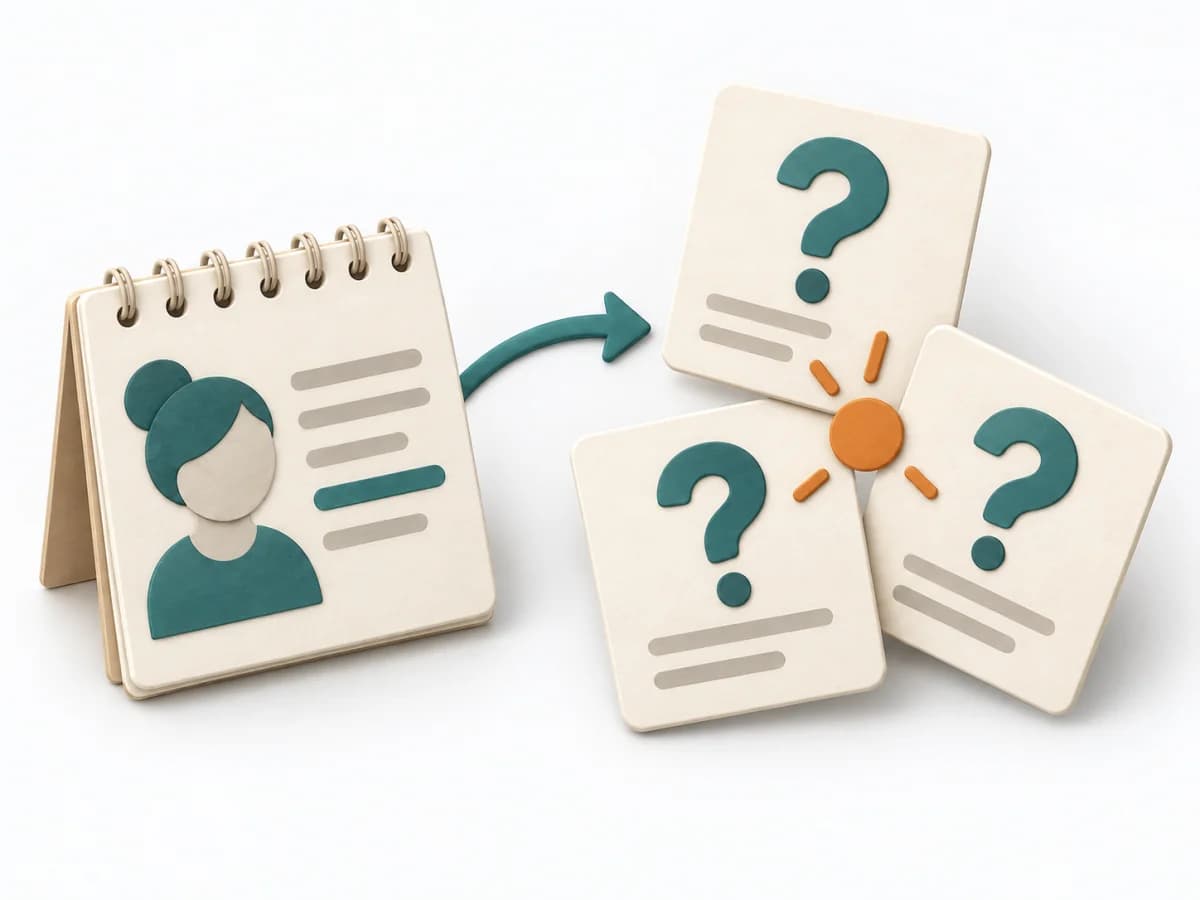 Innovation How Might We |  Product Discovery Assumption Mapping |  Decision Making Force Field Analysis |  Product Strategy DIBB |
|---|---|---|---|---|
Purposedifferent | With a stuck problem carrying many implicit assumptions, the method translates observations into open, workable questions. It sharpens the problem frame without pre-thinking the solution, turning frustration or fuzziness into a search space with clear direction. | When assumptions still sit unordered in the room, it weighs uncertainty against leverage. It makes visible which hypotheses should be checked first. | In change initiatives, supporting and restraining forces sit at the table at the same time. Force Field Analysis makes these tensions explicit and shows where change can be pushed forward by strengthening or relieving. | DIBB helps clarify target groups, value, goals, and priorities by making the logic behind a decision explicit. It captures results as a DIBB document, belief list, bet list, and learning report. |
Complexitydifferent | Low | Medium | Low | Low |
Timedifferent | 30–45 min | 45-60 min | 45-90 min | 1-2 h |
Participantsdifferent | 1-10 | 2-8 | 3-12 | 2-8 |
Formatdifferent | Workshop + async | Workshop + async | Workshop | Workshop + async |
Outputdifferent | HMW Questions, Challenge Framing, Idea Prompts | Assumption map, Test backlog, Risk ranking | Force Field Map, Change Levers, Risk Notes | DIBB document, Belief list, Bet list, Learning report |
Tagsno overlap | FramingOpportunityIdeationQuestions | AssumptionsRiskExperimentsValidation | ChangeDecisionStrategy | StrategyDecisionAssumptionsHypothesis |