View methods side by side.
Choose up to four methods. Add them using the search and share the comparison by copying its link.
| Criterion |  Growth Hooked Model | 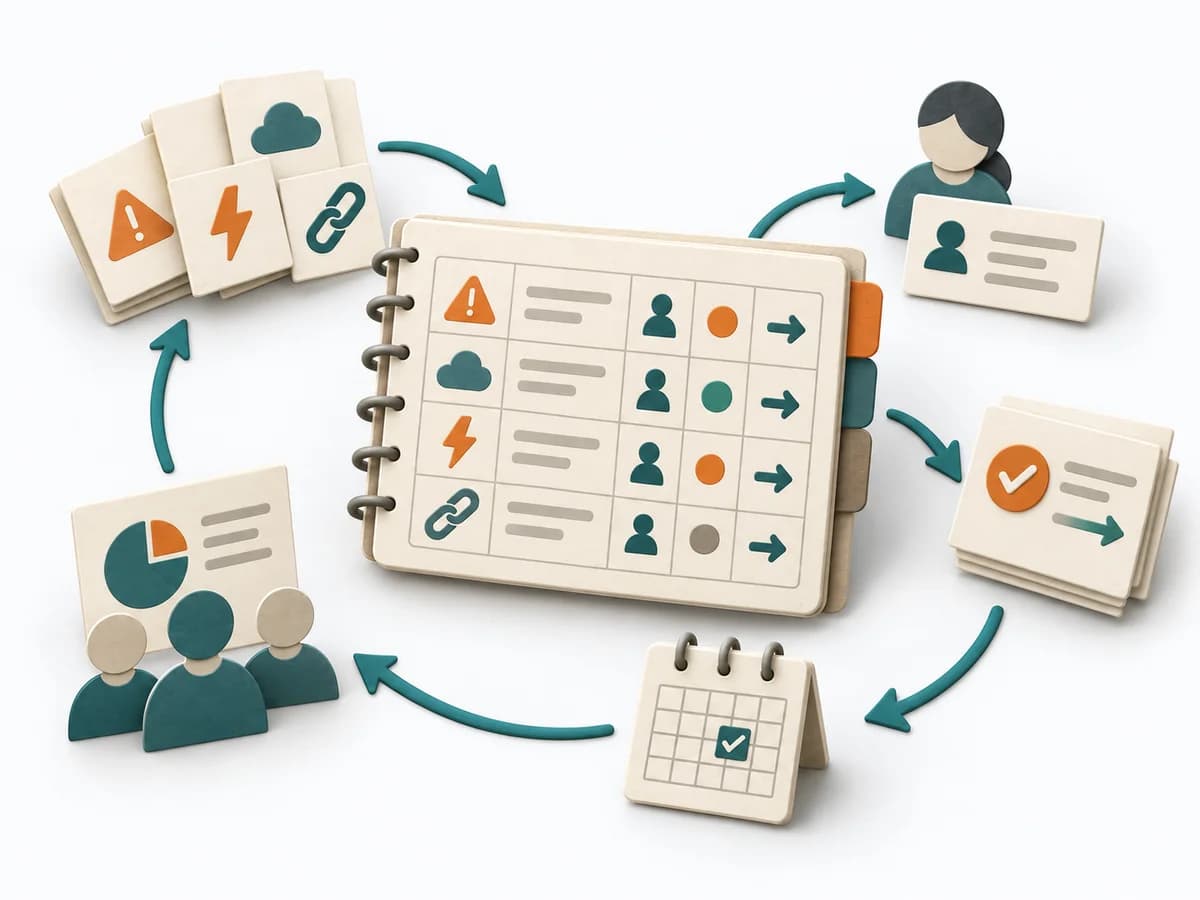 Delivery RAID Log |  Architecture Architecture Communication Canvas |  Architecture Architecture Decision Record |
|---|---|---|---|---|
Purposedifferent | The Hooked Model helps clarify engagement loops, user behavior, and experiments. It makes repeat behavior measurable and captures the result as a hooked loop, trigger map, and reward design. | Helps clarify scope, sequence, and delivery flow in concrete terms. It makes work, boundaries, and order steerable. The result is captured as a RAID Log and a source for status reporting. | The Architecture Communication Canvas plans architecture communication so the right people receive the right message. The method turns technical complexity into deliberate communication design. | An ADR permanently records an architecture decision with context, trade-offs, and consequence. It creates continuity for later changes because the decision path stays traceable. |
Complexitydifferent | Medium | Low | Medium | Low |
Timedifferent | Multiple workshops over several weeks | 30 min Setup, dann laufend | 60-120 min | 15-45 min |
Participantsdifferent | 2-8 | 1-3 maintaining, briefing for everyone | 2-8 | 1-3 |
Formatdifferent | Workshop + async | Async | Workshop + async | Async |
Outputdifferent | Hooked loop, Trigger map, Reward design, Ethics check | RAID Log, Status Report Source | Communication Canvas, Stakeholder Messages, Architecture Communication Plan | ADR File, Decision Log, Rationale |
Tagsno overlap | GrowthBehaviorRetention | RiskTrackingStakeholdersGovernance | ArchitectureCommunicationStakeholdersCanvas | ArchitectureRationaleDocumentationGovernance |