View methods side by side.
Choose up to four methods. Add them using the search and share the comparison by copying its link.
| Criterion | 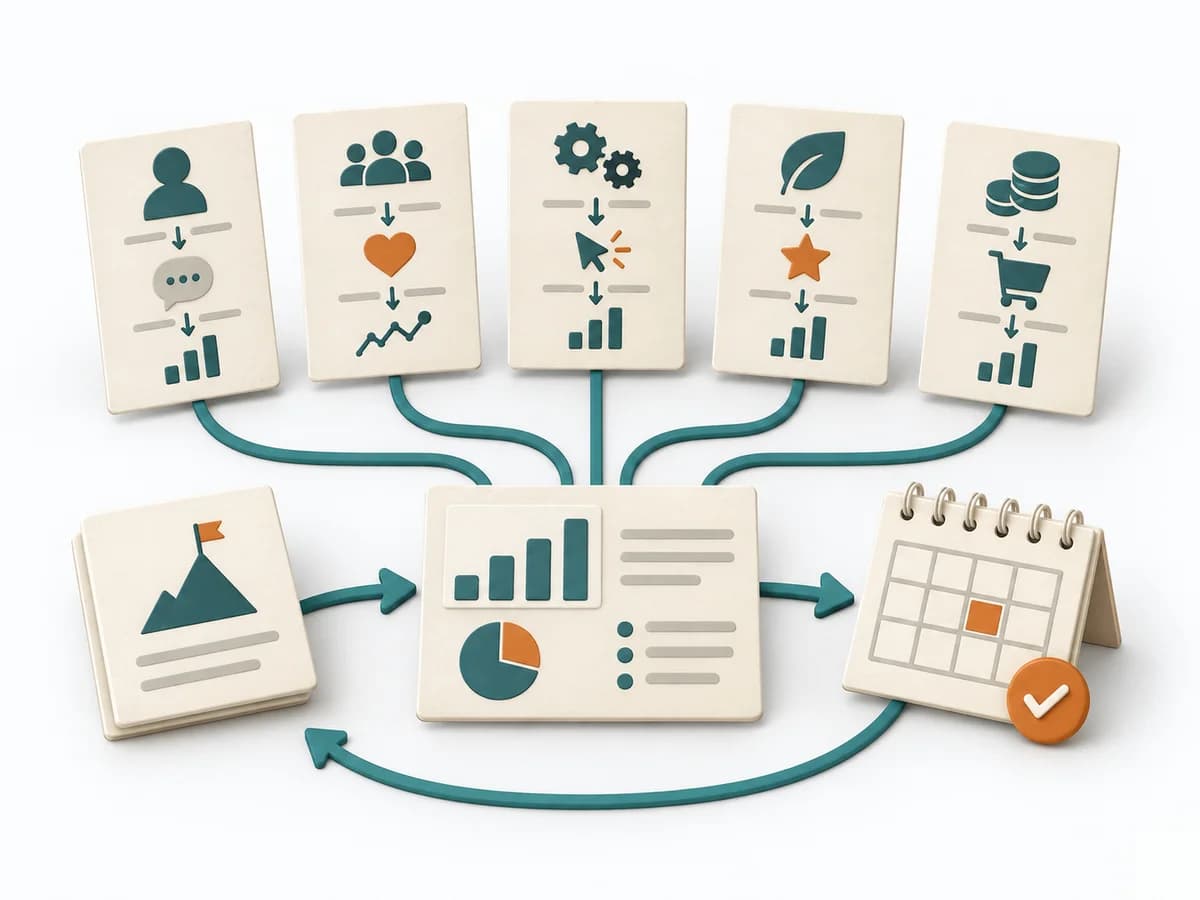 UX Research HEART Framework |  Innovation Design Thinking | 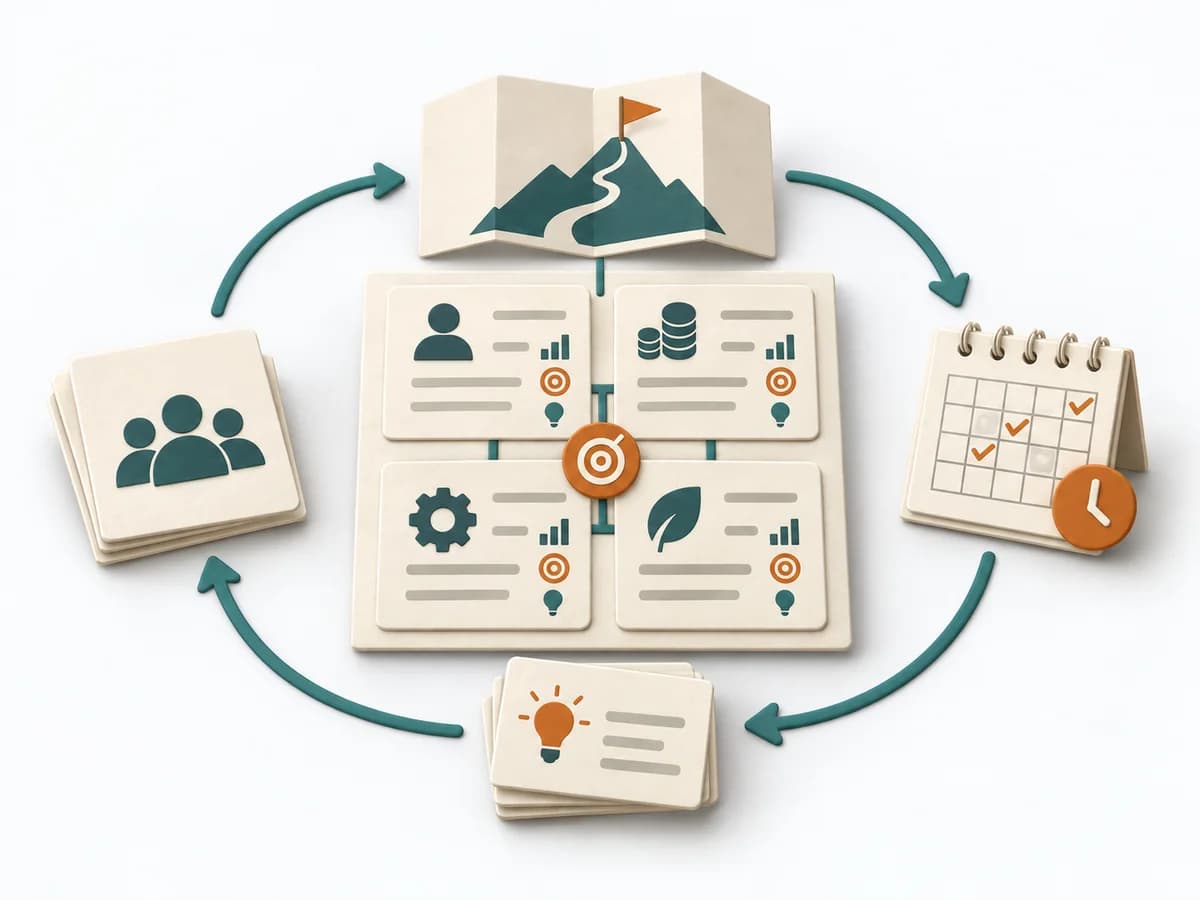 Business Strategy Balanced Scorecard | 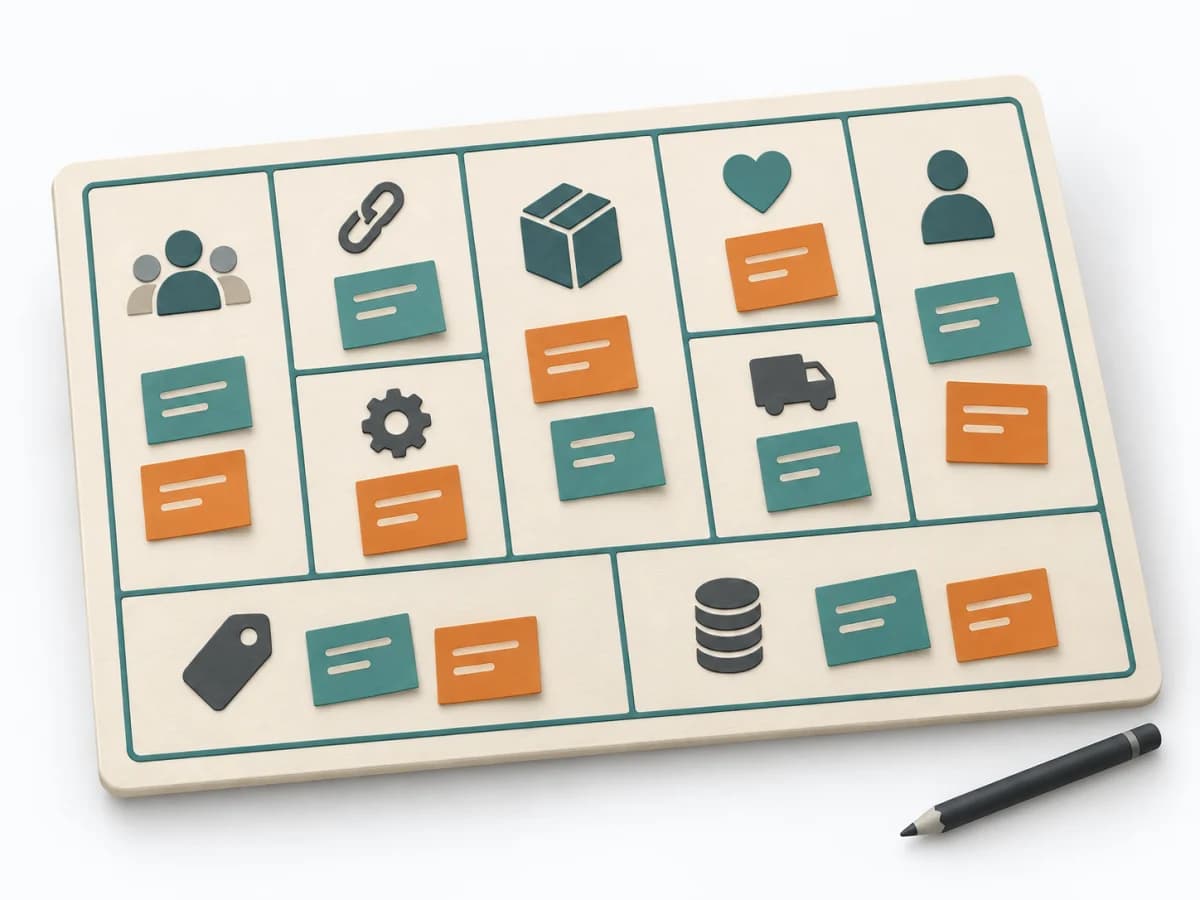 Business Strategy Business Model Canvas |
|---|---|---|---|---|
Purposedifferent | Helps clarify observations, needs, and patterns in concrete terms. It groups observations into patterns, questions, and decisions. The result is captured as a HEART-GSM table and dashboard. | For complex user problems with an uncertain cause, the method connects observation, interpretation, and experiment into a learning cycle. It keeps the focus on real needs and avoids premature solution language. This produces robust decisions for product and service. | Balanced Scorecard translates strategy into a few interconnected perspectives and metrics. It holds impact, steering, and learning together in daily work instead of narrowing strategy down to financial figures. | The Business Model Canvas condenses a business model to its key building blocks and assumptions. It makes variants quickly comparable and reveals gaps before validation or implementation begins. |
Complexitydifferent | Medium | High | High | Medium |
Timedifferent | 120 min initial, dann laufend | 1 Tag bis mehrere Wochen | Halber Tag bis mehrere Wochen | 1-2 h |
Participantsdifferent | 3-6 | 4-10 | 4-12 | 2-8 |
Formatdifferent | Workshop + async | Workshop | Workshop + async | Workshop + async |
Outputdifferent | HEART-GSM Table, Dashboard | Problem Statement, Prototype, Test Learnings | Balanced Scorecard, Strategic Measures, Initiative Map | Business Model Canvas, Assumption List, Business Hypotheses |
Tagsno overlap | MetricsUX researchMeasurementSatisfaction | InnovationPrototypeResearch | StrategyMetricsExecution | Business modelStrategyValueInnovation |