View methods side by side.
Choose up to four methods. Add them using the search and share the comparison by copying its link.
| Criterion | 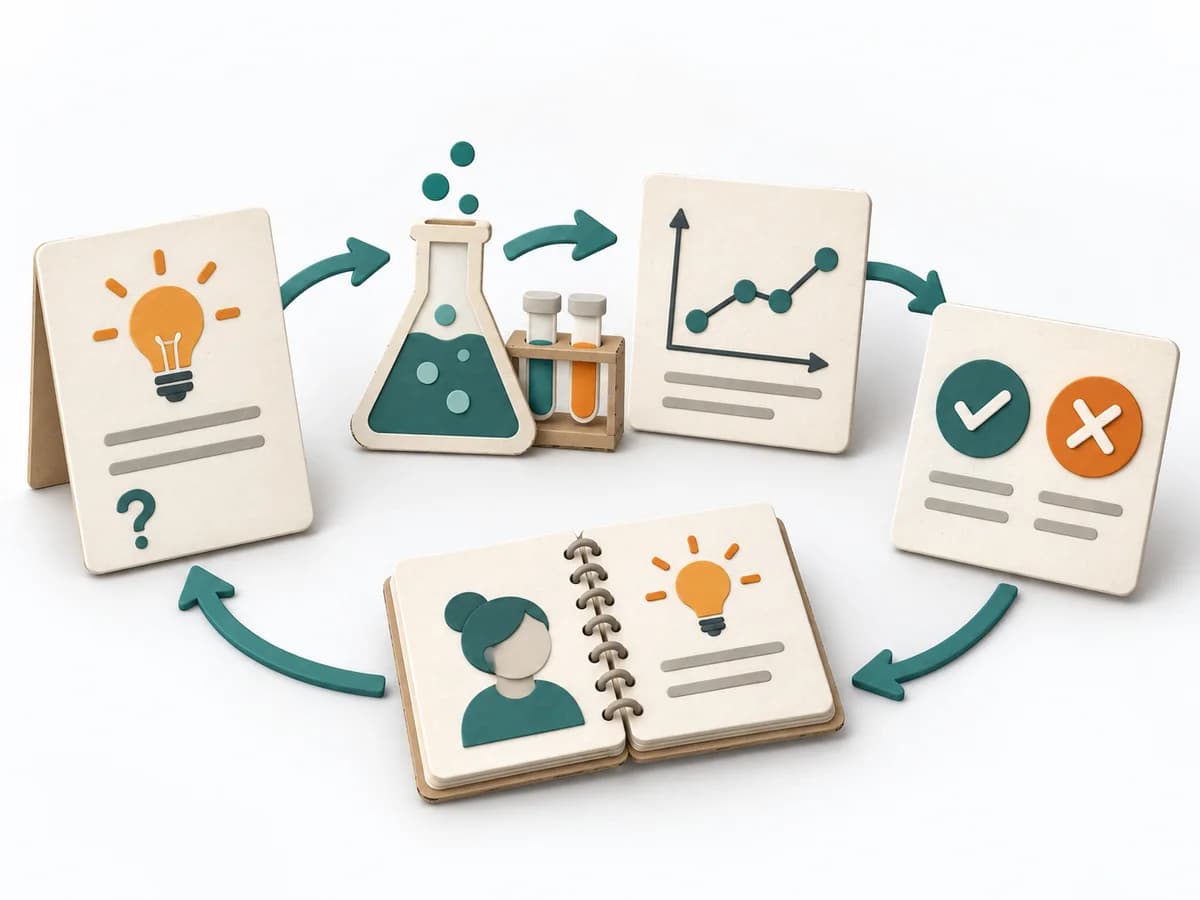 Growth Growth Experiment | 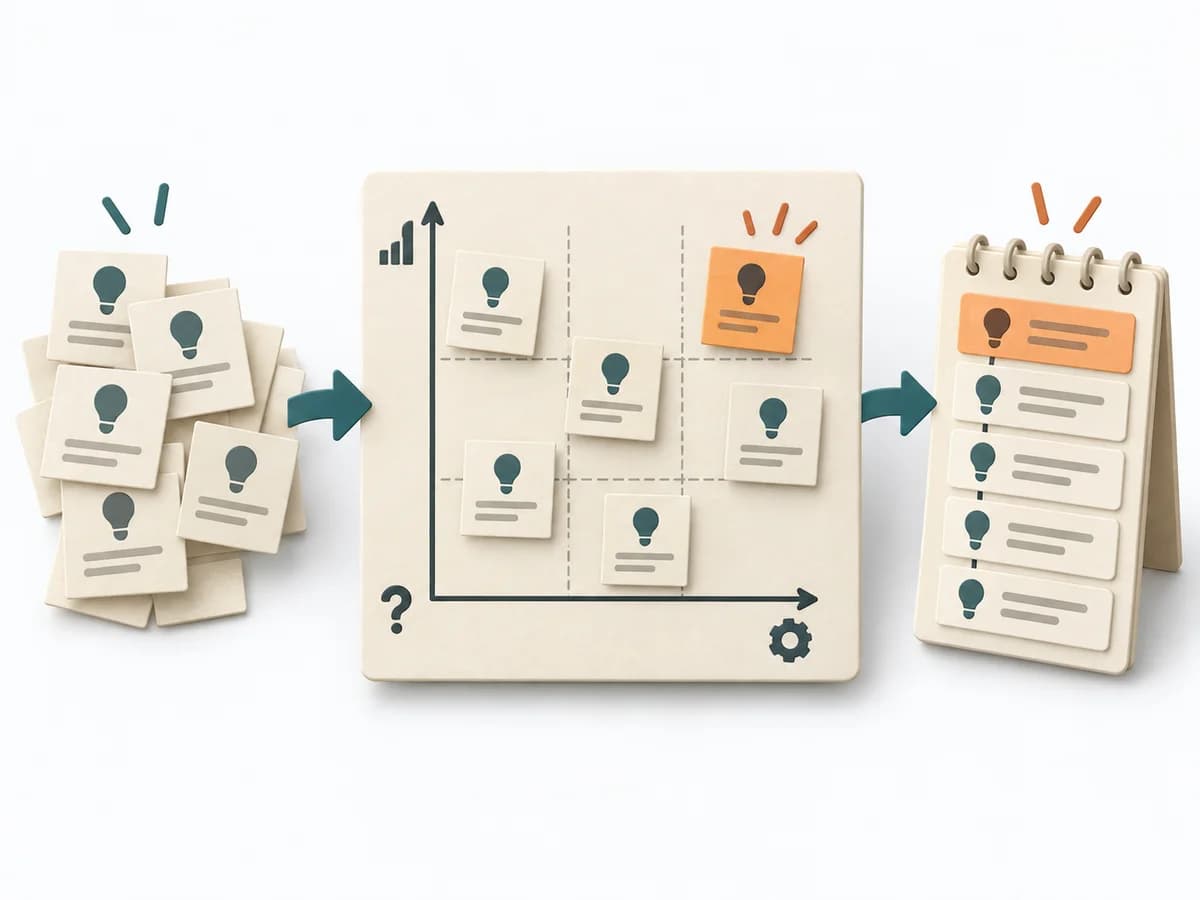 Product Discovery Hypothesis Prioritization Canvas |  Product Strategy DIBB | 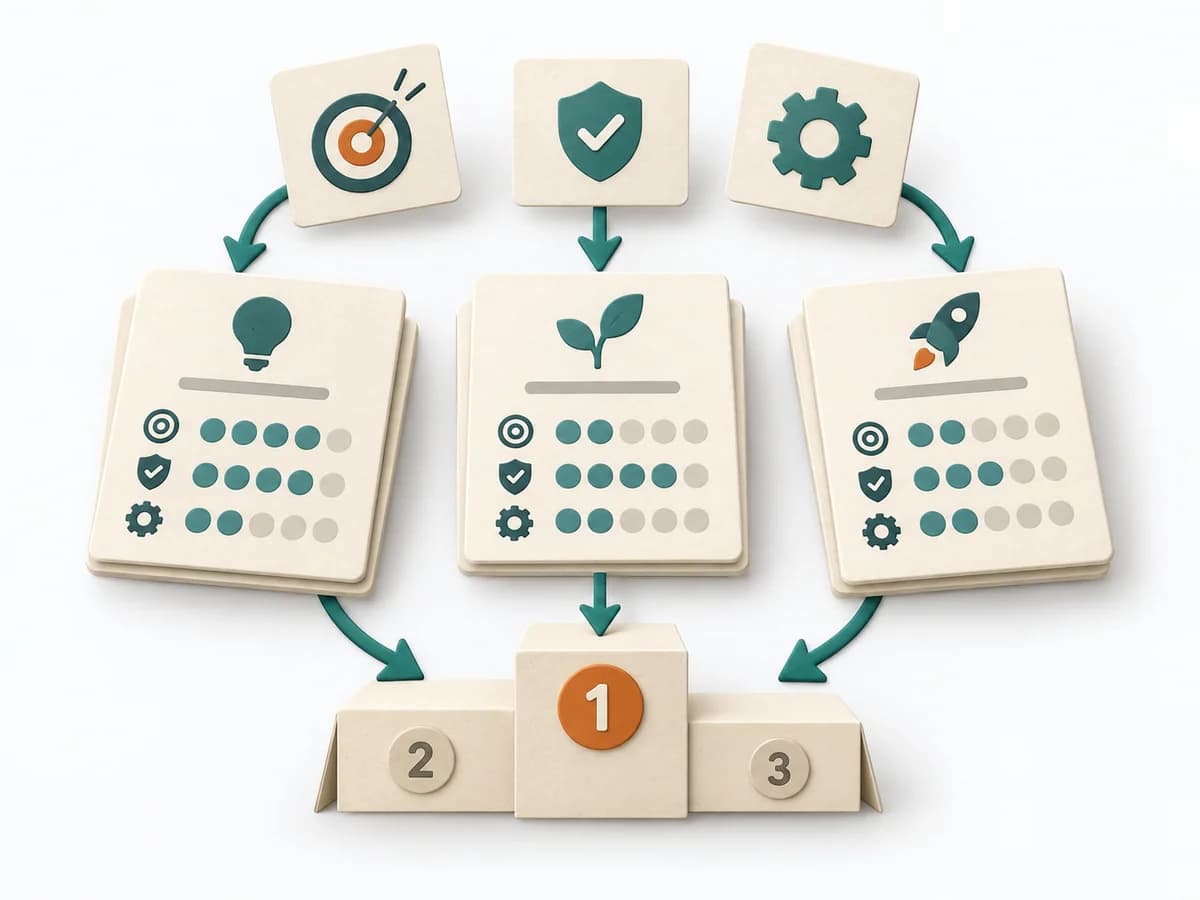 Product Strategy ICE Scoring |
|---|---|---|---|---|
Purposedifferent | When growth ideas surface quickly, the temptation to build immediately instead of learning is high. A Growth Experiment frames an assumption so target group, lever, and measurement are clear before the first deployment. | When many hypotheses compete for attention, it brings order to their learning sequence and importance. It separates problem, assumption, solution, and evidence. The result is captured as a prioritization canvas and a hypothesis backlog. | DIBB helps clarify target groups, value, goals, and priorities by making the logic behind a decision explicit. It captures results as a DIBB document, belief list, bet list, and learning report. | When ideas need sorting quickly, it condenses impact, confidence, and effort into one compact score. It connects customer value, product logic, and decision priorities. The result is captured as an ICE table and top-ideas list. |
Complexitydifferent | Medium | Medium | Low | Low |
Timedifferent | 1-2 Wochen | 60-90 min | 1-2 h | 30-60 min |
Participantsdifferent | 1-6 | 3-8 | 2-8 | 2-8 |
Formatdifferent | Workshop + async | Workshop | Workshop + async | Workshop + async |
Outputdifferent | Experiment card, Result summary, Next bet | Prioritization Canvas, Hypothesis Backlog | DIBB document, Belief list, Bet list, Learning report | ICE Table, Top Idea List |
Tagsno overlap | MarketingGrowthExperimentsLearning | ExperimentsPrioritizationDiscoveryHypothesis | StrategyDecisionAssumptionsHypothesis | PrioritizationScoringGrowthDecision |