View methods side by side.
Choose up to four methods. Add them using the search and share the comparison by copying its link.
| Criterion | 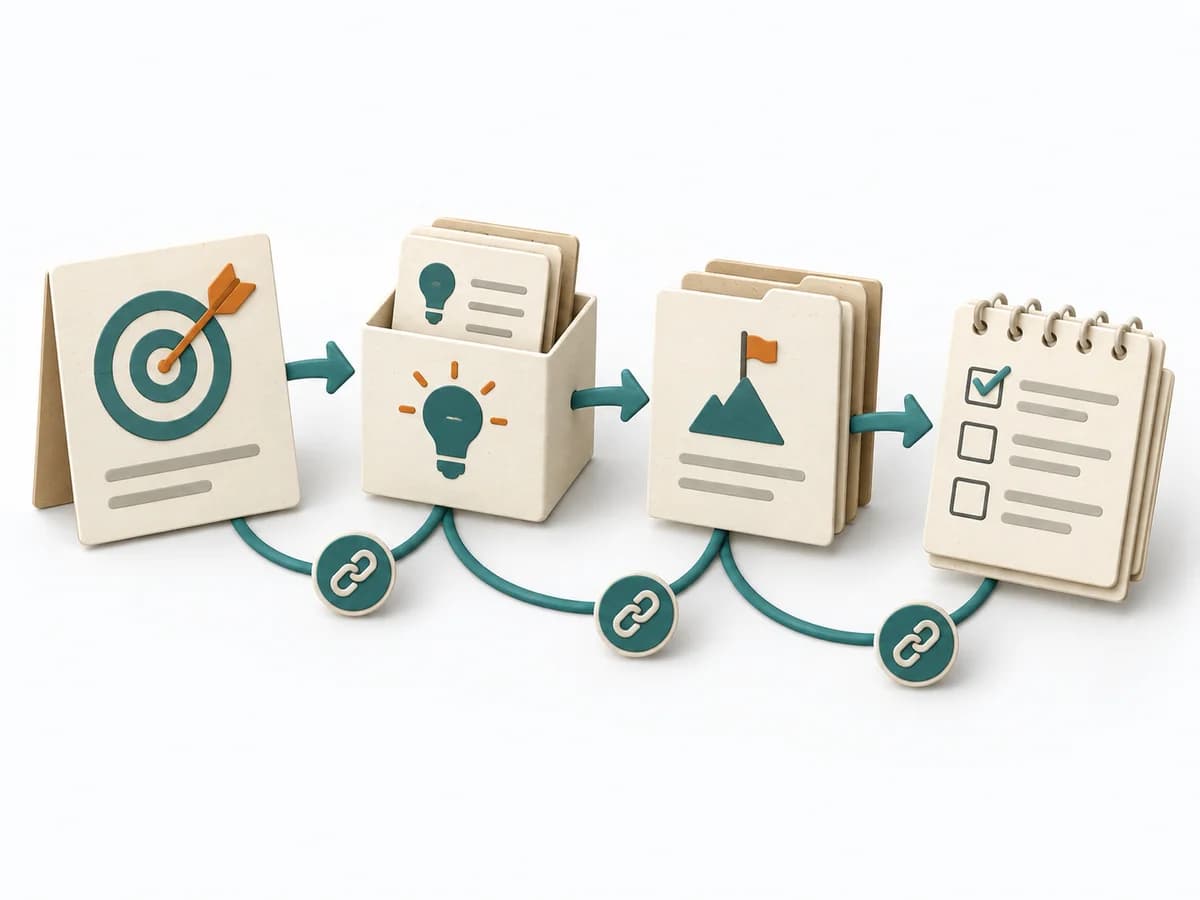 Product Strategy GIST Planning |  Business Strategy McKinsey 7S |  Operations ALPEN Method |  Decision Making Force Field Analysis |
|---|---|---|---|---|
Purposedifferent | GIST Planning helps clarify target groups, value, goals, and priorities. It links customer value, product logic, and decision priorities, and captures the result as goals, an idea bank, and a step-project list. | McKinsey 7S checks whether Strategy, Structure, Systems, Shared Values, Skills, Style, and Staff fit together. Organizational misalignments become visible across multiple levers as a result. | With an overloaded day full of too many tasks, a realistic picture of the day emerges. The method connects estimating, deciding, and buffer thinking so planning fits available energy and time. | In change initiatives, supporting and restraining forces sit at the table at the same time. Force Field Analysis makes these tensions explicit and shows where change can be pushed forward by strengthening or relieving. |
Complexitydifferent | Medium | Medium | Low | Low |
Timedifferent | Wochen bis Monate je Goal | 2-4 h | 10-20 min daily | 45-90 min |
Participantsdifferent | 3-10 | 3-12 | 1 | 3-12 |
Formatdifferent | Workshop + async | Workshop | Async | Workshop |
Outputdifferent | Goals, Idea bank, Step-project list, Tasks, Learning reports | 7S Assessment, Alignment Gaps, Change Actions | Daily Plan, Time Estimates, Review Notes | Force Field Map, Change Levers, Risk Notes |
Tagsno overlap | RoadmapOutcomesPlanningExperiments | OrganizationStrategyAlignmentChange | PlanningTime managementProductivityOperations | ChangeDecisionStrategy |