View methods side by side.
Choose up to four methods. Add them using the search and share the comparison by copying its link.
| Criterion | 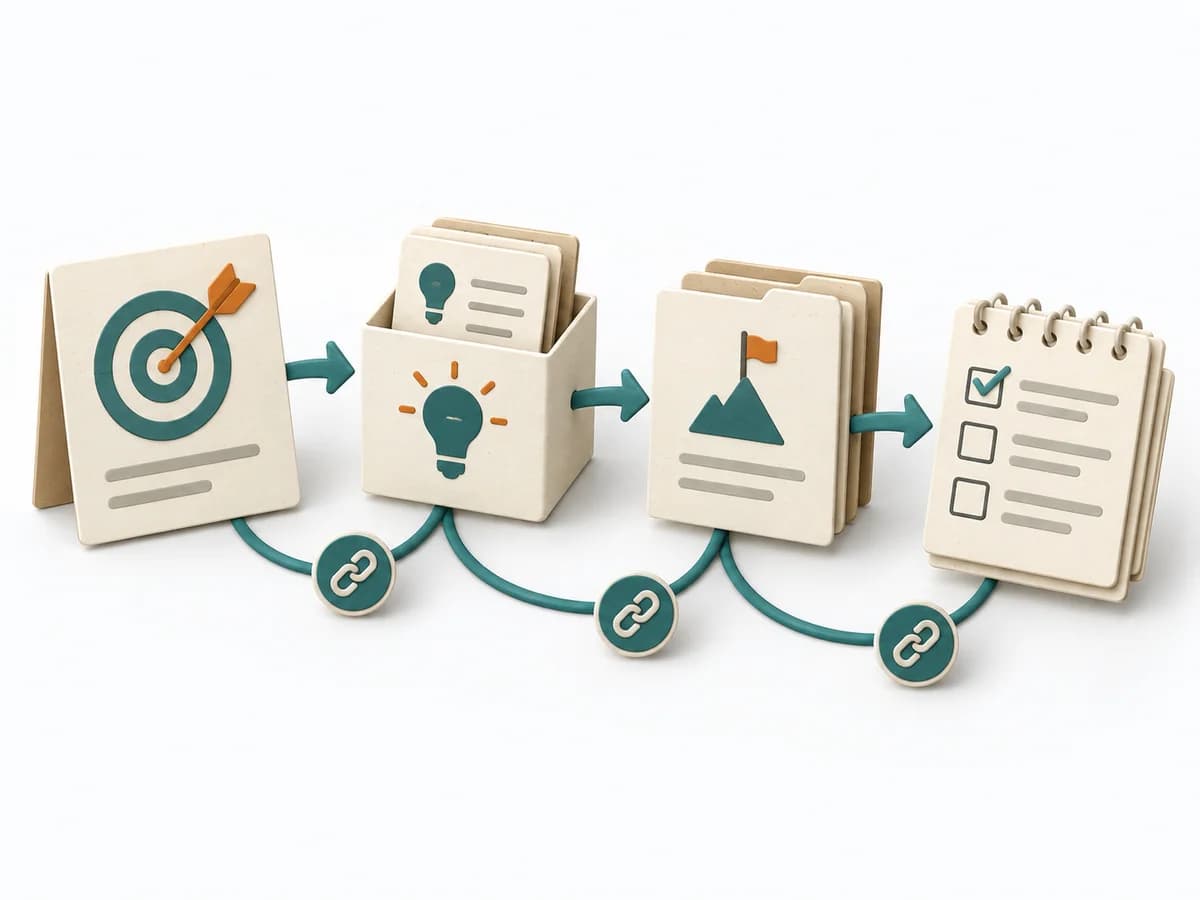 Product Strategy GIST Planning | 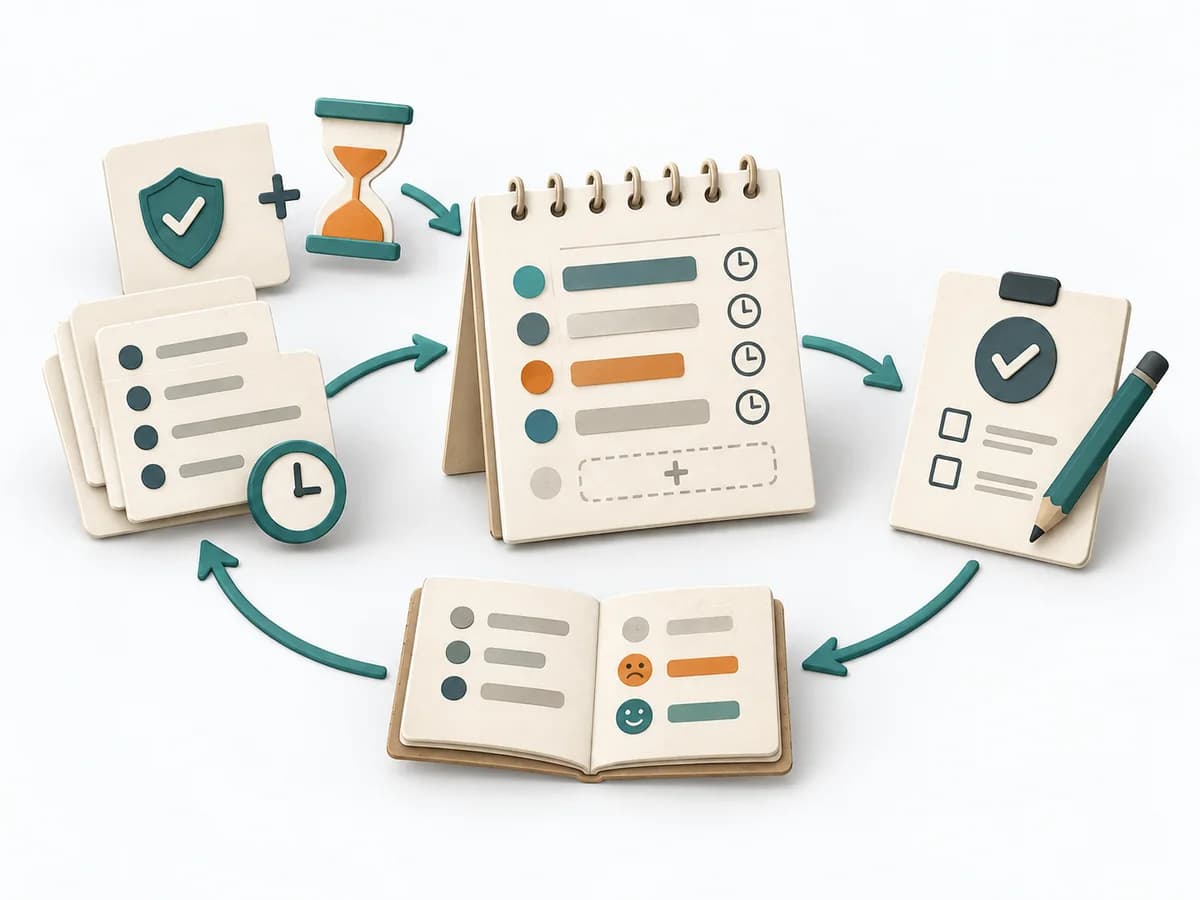 Operations ALPEN Method |  Product Discovery Learning Card | 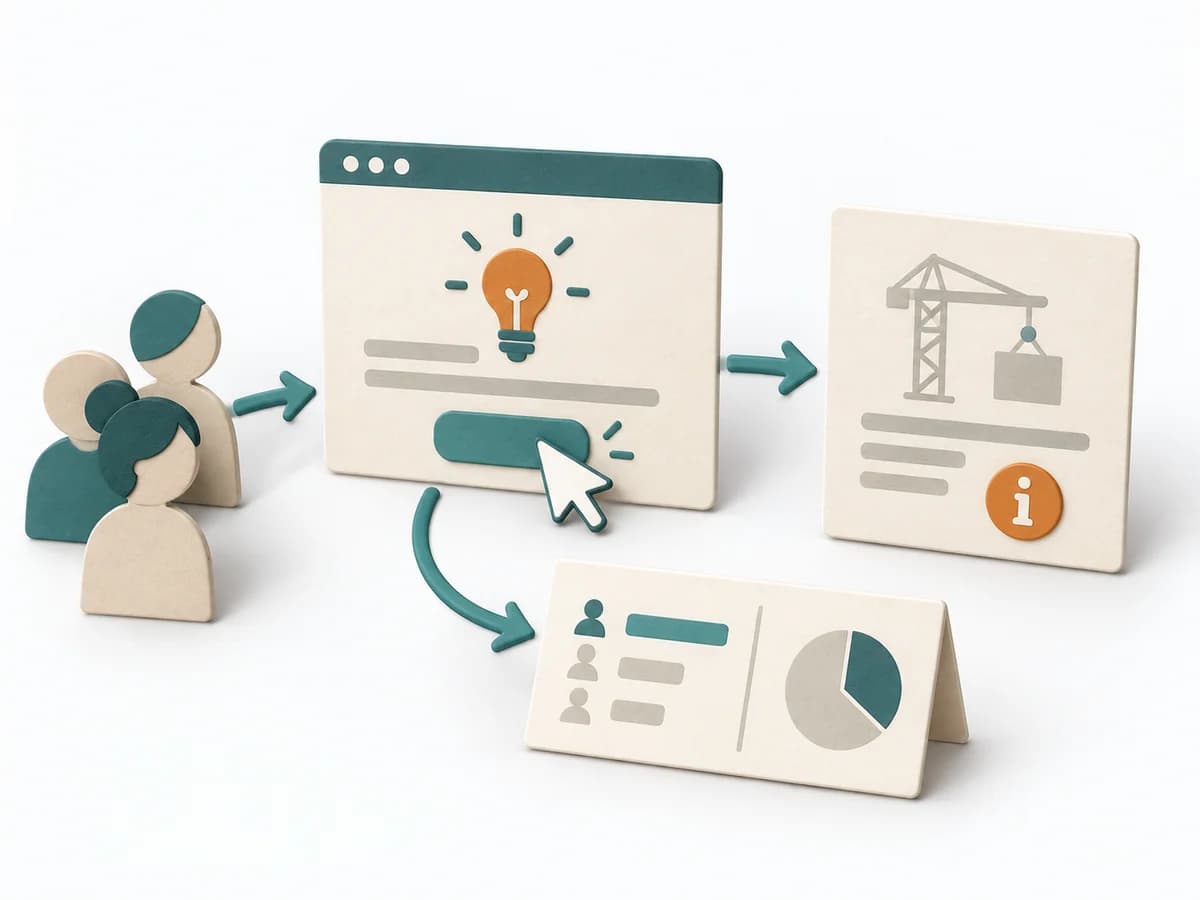 Product Discovery Fake Door Test |
|---|---|---|---|---|
Purposedifferent | GIST Planning helps clarify target groups, value, goals, and priorities. It links customer value, product logic, and decision priorities, and captures the result as goals, an idea bank, and a step-project list. | With an overloaded day full of too many tasks, a realistic picture of the day emerges. The method connects estimating, deciding, and buffer thinking so planning fits available energy and time. | The Learning Card connects traceable test results to a reasoned next action while keeping the limits of the insight visible. | When demand is still unclear, it measures interest in a feature before it is built. It separates real behavior from polite agreement and deliberately keeps build effort small. |
Complexitydifferent | Medium | Low | Low | Medium |
Timedifferent | Wochen bis Monate je Goal | 10-20 min daily | 25-40 min | 1-5 Tage |
Participantsdifferent | 3-10 | 1 | 1-5 | Nutzertraffic |
Formatdifferent | Workshop + async | Async | Workshop + async | Async |
Outputdifferent | Goals, Idea bank, Step-project list, Tasks, Learning reports | Daily Plan, Time Estimates, Review Notes | Learning Card with evidence and next action | Click Data, Interest Signal, Learning Decision |
Tagsno overlap | RoadmapOutcomesPlanningExperiments | PlanningTime managementProductivityOperations | ExperimentsValidationDiscoveryLearning | ValidationExperimentsDemandDiscovery |