View methods side by side.
Choose up to four methods. Add them using the search and share the comparison by copying its link.
| Criterion | 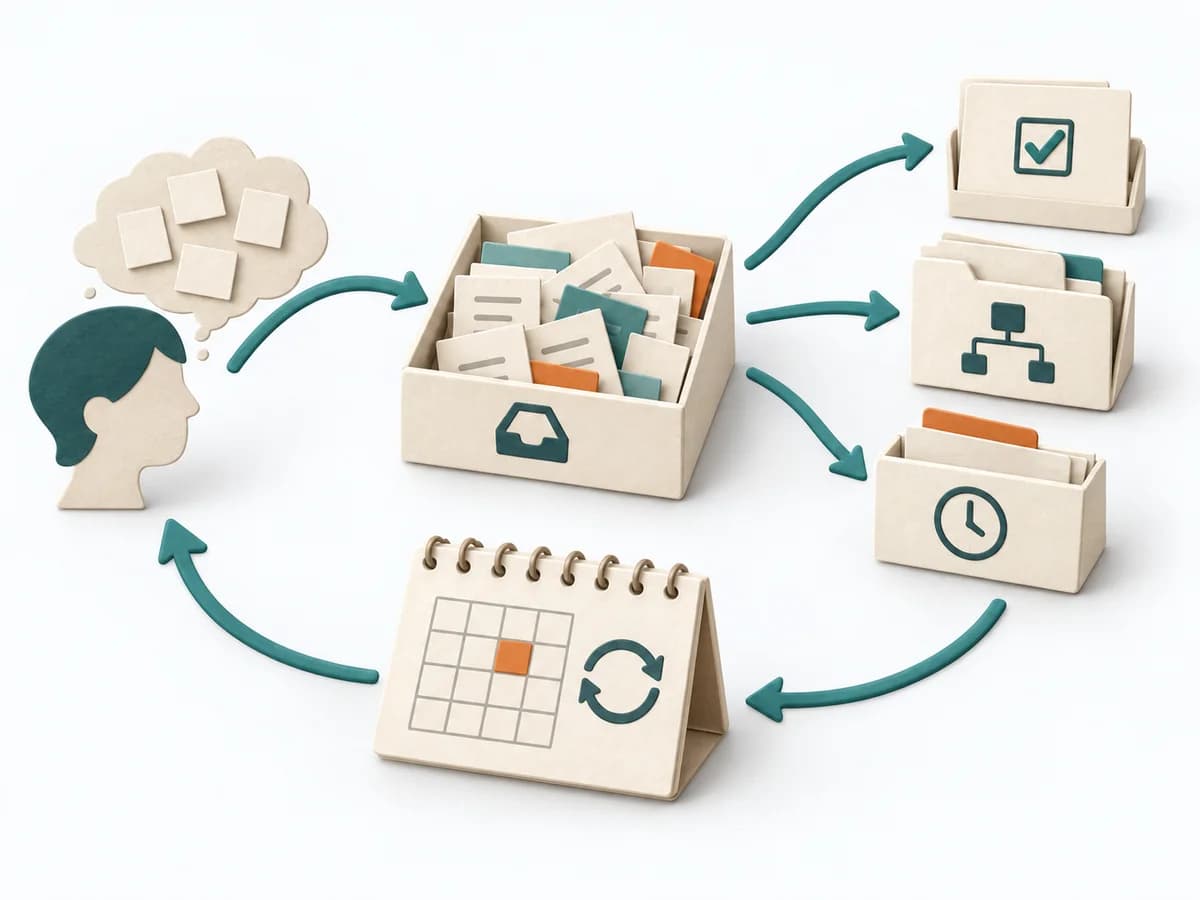 Operations Getting Things Done |  Domain Modeling EventStorming | 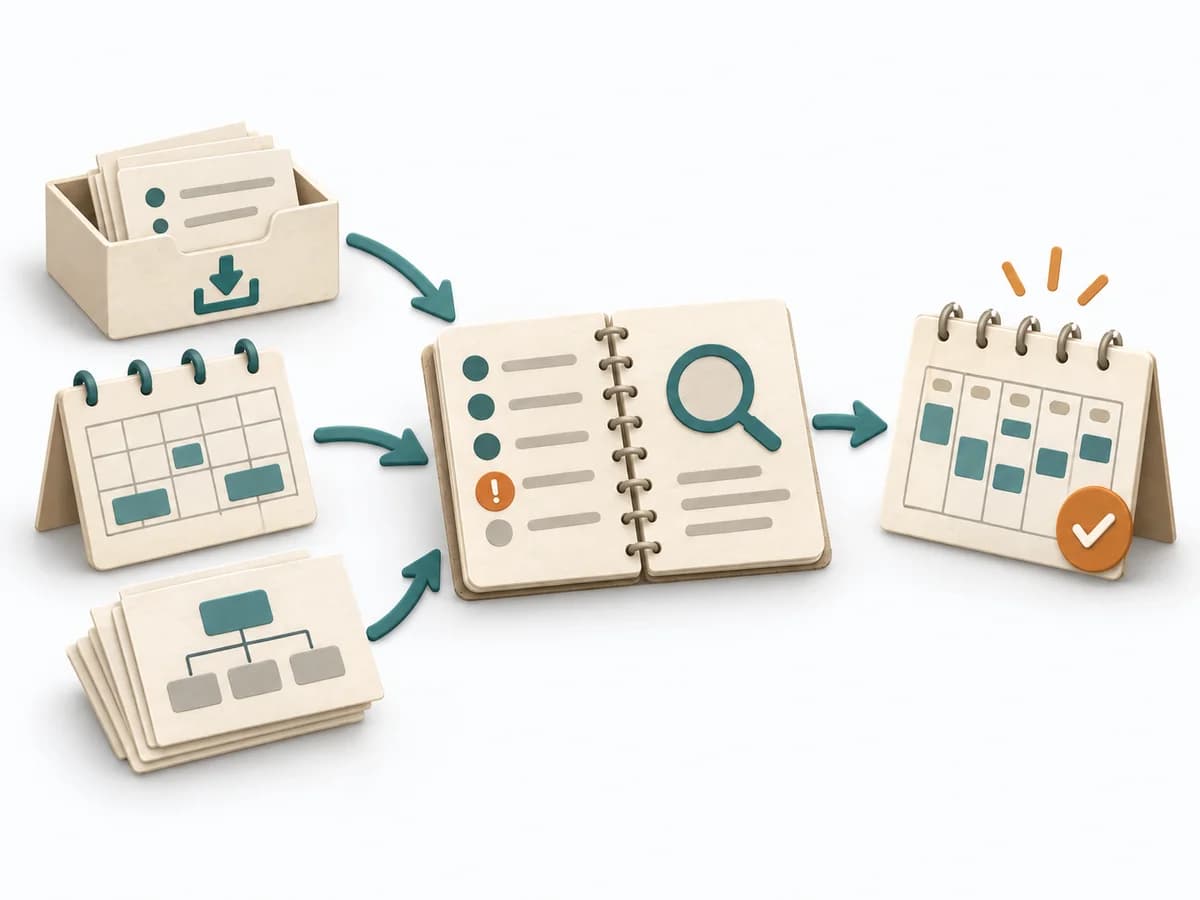 Operations Weekly Review |  Knowledge Modeling Event Modeling |
|---|---|---|---|---|
Purposedifferent | With many open commitments and ideas in daily life, a reliable external storage system emerges. The method relieves the mind so priority and context don't have to compete in memory. | When a domain consists of many events, rules, and states, it creates a shared modeling space for the team. It bundles language, flows, and boundaries before domain knowledge fragments into siloed views. | In a week with many open loops, the method creates distance from operational noise. It organizes commitments, calendar, and projects so the next week becomes workable. | Event Modeling connects business workflows with commands, events, and views into one coherent mental model. It helps design behavior, UI, and technical slices from the same underlying logic. |
Complexitydifferent | Medium | Medium | Low | Medium |
Timedifferent | 1-2 h Setup, laufend | 2-8 h | 30-60 min | 2-6 h |
Participantsdifferent | 1 | 5-12 | 1 | 2-8 |
Formatdifferent | Async | Workshop | Async | Workshop + async |
Outputdifferent | Action Lists, Project List, Review Routine | Event Timeline, Ubiquitous Language, Boundaries, Open Questions | Updated Task System, Weekly Focus, Next Actions | Event Model, UI Flow, Commands, Read Models |
Tagsno overlap | ProductivityPlanningTasksExecution | Domain-Driven DesignEventsDiscoveryWorkshop | ProductivityExecutionPlanning | EventsBlueprintDomain-Driven DesignBehavior |